
The San Juan Hotel Battle: A Crossroads for Mexican American Civil Rights in the Rio Grande Valley
There is a reckoning with history happening at an old hotel with a horrific past and the RGV's first and only civil rights museum.
There is a reckoning with history happening at an old hotel with a horrific past and the RGV's first and only civil rights museum.

A binational gathering shows that the borderlands community seeks peace and unity, not a manufactured war zone.

As DHS gaslights border communities, help document the reality on Wall Watch, our new community powered map for border wall construction, and a podcast from the resistance in Lochiel, Arizona, where protestors try to save the last ancient Cottonwood tree from bulldozers.

Just what did U.S. officials at the Border Security Expo earlier this month say about U.S. foreign policy, border extension, and a revival of the war on terror?

The following is a translated piece I wrote for the Oaxacan publication El Topil, which published it earlier this week. It examines the Border Security Expo from a different angle than the one posted here on May 7, focusing on U.S. foreign policy, the expansion of the war on terror, and the connection to the border and immigration enforcement apparatus. The original Spanish version appears below, after the English translation, or you can go directly to El Topil here.

The administrator for the Drug Enforcement Agency, Terrance Cole, said it clearly: the United States has gone “back to global enforcement.”
“Thank God we have this president,” Cole said to loud applause in the ballroom of the Phoenix, Arizona, convention center. A president who is “fully engaged to capture and to bring to justice these terrorists who are killing Americans.”
Among those terrorists, according to Cole, was the former president of Venezuela, Nicolás Maduro. Cole revealed that he had participated in the massive operation that removed Maduro from his post, including escorting Maduro off the plane after his extradition and arrival in New York City on January 3. Photos show Cole grabbing a confused Maduro by his arm, along with several agents of Immigration and Customs Enforcement.
Cole told this story at the Border Security Expo on May 5, an annual event that brings together high-ranking officials from the U.S. Department of Homeland Security—including the Border Patrol and ICE—with hundreds of private companies. (See the article published at The Border Chronicle earlier this month.)
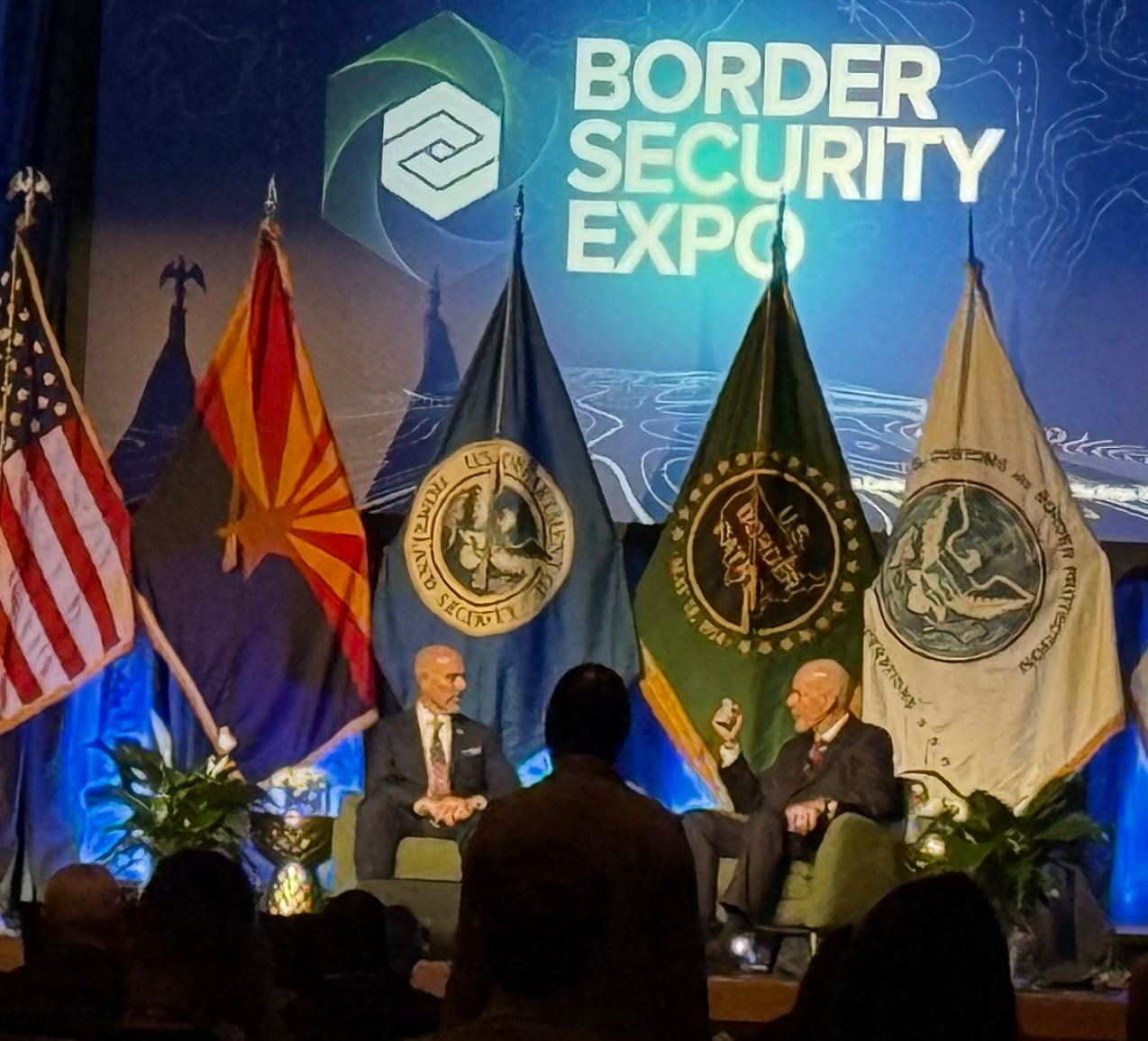
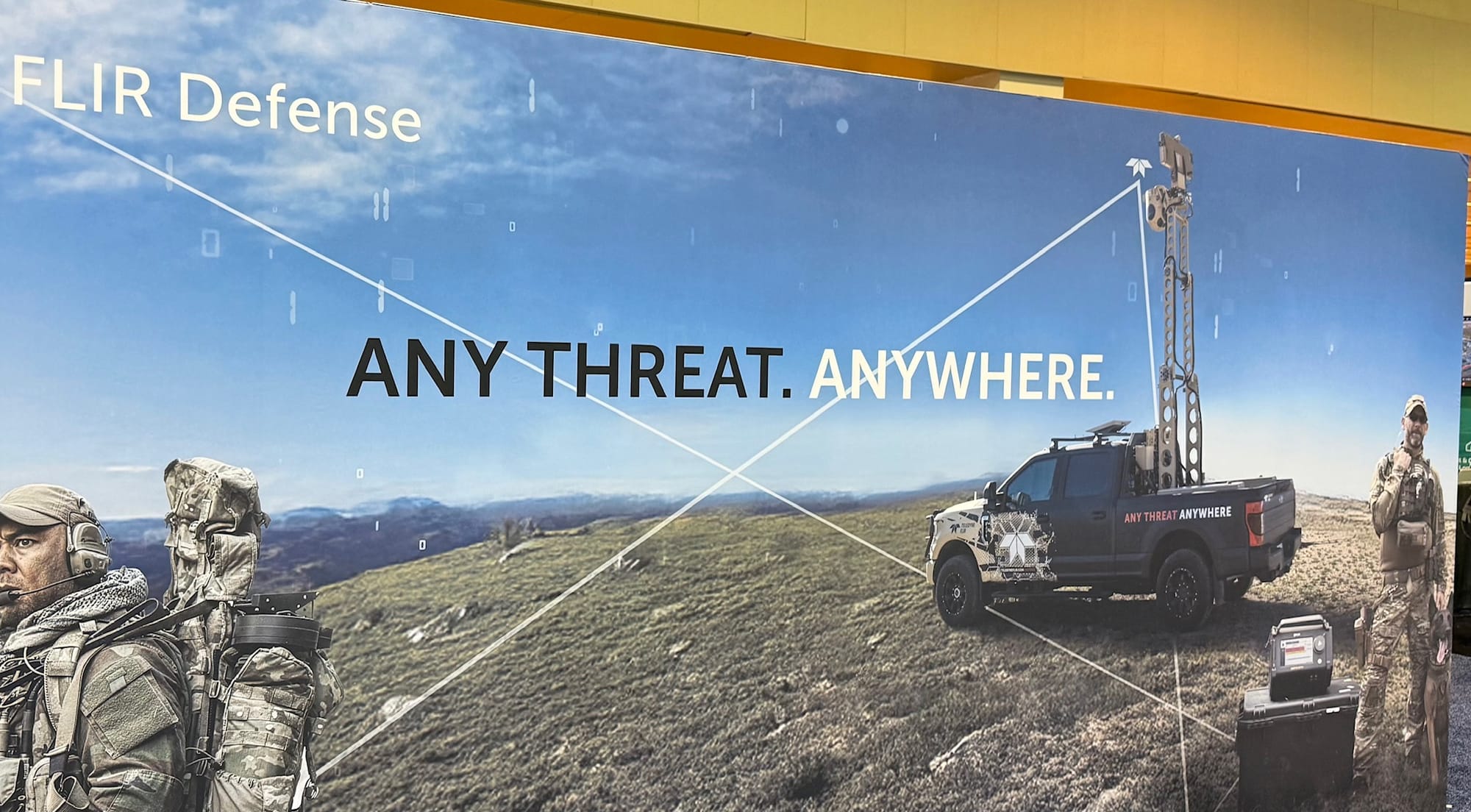
The ballroom was filled with representatives from these companies, who came from all over the world, applauding Cole’s words and those of other U.S. officials, including Border Czar Thomas Homan, ICE director Todd Lyon, and CBP commissioner Rodney Scott. Near where Cole spoke was an exhibition hall packed full of surveillance technology. Throughout the hall were booths where vendors sold sophisticated camera systems and advanced biometric technology. Drones flew around or moved along the floor like robots. There were several varieties of firearms for sale. Thirty years ago, this scene might have been found only in the pages of a science fiction novel. Now this imagined future has become reality.
If you are looking for the belly of the beast in the United States, you’ll certainly find it in Washington. But you don’t have to go that far; the beast also lives on the border. Here you will find a trifecta of U.S. foreign policy: the war on drugs, the war on terror, and the war on migrants.
You will also find—in the words of Cole and other officials—an open secret: that the United States’ southern border is extending beyond Mexico, further into Latin America and the Caribbean.
This externalization has increased significantly since September 11, 2001. A post-9/11 U.S. government report asserted that “the American homeland is the planet.” And even more explicitly, a DHS official stated in 2012 that “the Guatemalan border with Chiapas is now our southern border.” CBP has attachés all over the world, including in Mexico, Panama, the Dominican Republic, Brazil, Ecuador, El Salvador, Honduras, and Guatemala.
While the United States has been extending its border outward for decades, the Donald Trump administration has pushed the effort to a new level. It has become an act of war and has included lethal strikes against Venezuelan boats in the Caribbean.
Regarding the Maduro operation, Cole said, “God bless the Department of War.” It was a “flawless operation” to capture “this terrorist.”
It was, he said, a “noble job.”
The word “terrorist” isn’t just hyperbole. It’s a tactic, one that captures the Trump administration’s approach to foreign policy in the Americas: a revival of the war on terror for which the administration is building the largest border and immigration enforcement apparatus ever seen in the United States. Legally speaking, the word “terrorist” opens the possibility of a whole slew of potential military actions.
U.S. Attorney General Todd Blanche, who was also at the expo, said that “we are not treating drug dealers like ordinary criminals. We are treating them like terrorists.” They are going after “narcoterrorists,” he said, who “inject poison” into the United States.
This logic justified the operation against Maduro, who, along with his wife, Cilia Flores, are being charged as drug traffickers. This coup, according to Cole, sends a message that “anybody, anyplace, anytime can be removed.”
The border has extended not only outside the United States but also into its interior. As Cole put it, “the influx of all the illegals who flooded our country” has led to worries inside the government of an “internal threat,” as if migrants were also terrorists. He added that all the states—whether Kansas, Nebraska, or Illinois—“are border states.”
I lived in Oaxaca from 2005 to 2009, working for the organization Witness for Peace. For four years we focused on U.S. foreign policy and its impacts in Mexico, with a lot of support from Oaxacan civil society organizations like EDUCA (Services for an Alternative Education, the organization that publishes El Topil, for which this article was originally written). I believe that those four years contributed quite a bit to my development as a writer and reporter about what is happening in my country and how my country treats other countries around the world. My hunch is that the Trump administration wants to maintain the conditions that the U.S. has taken advantage of for a long time: an unsustainable world of rich and poor, an economy that favors the most powerful and biggest corporations, a world fraught with the serious impacts of climate change displacing more and more people year after year. To protect its interests in this global status quo, the United States has to manufacture a new phase of the war on terror.
And it will now pursue this through its border and immigration enforcement policies, aligned with the Department of War.
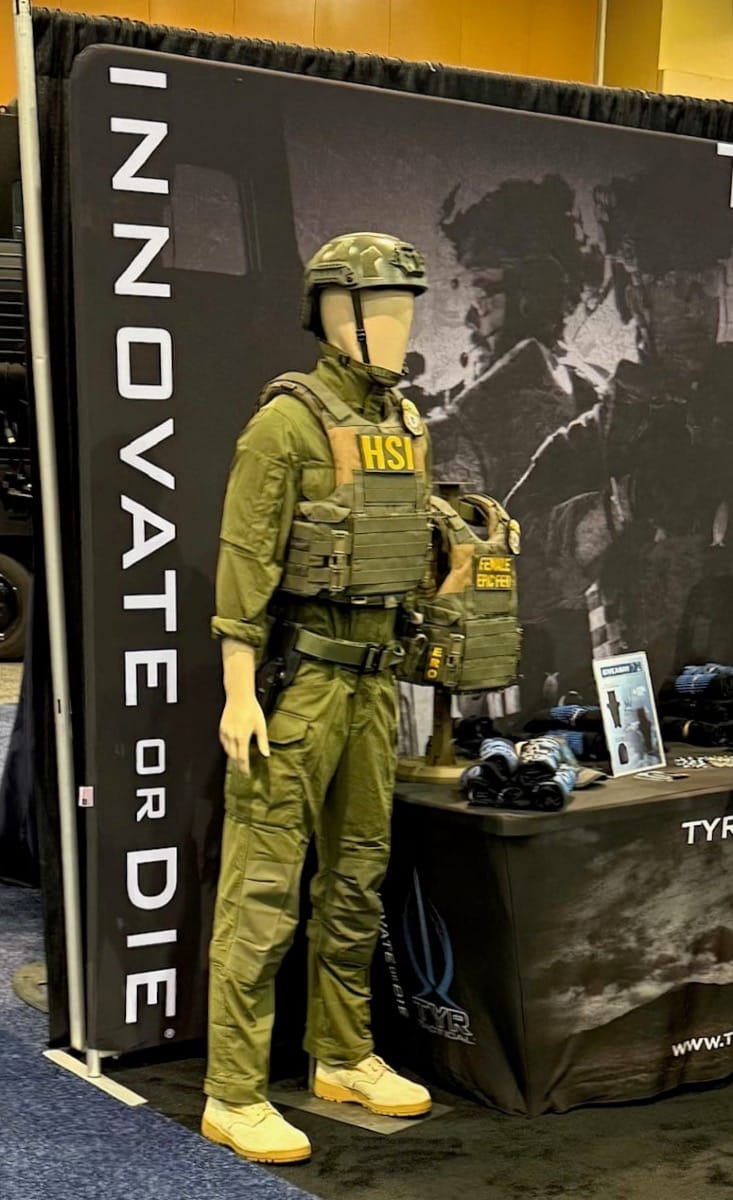
Such declarations of war on borders are wars that have no end, permanent wars. Because the threats, according to this logic, are always found in border zones, these zones then can be strategically located in a wider array of places—between Arizona and Sonora, Oaxaca and Chiapas, Minneapolis and Chicago. The technology that surrounds us at the Border Security Expo is the infrastructure of a permanent war. This industrial complex, and the lucrative contracts that sustain it, are going to expand this world of surveillance.
It is a mistake to think that this comes exclusively from Trump. Far from being an anomaly, Trump is better a more extreme representation of what the United States has been for decades. During the Cold War, the United States always needed an enemy, and for a long time that enemy was communism. During the Joe McCarthy era, “suspicious” citizens were hunted down, and after 2001, the strong language of the war on terror surged and unleashed a stark military power. All the enemies from before are now the enemies of today, with new faces.
And now Trump has become the perfect U.S. face of the 21st century, and his victims are the migrants: migrants who cross the border, who already live in the country, or the “migrant” who happens to be the president of another country, whether it be Venezuela or Iran.
In March, I went to Douglas, Arizona, and Agua Prieta, Sonora, because local organizations alerted me that Border Patrol agents were prohibiting citizens from accessing the border road. As a journalist, I was startled by this, because we had always been able to report right from the border.
While I was there, an agent told me the policy had changed because of international events, namely the war in Iran. The logic was that the border had become unsafe. Iran might come through Mexico and attack the United States from its southern flank. Though the premise seemed ridiculous, there’s no better way to sell a world of threats to the general population. “Anybody, anyplace, anytime, can be removed.”
My question is this: Are we at a point in which we are witnessing a country that is incapable of transforming itself in an evolving world, and instead of changing, it maintains the injustices of the status quo through increasing violence? One test will be the midterm elections in the United States in November. There is a deep resistance in the country, and it seems clear that most of the world understands that more radical changes are needed. Perhaps the first step, especially from the vantage point of the Border Security Expo, will be to stop looking at the world as a territory of divisions and borders, and begin to see it as an opportunity to connect, unite, and organize globally to create something new. Such cross-border solidarity and collaboration may, indeed, be the only way out.
Support independent journalism from the U.S.-Mexico border. Become a paid subscriber today for just $6 a month or $59 a year. Help us continue to expand our operations at a critical time.

Este artículo, traducido arriba en inglés, fue originalmente publicado en la publicación El Topil.
El director de la Administración de Control de Drogas (DEA, por sus siglas en inglés) Terrance Cole, lo dijo claramente: Estados Unidos ha vuelto a “la aplicación de la ley a nivel global.”
“Gracias que tenemos con nosotros a este presidente,” dijo Cole, refiriendo a Donald Trump, y recibió un aplauso fuerte en el gran salón de eventos del centro de convenciones en Phoenix, Arizona. Donald Trump “está completamente dedicado a capturar a estos terroristas que están matando a estadunidenses.”
Entre estos “terroristas,” según Cole, está el expresidente de Venezuela, Nicolás Maduro. Cole nos dijo que había participado en ese operativo masivo para quitar por la fuerza a Maduro de su puesto, y fue el quien lo trasladó en avión a Nueva York. Fotos muestran a Cole agarrando a Maduro -todavía con una cara confundida- en su brazo con unos agentes de ICE.
Cole estaba contando esta historia en el Expo de Seguridad Fronteriza (Border Security Expo), un evento anual que junta altos funcionarios del Departamento de Seguridad Nacional, incluyendo la patrulla fronteriza, ICE, y centenas de compañías privadas.
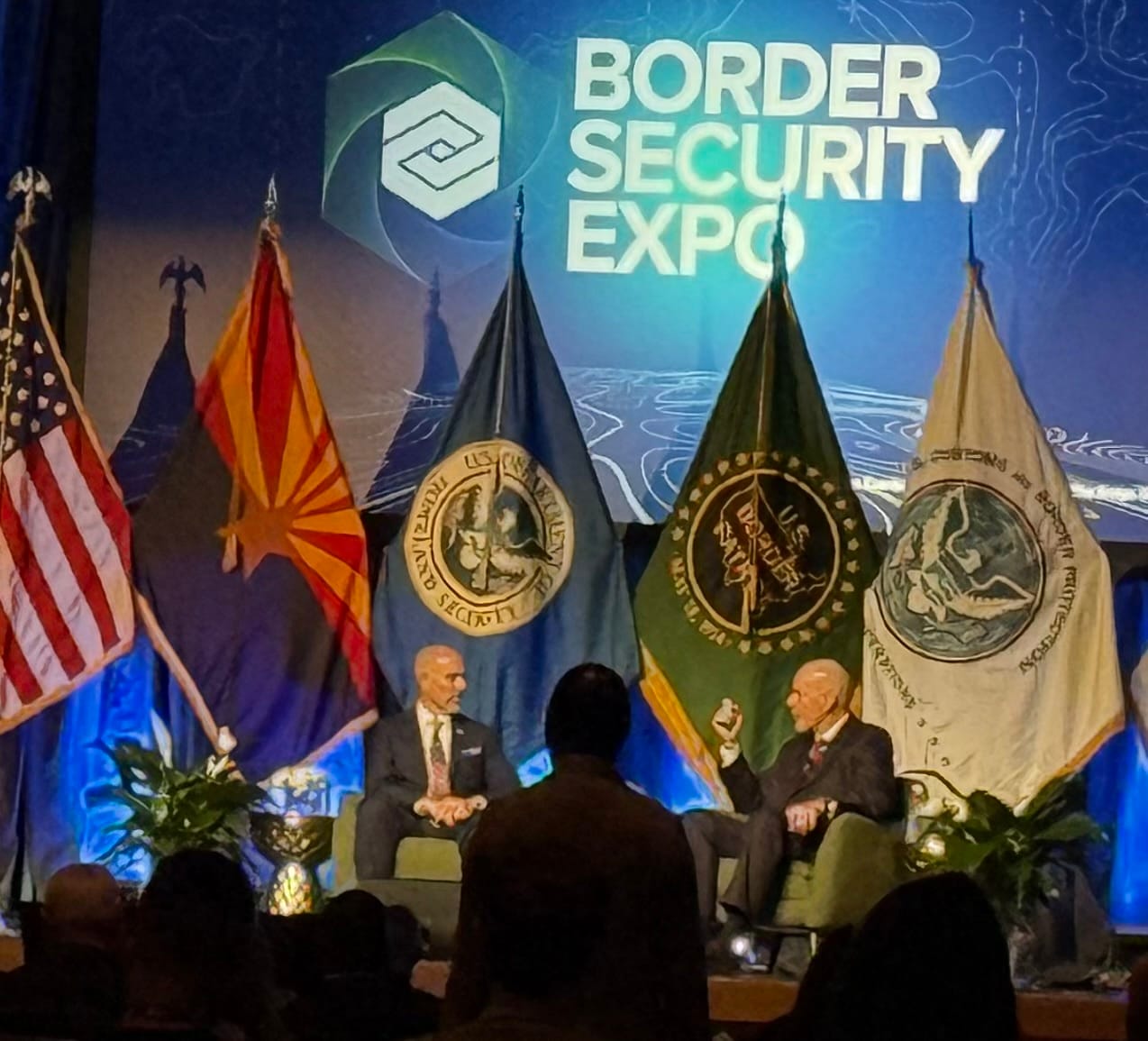
El salón estaba lleno de representantes de estas compañías quienes aplaudían fuertemente las declaraciones de Cole y otros oficiales estadunidenses de la administración de Trump como el “Czar” de la Frontera Thomas Homan, el director de ICE Todd Lyon, el director de CBP (la agencia de la patrulla fronteriza) Rodney Scott. Y estas empresas estaban bien representadas en otro salón de exhibiciones cercano que estaba repleto de tecnología de vigilancia. Por todos lados había puestos donde se vendían sistemas sofisticadas de cámaras y tecnología avanzada de biométrica. Había drones que volaban y drones que andaba en la tierra como robots. Había armas de fuego y pistolas. Hace 30 años lo que se veía en el expo tal vez se hubiera encontrado dentro de las hojas de una novela de ciencia ficción. Ahora este futuro imaginado se ha convertido en realidad.
Y también sirve como bola de cristal. Se puede ver el futuro de la frontera.
Si andas buscando las entrañas de la bestia en los Estados Unidos, si claro que las encontraras en Washington. Pero no hay que ir tan lejos, esta bestia existe también en la frontera, una frontera en donde se encuentra la trifecta de la política extranjera de Estados Unidos, la guerra contra las drogas, la guerra contra el terror, la guerra contra el migrante.
Y también se encuentra—en las palabras de Cole y todos los otros oficiales—otro secreto abierto. La frontera estadunidense ya no es solamente la línea entre Estados Unidos y México.
Desde el 11 de septiembre 2001, esta frontera belicosa se ha estado extendiendo fuertemente no solamente a la República mexicana, sino que también a toda América Latina y el Caribe. Un informe gubernamental estadunidense después de 9/11 declaró que “la patria estadunidense es el planeta.” Mas explícitamente, como dijo un oficial del Departamento de Seguridad Nacional estadunidense en 2012, la frontera de Estados Unidos es “entre Chiapas y Guatemala.” CBP tiene atachés en todas partes del mundo, México, Panamá, República Dominicana, Brasil, Ecuador, El Salvador, Honduras, y Guatemala. Y ahora la administración de Trump ha alcanzado otro nivel: es un acto de guerra.
En el operativo golpista de Maduro Cole dijo, “que dios bendiga el Departamento de Guerra” (el Departamento de Defensa ha sido renombrado). “Fue un operativo sin fallas” para capturar a “este terrorista.” Fue, dijo Cole, “un trabajo noble.”
Tal vez esa palabra “terrorista” parece exagerada, y si es. Pero el uso de esa palabra es algo táctico y describe muy bien lo que estamos viendo bajo esta administración de Trump. Un renacimiento de la guerra contra el terror bajo de una definición mucho más amplia y bajo el sistema de policía migratoria más grande que se han visto en Estados Unidos. La palabra “terrorista” abre la posibilidad de un montón de acciones militares.
El Procurador General de EU Todd Blanche, quien también estaba en el expo, dijo que “ya no estamos tratando a los traficantes de drogas como criminales ordinarios. Los estamos tratando como terroristas.”
Claro que sí. Se justificó el operativo de Maduro acusándole a él y a su esposa de ser narcotraficantes. Este golpe, según Cole, también manda una mensaje que “cualquier persona, en cualquier lugar del mundo puede ser derrocado.” Más extendida esta frontera bajo Trump, y más violenta. Y esta extensión no solamente se ha visto afuera del país, sino también adentro en sus propias ciudades.
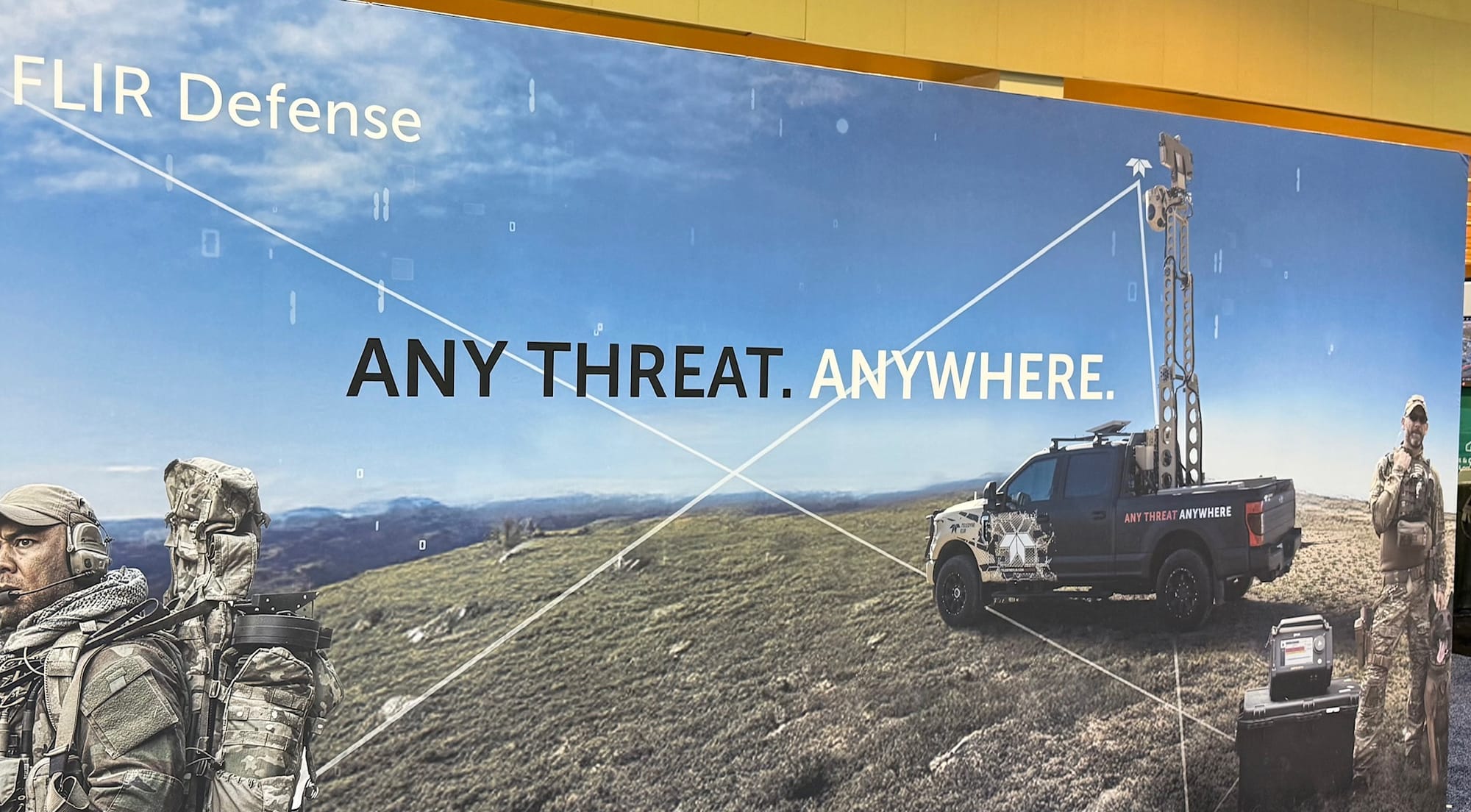
Como dijo Cole, con “la entrada de todos los ilegales quienes inundaron nuestro país,” la preocupación oficial es una “amenaza interior,” como si fueran los migrantes terroristas también.
Todos los estados, no importa sin son Kansas, Nebraska, Illinois, dijo, “son estados fronterizos.”
Yo viví en Oaxaca desde 2005 a 2009 trabajando con la organización Acción Permanente por la Paz. Por cuatro años enfocamos en la política extranjera estadunidense y sus impactos en Mexico, con mucho apoyo de organizaciones de la sociedad civil oaxaqueño como EDUCA. Creo que esos cuatro años me dieron mucho en mi formación de escritor y reportero de lo que pasa en mi país y cómo mi país trata a otros países. Mi instinto y análisis es que la administración de Trump está viendo lo que han visto los presidentes de EU por mucho tiempo, un mundo insostenible de ricos y pobres, una economía que favorece los más poderosos y empresas grandes, un mundo con graves impactos del cambio climático y que hay cada vez más personas desplazadas porque ya no se puede sobrevivir en sus comunidades. Es este status quo que el gobierno quiere mantener. Y para mantenerlo hay que manufacturar una fase nueva de la guerra contra el terror. Y ahora va a través de las policías migratorias.
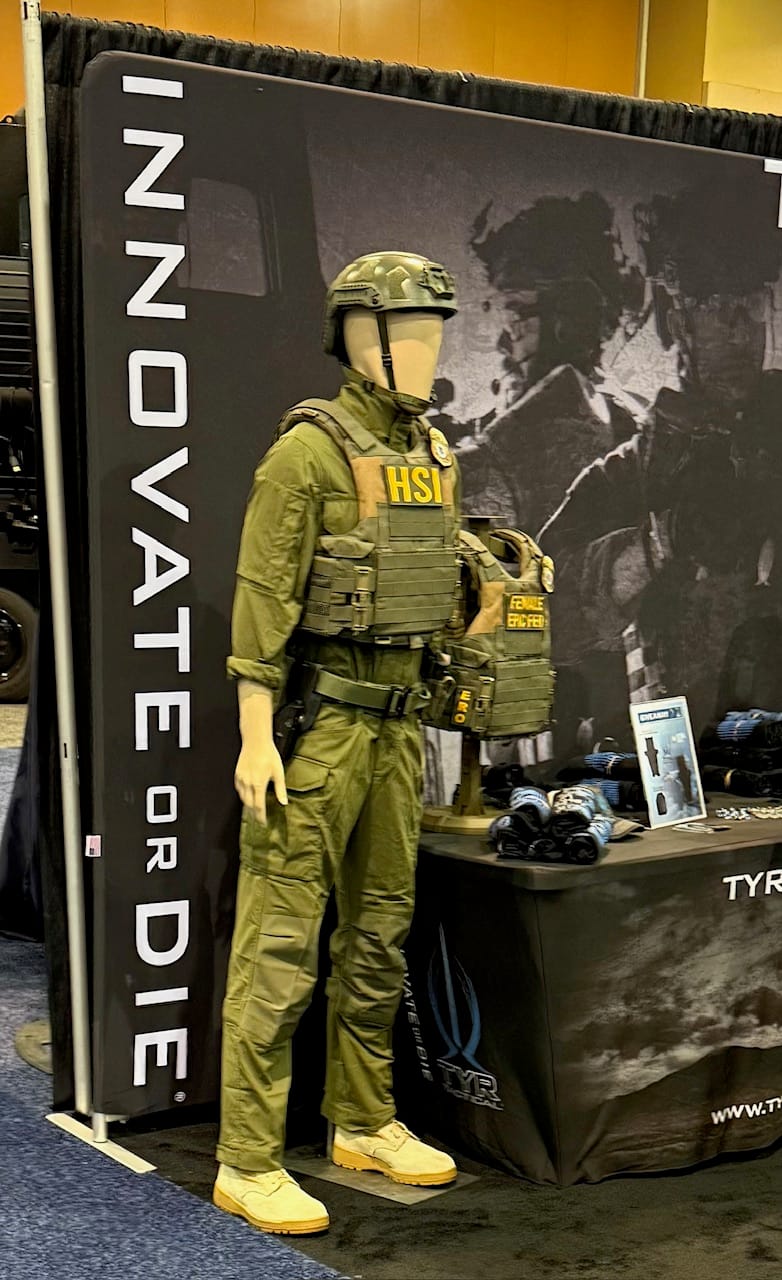
Tales declaraciones de guerra fronterizas son guerras que no tienen fin, guerras permanentes. Porque las amenazas, según esta lógica, siempre se encuentran en las zonas fronterizas, y estas zonas pueden estar entre Arizona y Sonora, o Oaxaca y Chiapas, o Minneapolis y Chicago. La tecnología que nos rodea en el Border Security Expo va a ser la infraestructura de esta guerra permanente, los contratos son lucrativos, y este complejo industrial va a hacer que crezca y crezca más un mundo de vigilancia y de control.
Es una equivocación pensar que todo esto viene exclusivamente de Trump. Lejos de ser una anomalía, Trump es el símbolo perfecto de lo que ha sido Estados Unidos por décadas. En la Guerra Fría siempre necesitaban EU un enemigo y por un buen rato fue el comunismo. Hubo los casamientos de ciudadanos durante el tiempo de McCarthy, y luego después de 2001 el lenguaje feroz del terrorismo que desencadenó el poder militar crudo. Todos estos enemigos de antes ahora son los enemigos del día de hoy, con sus rostros nuevos. Y ahora Trump es el rostro estadunidense perfecto para el siglo 21, y sus víctimas son el migrante cruza la frontera, o el “migrante” que es presidente de otro país, Venezuela o Irán.
En Marzo fui a Douglas, Arizona y Agua Prieta, Sonora porque organizaciones ahí me avisaron que los agentes de la migra estaban prohibiendo que los ciudadanos se acercaran a la frontera. Me llamó mucha la atención como reportero porque siempre hemos podido acercarnos a la frontera para hacer reportajes. Cuando estaba ahí, la patrulla fronteriza me dijo que había cambiado esta política por los eventos en el mundo, principalmente la guerra en Irán. La idea fue que Irán podía atacar Estados Unidos pasando a través de Mexico y llegar a la frontera sur, en la ubicación exacta donde yo escuchaba el agente con mucho escepticismo. Pues, no hay manera mejor para vender un mundo de amenazas al público.
Todas las políticas más brutales de décadas se han unido bajo la administración de Trump. “Cualquier persona, en cualquier lugar puede ser derrocado.”
La pregunta que tengo yo ahora es si ¿es otra imposición de poder? O realmente estamos viendo un país que necesita cambiar, pero en lugar de cambiar, va manteniendo las injusticias con violencia. Seguramente la prueba van a ser las elecciones de noviembre, las elecciones parciales. Adentro del país, hay mucha resistencia. Y yo creo que el mundo sabe que se necesitan cambios más fuertes. Se empieza por no mirar el mundo como uno de divisiones y fronteras, sino como una oportunidad de conectar, unir, y organizar a un nivel global para crear algo nuevo.
Support independent journalism from the U.S.-Mexico border. Become a paid subscriber today for just $6 a month or $59 a year. Help us continue to expand our operations at a critical time.

A vivid depiction of what has been happening during the last eight weeks of resistance against border wall construction in southern Arizona’s San Rafael Valley.

Wall Watch combines geospatial mapping, archival research, and community participation to provide the public with an accurate, continually updated record of border wall construction along nearly 2,000 miles of the international border.

As floodwaters swept hundreds of one-ton border buoys downstream, international bridges closed, commerce slowed, and officials struggled to get answers from DHS about a project advancing despite local opposition, environmental concerns, and treaty questions.

Hundreds of massive orange buoys staged for a controversial DHS floating barrier project broke free near Eagle Pass and are now drifting toward Laredo, threatening bridges, commerce, drinking water supplies and downstream communities.
Independent news, culture and context from the U.S.-Mexico border.