Romeo and Juliet: How Star-Crossed Lovers Defied Borders on Roller Skates
Sometimes the best way to contest the border is to skate right through it and create a beautiful, binational community.
A dozen women sit at a table, finalizing details for the first large-scale binational roller skate event in Sonora, Mexico. There’s excitement in the air; months of preparations have led to this.
It’s the first in-person meeting of the Tucson Roller Collective, Avenida Rollers, and Morras Patinando—three women-led roller skate and skateboard groups in Tucson and Hermosillo. We’re preparing to host skaters from both sides of the border in San Carlos, Guaymas, Sonora, 300 miles from the U.S. border near the Sea of Cortez. It’s September 2024, and while we know what we’re doing is big, we can’t imagine how this collaboration will shape our lives.
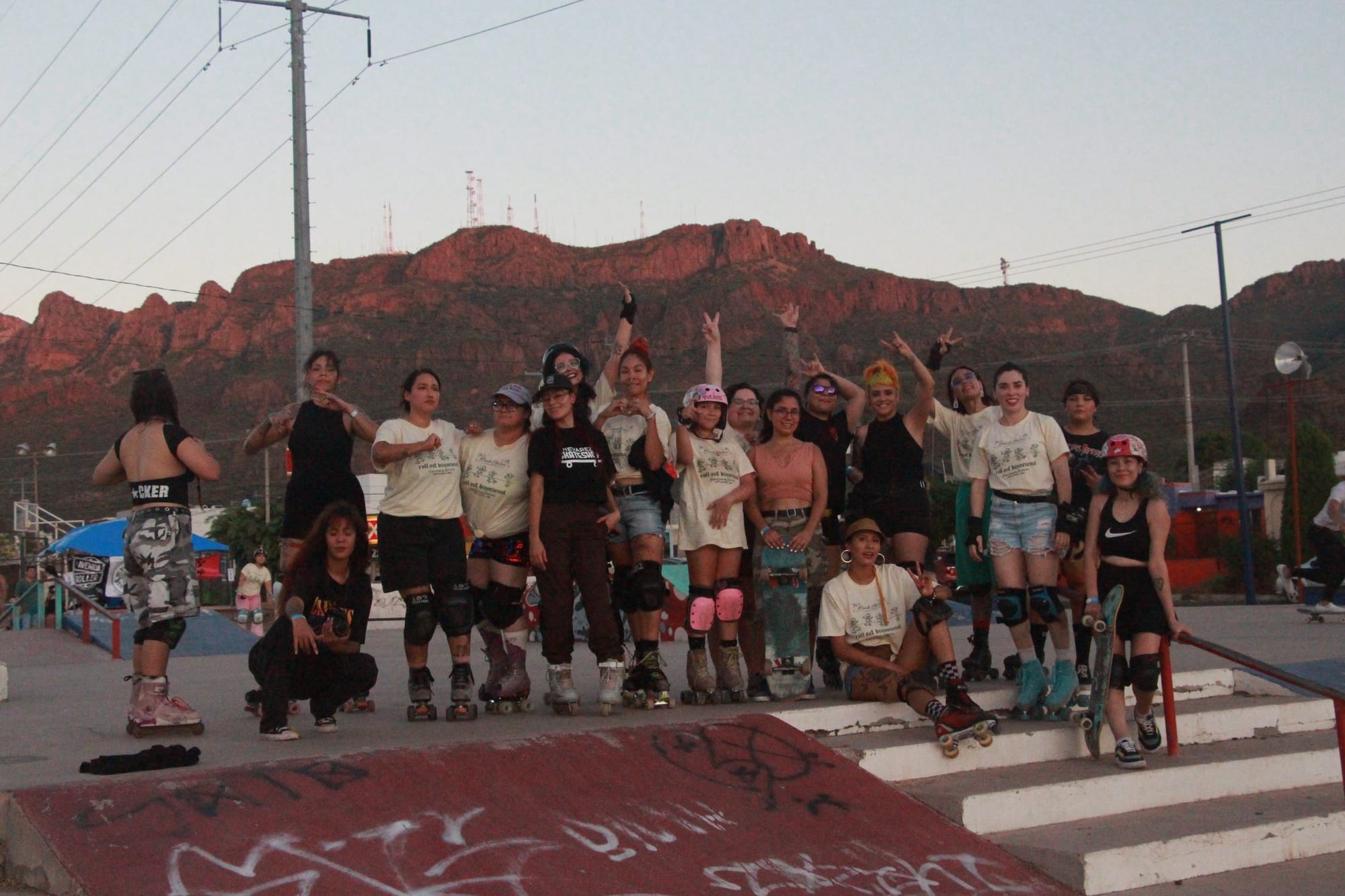
The women form a part of a burgeoning binational skate community in the Arizona-Sonora borderlands. As political tensions intensify between the U.S. and Mexico, the two sides are like star-crossed lovers: stuck between the Trump administration’s negative narratives about Mexico and the reality of living in the borderlands.
Tucson is 71 miles from the U.S.-Mexico border, a line that cuts through the Sonoran Desert, which stretches hundreds of miles from the Pacific port city of Guaymas to the Colorado River. Geographically, the land is continuous; it shares the same rich, biodiverse ecosystem of saguaros, cholla, and creosote, yet it is bisected by a 20-foot steel border wall, which is now expanding in southern Arizona and other parts of the border. The wall insists that we can’t come together.
“We’re like Romeo and Juliet,” says Leonor Varela, an organizer with Avenida Rollers in Hermosillo. “We have lands that are totally in conflict. I mean, your country’s president hates us and considers us trash, but despite that, we connect and find common ground.”
Like any good romance, the relationship between the two skate communities began by subverting the suffocating national narrative and encouraging others to see the continuity of the Sonoran region across the border, building bridges where there are bollards. Through various collaborations, we began to build a binational community made up of people of all ages, sexualities, genders, professions, and tastes. In supporting each other, we are building relationships that can thrive only when we reject the border.
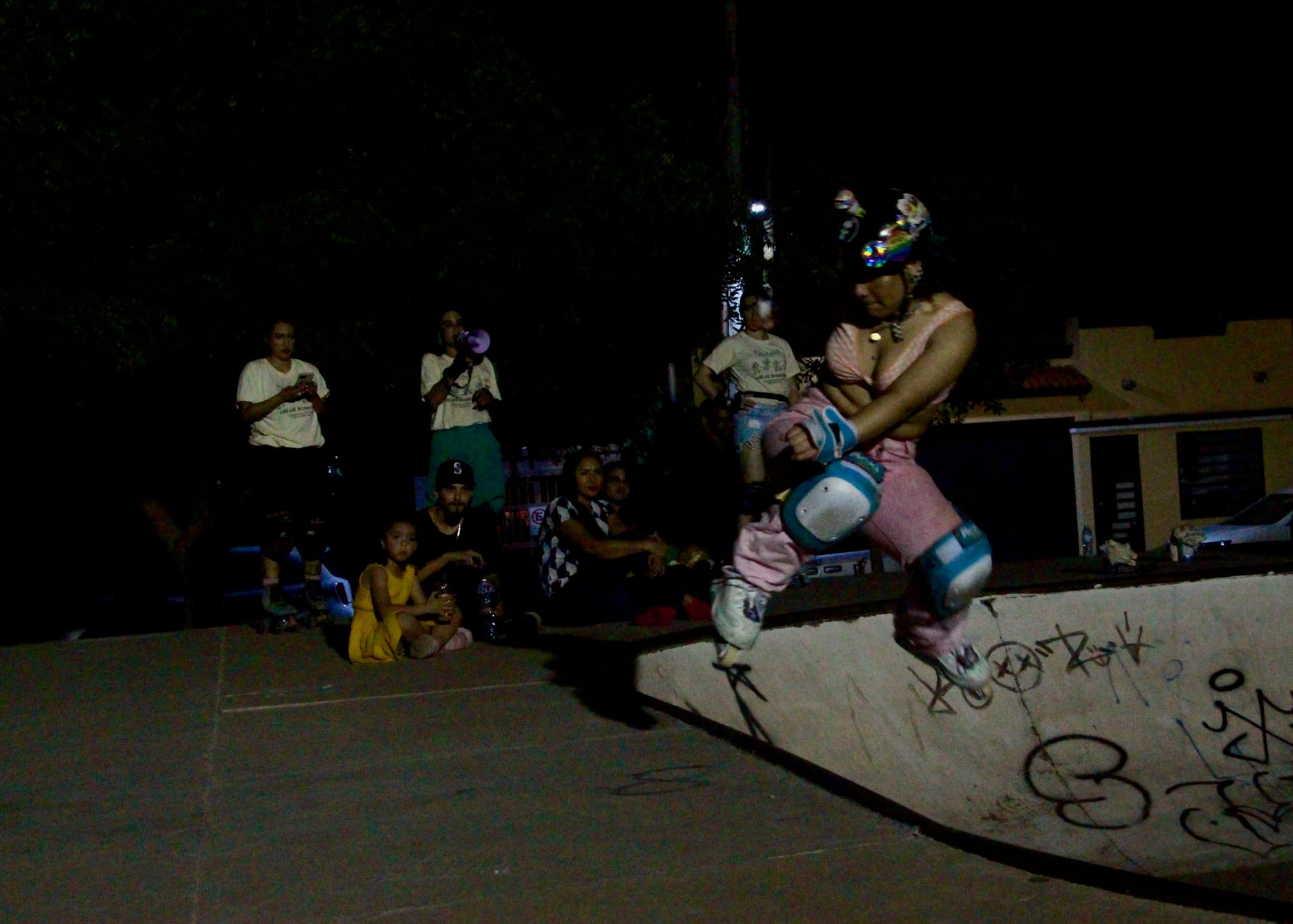
The binational rollout kicks off September 28, a Saturday, at the North Guaymas Skate Park. As the sun sets behind the mountains, skateboarders and roller skaters from all over Sonora and Tucson begin arriving at the park.
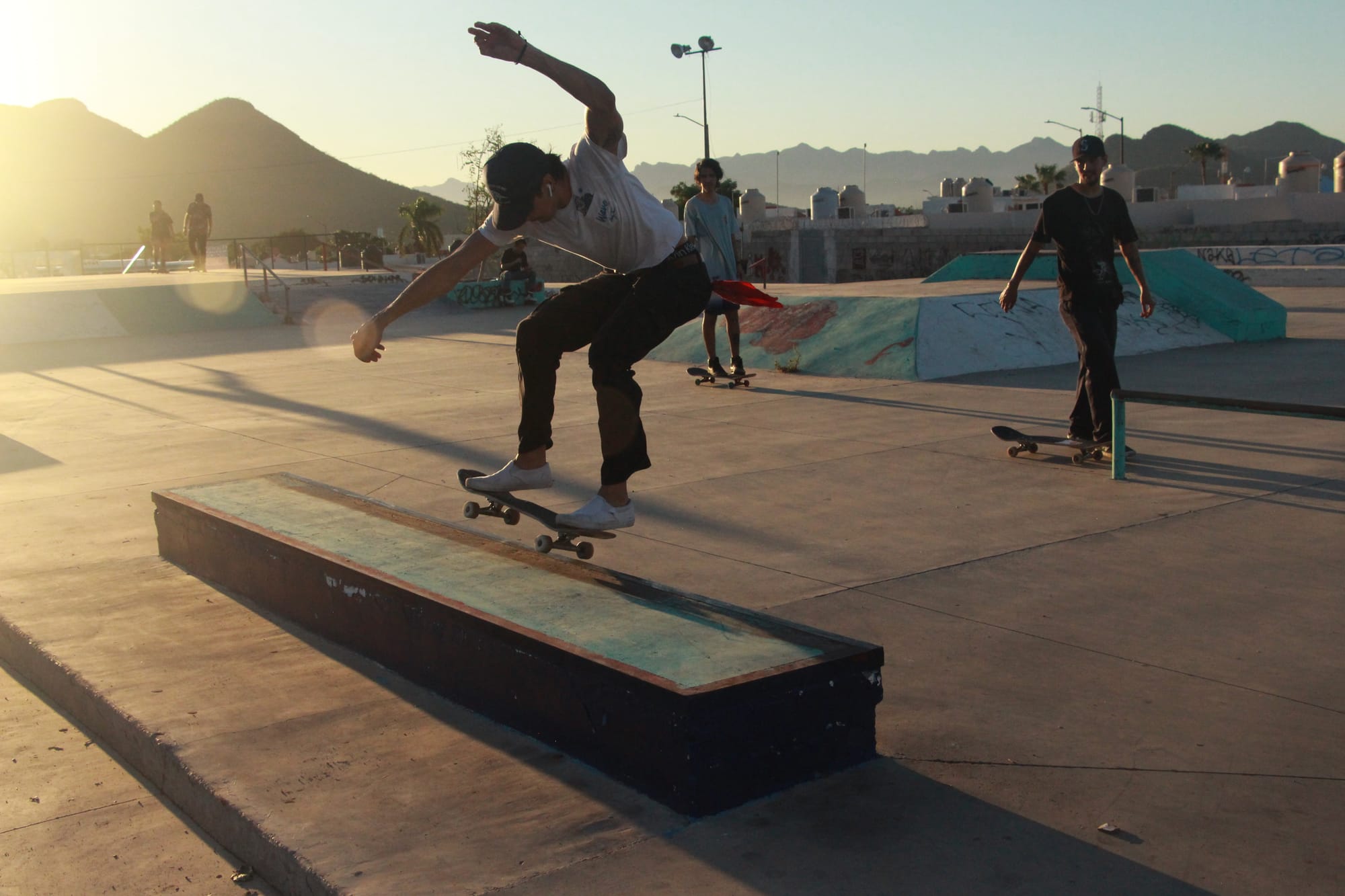
The event is a cash-per-trick competition, in which participants win 20-to-50-peso prizes for landing tricks, as well as skate gear donated by sponsors on both sides of the border for the more challenging tricks. Skaters attempt tricks like a 180 air, wherein the skater jumps forward, turns 180 degrees, and lands rolling backward. The event, with over 80 attendees, features an extensive women’s category, bringing us out of the margins, where traditional skate park culture places us.
“Walking in and seeing nothing but women, you feel a sense of power that isn’t easily described,” says Cecilia Villa, an organizer with Avenida Rollers in Hermosillo. “That we are strong, powerful. That no one can take that away from us.”
There’s a feeling of euphoria as our relationship begins to blossom, a feeling of liberation and invincibility that propels our burgeoning love story. The veil is lifted, revealing the stark absurdity of the border: a wall that tries to divide families and communities that are inextricably linked.
We find that there is much more that unites us than divides us—and that, for those of us from the U.S. side, we’re far more similar to our Mexican counterparts than to U.S. politicians at the Capitol who peddle divisive ideology.
“When you’re driving on the highway, if you didn’t see any signs, there’s no way that you would know whether you were in Mexico or in Tucson,” says Hanan Khatoun, a graduate student and organizer with the Tucson Roller Collective. “There’s stretches of desert, and the land is the same land: the same cactuses, the way that the mountains look, the same everything.”
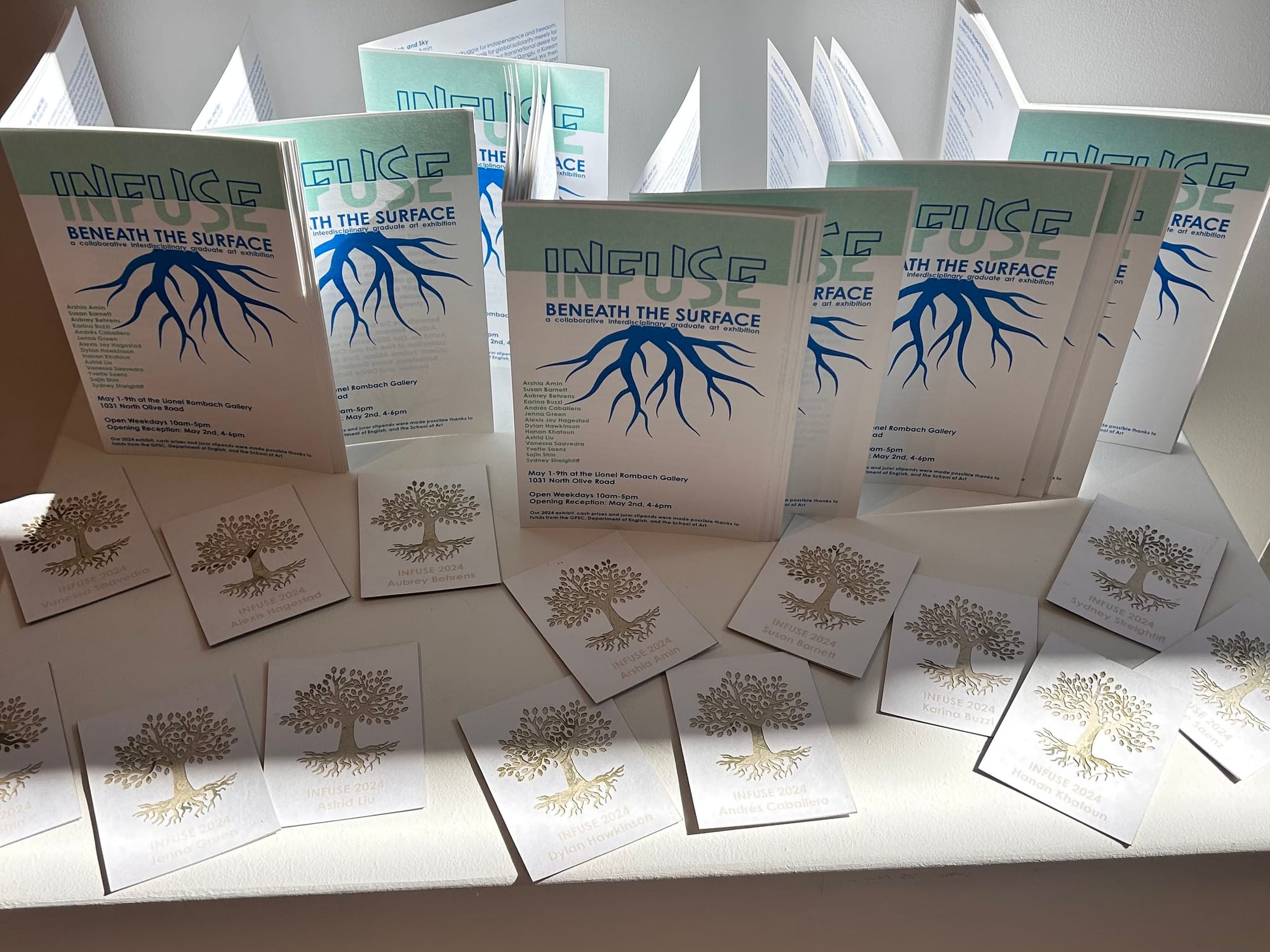
The forbidden romance began in April 2024 after a University of Arizona exhibition, titled “Infuse: Steeped in Tradition”, invited graduate students to reflect on the theme of borders. Khatoun and I, alongside community steward Joycee Quevedo, brainstormed ways to bridge communities across the border. The three of us knew each other through Tucson’s local skate community. Each of us had wanted to create a connection on the other side, but the exhibit gave us a reason to team up and make it happen.
The project helped us understand how communities can grow in parallel yet never organically connect because of a geopolitical border. The idea was to make contact with a roller skate community across the border in Sonora and see if we could meet them. We reached out via Instagram to see if they would be interested in hosting us for a day of skating and getting to know one another. They were immediately intrigued, telling us they would create an entire itinerary for our visit.
We met Avenida Rollers and Morras Patinando for the first time on April 7, 2024, in Hermosillo, where members introduced us to their city and skate culture. Among the skaters were artists, teachers, university students, activists, and community organizers.
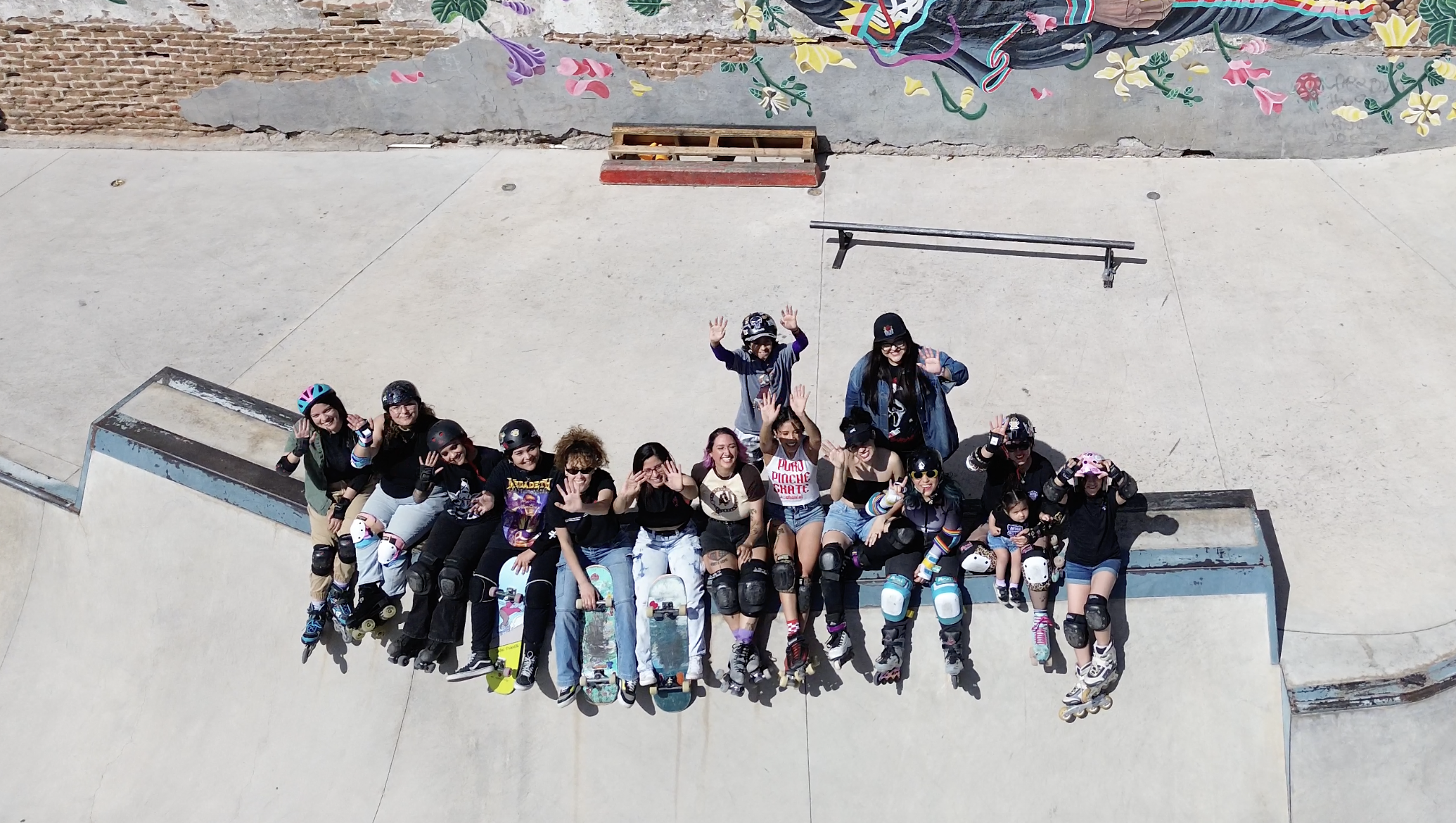
The meeting was like an awkward first date: it started with nervous introductions and navigating a language barrier for some, but the more time we spent together throughout the day and got to know each other, the more relaxed we became.
“The wheels brought us together. The language was the least of it,” says Villa. “It was seeing one another, how we skated, how tricks were shared, how all the encouragement and effort were recognized. That was what united us.”
At the end of the day, we sat at a skate park and talked about how the border had impacted our lives. The Mexican skaters shared their experiences of being unable to visit family or vacation on the other side and how being close to the border affected their culture. Living in the borderlands, most know English and are exposed to U.S. media and culture, and many adopt slang and customs from el otro lado. It was similar for us on the U.S. side: some of us speak Spanish, and many participate in Mexican culture and celebrate Mexican traditions.
The only thing separating us is a 20-foot wall.
The first meeting led to the creation of two art installations designed to resemble the U.S. Border Patrol checkpoint we passed through 25 miles into Arizona when we returned to Tucson.
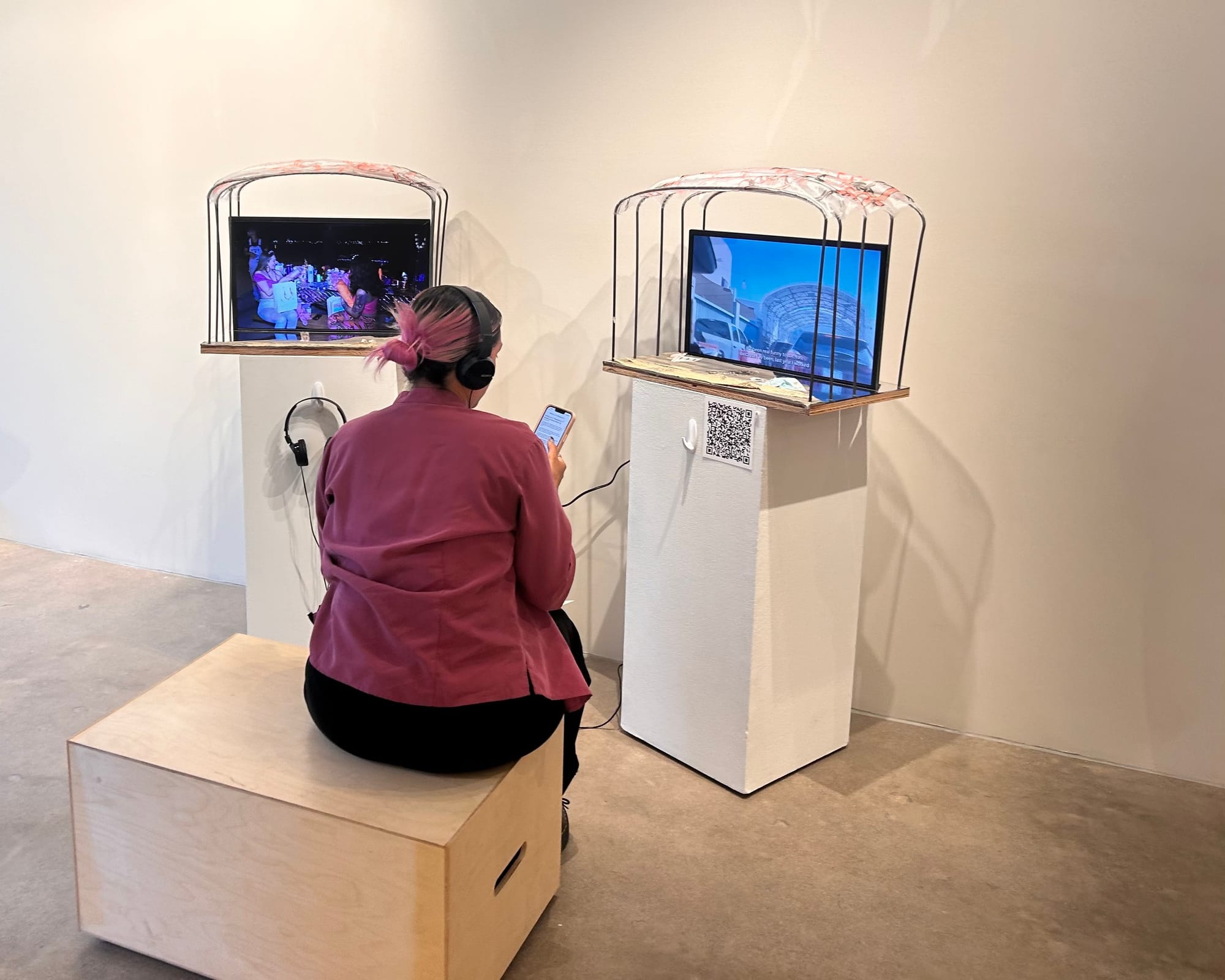
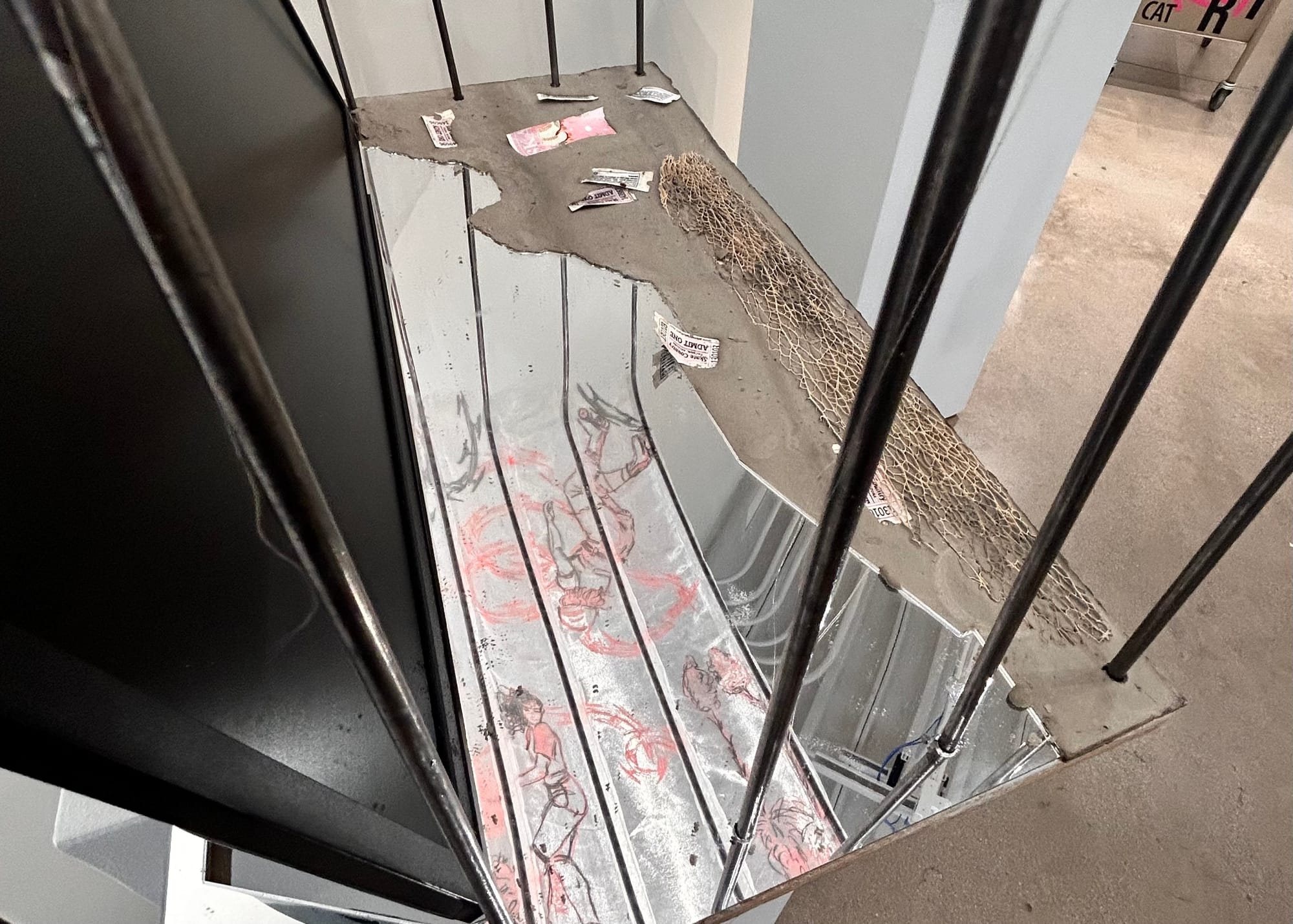
The concrete base held items from both sides of the border that illustrated our realities: the natural materials of the land, including a dried cholla cactus skeleton, an entry ticket for Tucson’s local rink, and a mirror that reflected our lived realities.
From the base of each installation rose small poles on either side that connected to a canopy, completing the mini-checkpoint. Painted onto the canopy was an image of us skating together, showcasing the beauty of redefining the border.
Inside the structure was a TV playing videos from both skate communities. Viewers could sit in front of the artwork, listen to both sides simultaneously, and see how we reflect one another.
On both sides, you could hear skaters encouraging one another, celebrating when a trick was landed by stamping their roller skates together, and urging each other to get back up and try again after a failed trick. We presented the installation at the University of Arizona’s Lionel Rombach Gallery and won second place.
“It was that first in-person meeting that made us think we could do something bigger,” Khatoun says. “We thought we could bring them all to one point to build community, compete, and enjoy each other’s company.”
Despite our first-date jitters, we both saw the promise of what this could look like if we all made the effort. There was a spark of connection between us.
Soon after, we founded the Tucson Roller Collective as a way to organize skaters in Tucson to become more intentional about fostering a binational community.
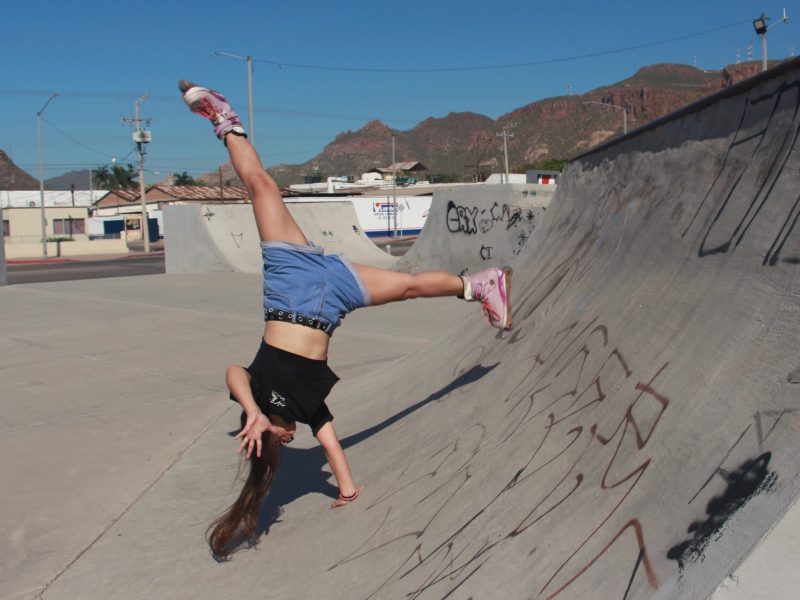
Then our binational relationship stepped up to another level. We began to meet virtually each week with skaters in Hermosillo to plan another rollout, a larger event in San Carlos, Guaymas, Sonora—a midpoint for many skaters in Sonora. We secured city permits, applied for funding, and coordinated travel and lodging for those interested in attending.
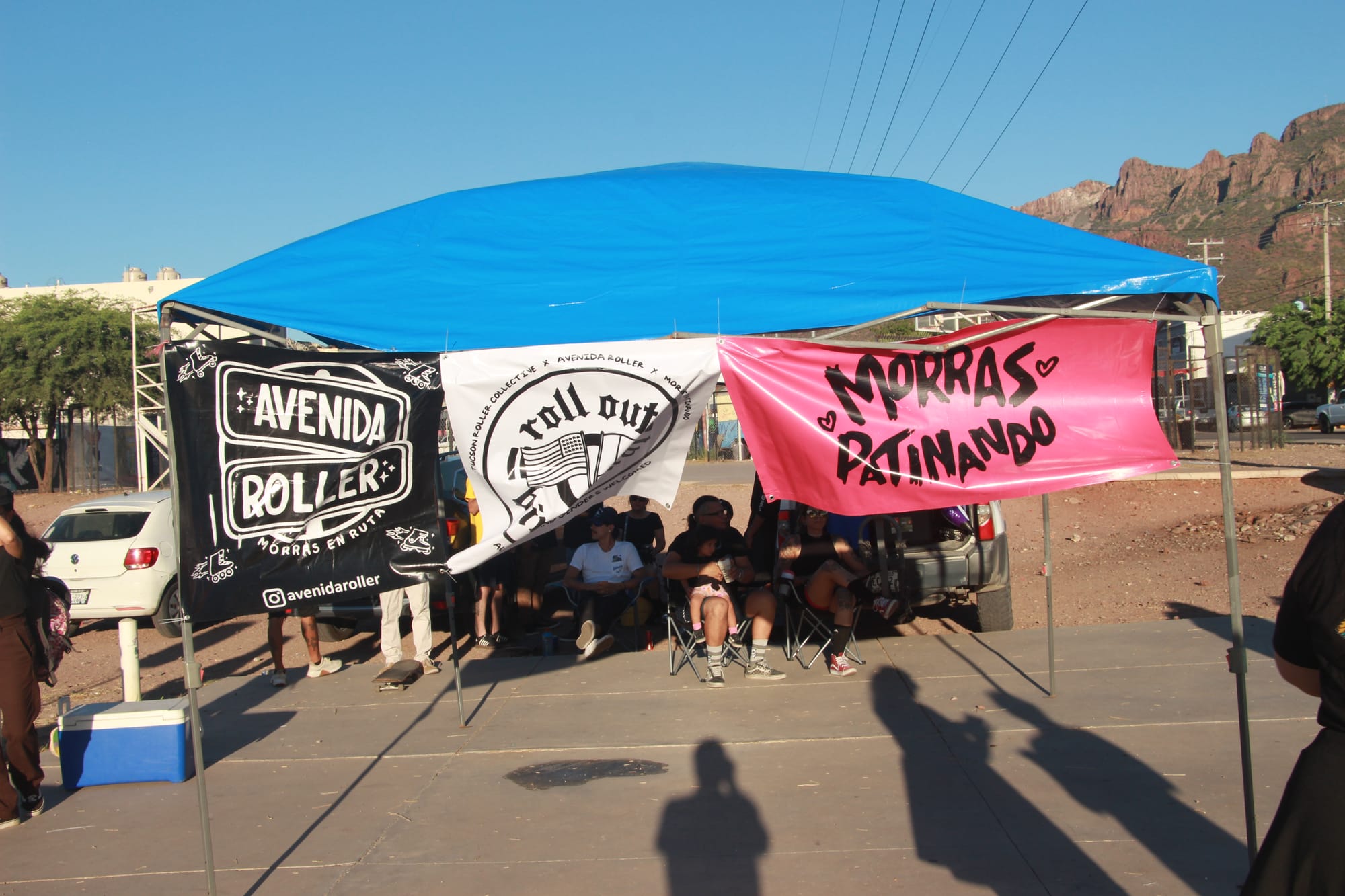
The event brought out over 80 roller skaters and skateboarders from Tucson and Sonora to compete in prize-per-trick competitions and showcases. As soon as the blazing sun set behind the mountain, the event began, and each participant was given time to perform a trick. Even locals came to watch, some bringing their children to see the skaters attempt difficult moves that require exceptional skill.
The atmosphere was energizing, with activity in all corners of the skate park. Some were practicing while others were sweeping areas to skate in. A small group sat behind a table selling event merchandise like shirts and stickers, and others sat under trees, watching the event unfold. As the night continued, more locals joined the crowd to watch the conclusion of the event.
A local skateboarder, unaware of the event, passed by and later returned to participate in the competition. At the end of the night, she walked away with a brand-new skateboard as her prize.
“It was surreal just realizing all of the work that we did despite being in completely different places,” Quevedo says. “That we could do it, and we’d already done it before, but not as organized as this.” Love was definitely in the air.
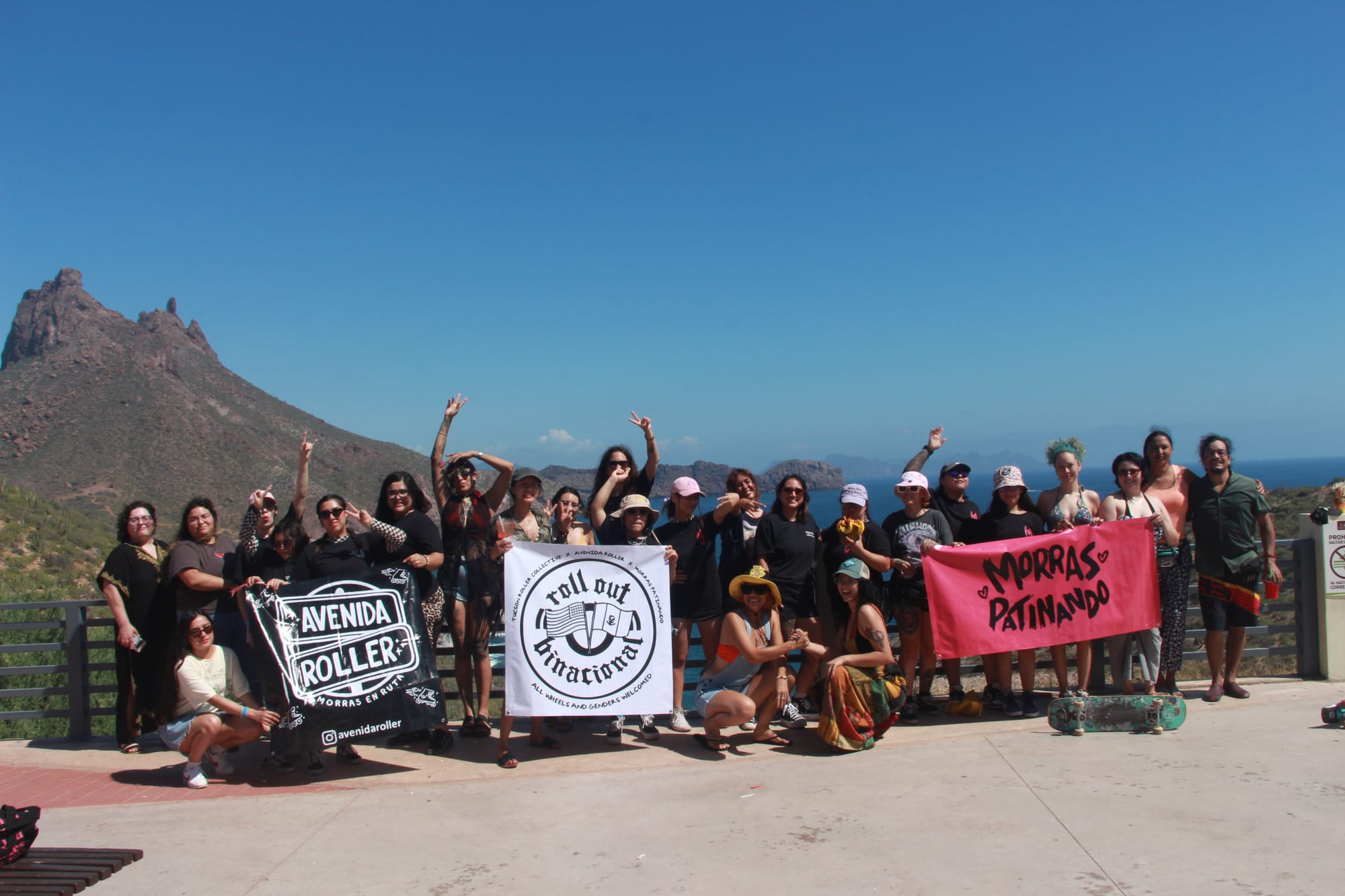
Hours later, the event organizers regrouped at a secluded beach in San Carlos. We were still riding the high of the event as we waded into the warm, bioluminescent water. We swam, sat, talked among ourselves, and took a moment to reflect on the day’s events.
Tropicalisimo Apache began playing over the speaker, and we got up to dance to the familiar cumbias I’d grown up with. I felt at home. I was in Sonora, the motherland, the state where both my parents grew up and where I spent many of my early years traveling. This was before my parents’ visas expired and the border became another barrier to finding this new kind of love.
But I also felt a tingling excitement: I was an adult, resisting geopolitical forces and basking in the richness that is otherwise sacrificed by allowing a border to determine what is possible. As we kicked up the sand with our feet, I felt it: I was falling in love with living on both sides of the border.
Despite our feuding nations, on a human level, we coexisted, connected, and created something beyond us—a sisterhood that doesn’t care about borders or hateful political narratives, but about finding common ground. In that moment, I realized that, more than just roller skating, I had been missing out on living a full binational life.
As a collective, we were seeing beyond citizenship.
“I’m not Mexican,” says Khatoun. “I wasn’t born here, but I was born in this land, and I want to have a connection to all of it, but I want it to be about the land and about the people, and not just about my American citizenship. I want to be grateful for all of it and experience it the way it was supposed to be, which is one region.”
In another world, the border could have kept us from meeting. But through conscious decisions, we’ve allowed ourselves to define where the borders of our lives extend, though that is not the case for everyone. We, of course, discussed doing an event in Tucson.
“If visas weren’t required, I think we would go. The main challenge has been the border, sadly,” Varela says. “The only thing that can’t be changed is the border and all the politics surrounding it. I really think that’s the only thing stopping us all from going.”
While these barriers seem unchangeable, our story proves that the border can be challenged. Maybe in the future, hosting our Mexican friends in Tucson can become a reality.
Since our first meeting, our organizations have grown. In Tucson, the organizing group has expanded from three to over 10 people dedicated to promoting roller skating events in the city. Hermosillo groups have remained active, hosting regular events that attract children, adults, and families.
Currently, only three out of over 10 organizers in Hermosillo have tourist visas and can enter the U.S. The main barrier to getting a visa is the time and cost, and even if you complete the entire process, your application can be denied. Getting a visa requires a rigorous process to ensure that applicants will return to Mexico, and having a secure job or being in college can validate your return.
Despite the rhetoric from U.S. leaders, the two countries have a vital and complex partnership that encompasses agriculture, the economy, trade, and history, and our emerging community reflects this. It’s a point of synergy where artists, activists, grassroots organizations, environmental groups, and many others connect, despite the bollards.
“I believe our binational community makes us stronger on both sides,” says Varela. “We are like two organisms working together, helping each other and becoming stronger. We are part of something that, by uniting, creates a single entity: the binational community.”
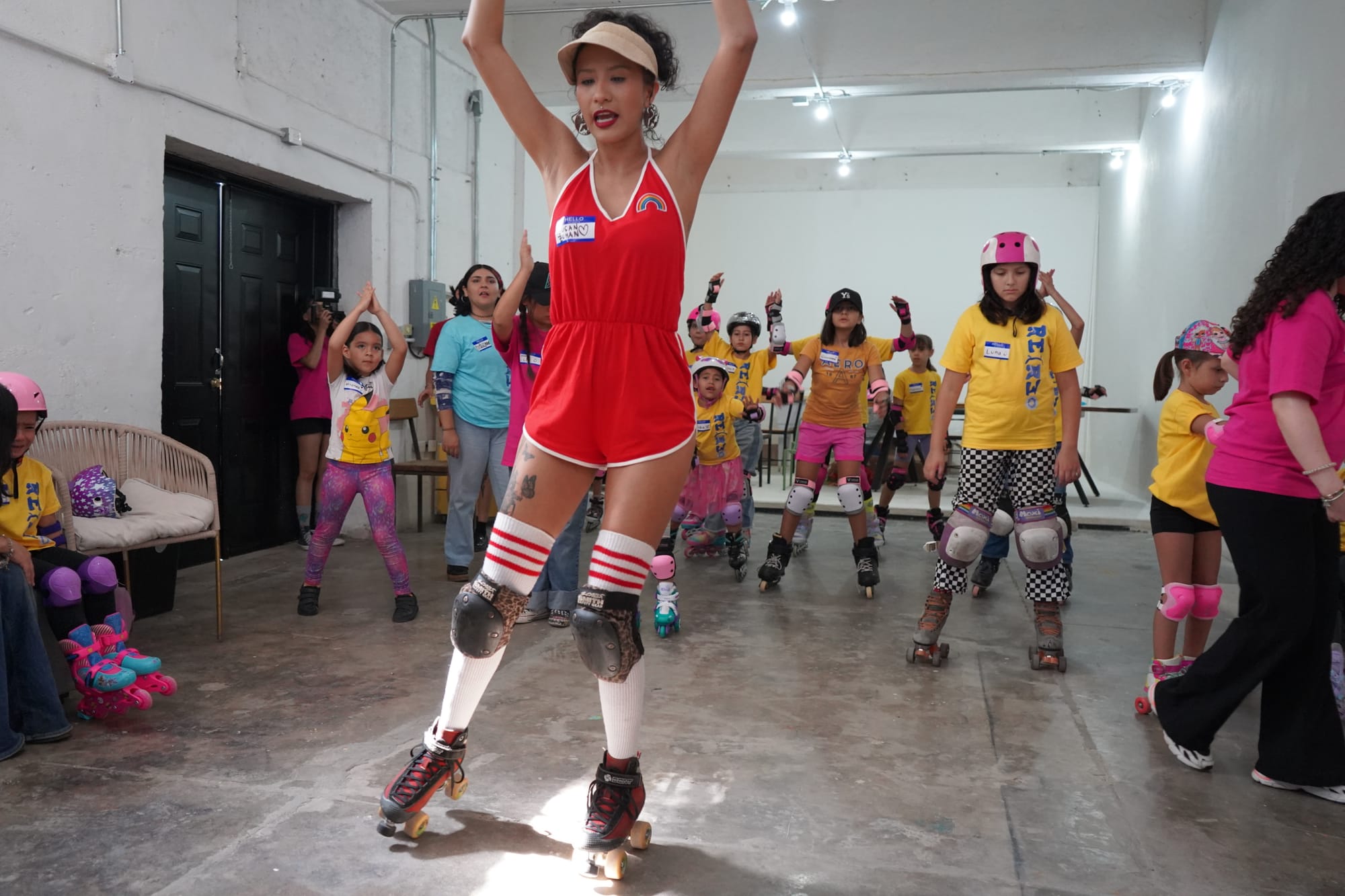
Throughout our friendship, we’ve donated skate gear, participated in RECREO—a summer youth roller skate camp created by Lili Villanueva, an inline skater in the Converse All Star’s Mexico global community—and collaborated on a Christmas gift and clothing donation for an underprivileged community in Hermosillo.
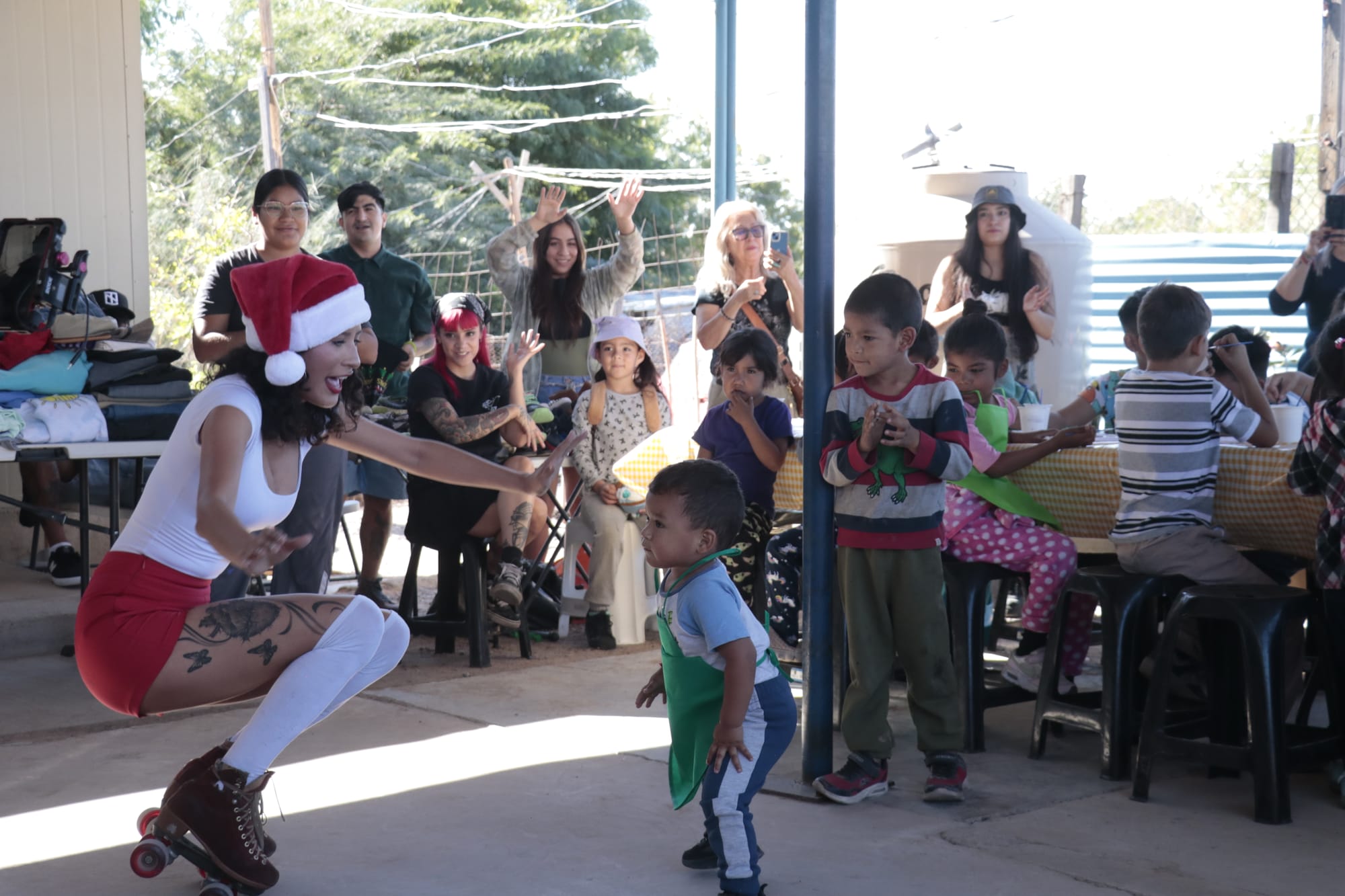
We might be star-crossed lovers, but unlike Romeo and Juliet, our story doesn’t end in tragedy.
“I’ve created a lot of really good friends over there that I hold dear to my heart,” Quevedo says.
And perhaps that is our true love: creating this binational community.
Support our independent reporting from the U.S.-Mexico border. Become a paid member of The Border Chronicle today for just $6 a month or $59 a year.
Related Articles
In a Mexicali Novel, a Secret and an Unraveling Childhood Friendship
Elma Correa’s award-winning Donde termina el verano follows two girls from the working-class outskirts of Mexicali whose friendship, guilt and memories are shaped by a childhood disappearance and the borderlands around them.
The Sonoran Desert’s Endemic Psychedelic: A Q&A with Writer Kimon de Greef
A new book tells the scandal-ridden tale of Sonora’s toad-smoking neo-shaman.
Reporter’s Notebook: NAFTA, Tijuana Art Week, and the Built Environment of the Baja Borderlands
A road trip through Baja California reveals how free trade, migration, and border policy have reshaped Tijuana’s landscape, and why the uncertain future of the USMCA invites new questions about what comes next.