Chad Wolf’s Illegitimate Border Wall Waivers: A Q&A with Scott Nicol
The Border Chronicle is back. We dig into the Good, Bad and the Ugly of July. August will be better, right?

A lot happened while we were gone—most of it, unfortunately, not good. For one, the World Meteorological Organization deemed July the hottest month on global record. “The era of global warming has ended; the era of global boiling has arrived,” declared United Nations Secretary-General António Guterres in a speech last week at UN headquarters.
Heat domes, drought, and flash floods are the lingua franca of the Anthropocene. In Tucson, where I live, the temperature hasn’t dipped below 100 Fahrenheit in weeks, and in El Paso, Texas, and elsewhere along the border, residents are living under excessive heat warnings. Amid this record-breaking heat, Border Patrol in the Tucson Sector, which has been under a federal court order since 2020 to improve detention conditions, is caging people outdoors. This inhumane and potentially fatal practice was recently documented by The Intercept’s Ryan Devereaux and photographer Ash Ponders.
In better news, the Justice Department filed a complaint demanding that Texas governor Greg Abbott remove his floating death barrier from the Rio Grande. It’s a long-awaited response from the federal government, which has largely gone along—if not worked in tandem with—Abbott’s unconstitutional, multibillion-dollar Operation Lone Star, since it began in 2021.
As part of Operation Lone Star, Abbott has placed a 1,000-foot-long barrier on the river near Eagle Pass. Not only is this pure evil, but it also flagrantly disregards binational water treaties. Mexico has already lodged a diplomatic complaint and is sending an inspection team to determine whether the barrier extends into Mexican territory and impedes the flow of water. (Spoiler alert: it does.) A local business owner from Eagle Pass has also filed a lawsuit saying that the barrier has destroyed his kayaking business.
The buoy barrier, as I wrote in June, is just another layer of “prevention through deterrence,” a long-practiced and deadly federal strategy. An email leaked from a Department of Public Safety trooper and medic, also revealed that they’ve been ordered to push exhausted families back into the Rio Grande, and that asylum seekers, including pregnant women and children, have received severe injuries from razor wire—which DPS creepily calls “casualty wire”—which Abbott has placed along the river.
After decades of prevention through deterrence, we already know Abbott’s Operation Lone Star won’t dissuade people from migrating, but it will kill more people, which is exactly what it’s doing—and all for political gain as Abbott and Florida’s governor, Ron DeSantis, compete for ever-more inhumane and attention-grabbing headlines leading up to the 2024 election.
The Border Chronicle will be digging into all of this and more in the coming months. As I noted earlier, not all the news in July was bad. The Sierra Club, ACLU, and several states announced the settlement of two lawsuits filed during the Trump administration, when the former president declared a national emergency to illegally transfer military and Treasury Department funds for wall construction. The settlement terms include funds to mitigate wildlife and environmental damage and a commitment from CBP to engage in environmental planning and consultation before installing anything that could devastate the fragile border ecosystems (like stadium lighting, which I wrote about in June).
This is welcome news, but as noted in today’s Q&A with Texas border educator and activist Scott Nicol there’s a lot more that President Biden and DHS secretary Alejandro Mayorkas could be doing to stop wall construction, which is still happening.

Chad Wolf’s Illegitimate Border Wall Waivers: A Q&A with Scott Nicol
President Biden Could Instantly Make Good on His Campaign Promise to Stop Border Wall Construction by Cancelling Trump-Era Waivers, says Nicol.
Remember Chad Wolf and Kevin McAleenan? The Trump administration years were a blur of cruel border policy and endlessly rotating appointees. The head of the Department of Homeland Security changed four times in four years—an unprecedented churn. So it wouldn’t be unusual if their names had receded from your memory. But both men served for a time as acting secretary of DHS.
Why is this important now? Three federal judges and the Government Accountability Office (GAO) have declared that the appointment of the former acting secretaries violated the agency’s policy on succession. Therefore, the two didn’t have the legal authority to rescind DACA or deny asylum recipients work authorization while they were at the head of DHS.
This also means that the many border wall waivers they issued for construction, which exempt federal laws, including the Endangered Species Act, are also in question. In late June, for the first time, DHS canceled a waiver after a federal judge ruled in favor of a 2020 lawsuit filed by Texas landowners that Wolf had not been lawfully appointed as secretary of DHS when he issued the waiver to build 71 miles of wall in Zapata and Webb counties.
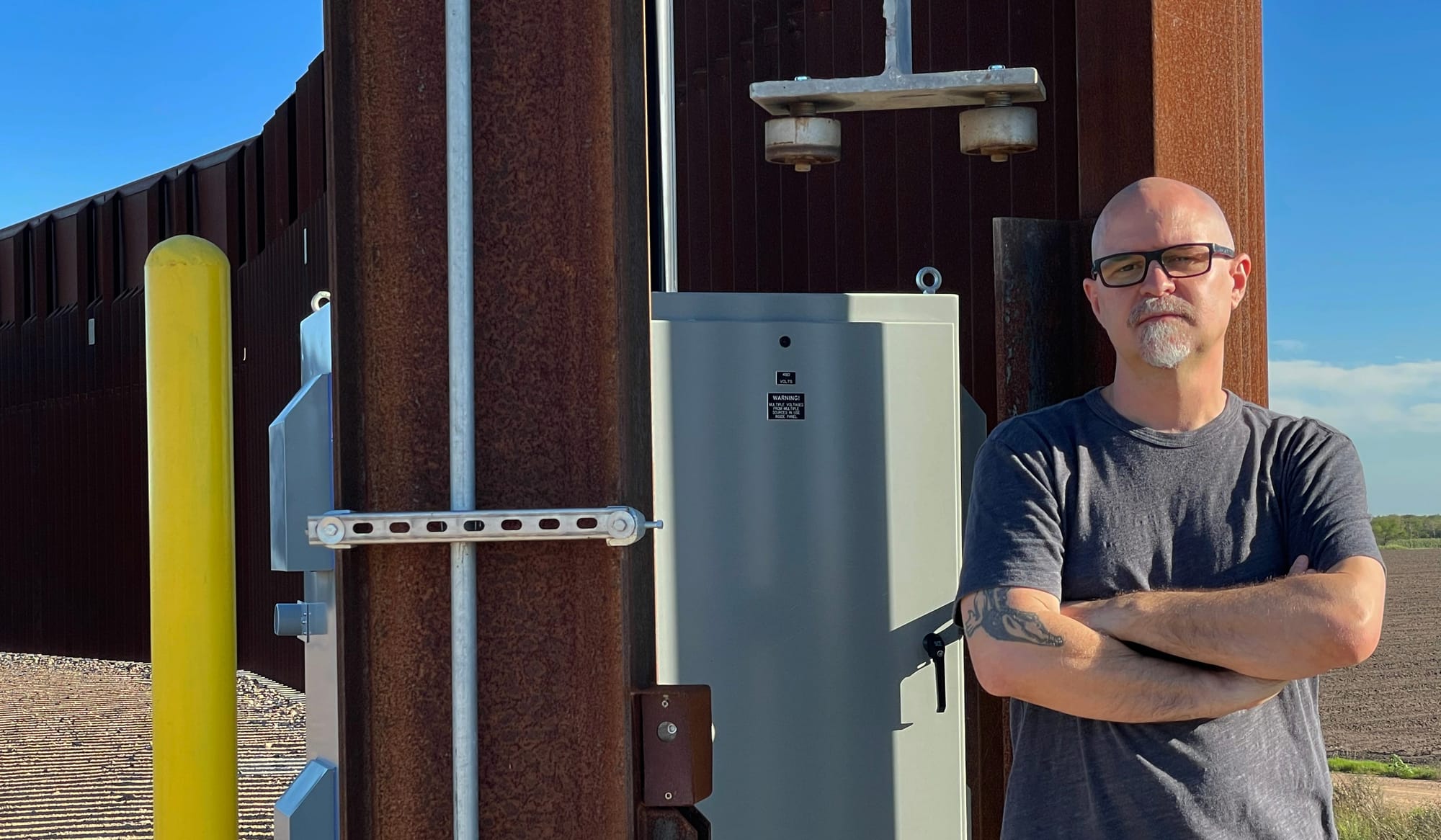
DHS’s cancellation of the waiver was a rare and significant win for border residents, and it got Scott Nicol, an expert on border wall construction and policy in South Texas, thinking about the other 21 waivers issued by Wolf and McAleenan that are still in place. Why don’t the Biden administration and DHS follow suit and cancel the rest of those unlawful waivers? In this Q&A, Nicol explains what more the Biden administration could do to keep his campaign promise of “not one more foot of wall.”
Two important announcements were made in June regarding border wall construction, which the Biden administration is still undertaking, despite the president’s campaign promise that he wouldn’t do so. Can you explain the significance of these announcements?
The national news has largely moved on from reporting on the wall. So, when Republicans say, “Biden has abandoned the border” or whatever else, the media isn’t there to say, “Wait, that’s bullshit.”
The one about the waiver, it was very under the radar, and there was no announcement. It just showed up in the Federal Register. And even in the Federal Register, there was no explanation for it.
Every time the Trump administration put out a waiver to build border walls, it always tried to justify it by saying, “Oh, this is a place that has a lot of border crossings and smuggling” and stuff like that. They’d put in statistics that were generally misleading because they would cover an entire sector, even though the wall would cover only a portion of that. And they didn’t include any historical context. But at least they’d go through the motions.
This one was unusual, because the Biden administration didn’t explain at all why the waiver for Zapata and Webb County is being rescinded, and it was very explicit that no other waivers will be rescinded.
I think it was canceled because Zapata County challenged that waiver. They made the same constitutional challenges that other plaintiffs have attempted before. And that courts have struck down and that the Supreme Court has not been interested in ruling on. They also claimed that the waiver was coming from a place of racial animus on Trump’s part. All their arguments were shot down by the judge, except for one: that Chad Wolf was not really the secretary of Homeland Security when he issued the waiver, which is true. When Wolf and Kevin McAleenan before him were announced as acting DHS secretaries, that wasn’t following the proper order of succession. And then they were never confirmed by the Senate. So they were not legitimately secretaries of Homeland Security or acting secretaries of Homeland Security.
The judge in the Zapata case said, I’m striking every argument you make, except that one. And then the parties were supposed to continue to argue on that point. But by rescinding that waiver, Mayorkas mooted that argument. There’s nothing to argue over if there’s no waiver in place anymore.
If this contested waiver has been removed from further scrutiny by a judge, what does that mean strategically for further wall construction?
It’s a way to prevent a judge from ruling that Wolf’s waivers are illegitimate. I think the Biden administration wants to make sure that doesn’t happen, because there are 11 waivers that Wolf issued, and 10 more that McAleenan issued. If a court strikes down the one waiver, then by extension, the others could also be contested and eventually struck down.
For some of these waivers, those walls haven’t been built yet. For instance, in Starr County, there’s a waiver that Wolf issued where walls have never been built. But there’s a lot of places where they have. These waivers continue to get relied on to rebuild walls or add to walls and do other things in conjunction with them. So striking 21 waivers would definitely make a difference.
So why wouldn’t the Biden administration rescind all these waivers?
Having a waiver in place saves the Biden administration from having to issue a waiver. They’re just relying on the bad thing that Trump did, so as not to have to do the bad thing themselves.
They’re essentially riding on Trump’s coattails.
Yes, and that leads to the second announcement, which is that they’re going to restart border wall construction. They’re doing what they call “make safe” or “filling in the gaps” in Arizona. These are places where walls were half built. You have all these different size gaps, some small, some significant. Filling in these gaps are environmentally destructive. There are places where just that small gap is the only way that wildlife or water can pass through.
They also announced that they’re going to restart construction on 20 miles of border wall in Starr County, and some of that border wall construction is covered by waivers that were issued by Wolf.
So if Secretary Mayorkas hadn’t canceled that waiver, the federal judge overseeing the Webb and Zapata County case probably would have declared it unlawful?
If a court struck down one of Wolf’s waivers, and by extension called all his other waivers into question, they wouldn’t be able to rely on them anymore. Instead, the administration can restart construction in Starr County.
And this is wall construction that Congress appropriated money for when Trump was in office, right?
The Biden administration says repeatedly in press releases that they must build it. They don’t have a choice, because Congress didn’t step up to the plate and rescind the border wall funding. I partly blame U.S. Congressman Henry Cuellar, because it’s his district (Starr County), and he made no real effort to get money rescinded or to stand up for his constituents who could be losing their property because of that wall. I mean, he voted for that funding.
It sounds like it might be good legal strategy, then, for landowners to challenge the legality of these waivers issued by McAleenan and Wolf.
I think legal organizations largely haven’t challenged the Wolf and McAleenan waivers because they were all focused initially on the REAL ID Act, saying you’d have to file a legal complaint within 60 days of the waiver coming down. The finding by the GAO that Wolf wasn’t legally acting secretary, and then the subsequent court rulings all came after that 60-day window. So, people didn’t challenge it. But I don’t see why they couldn’t do it now. One key aspect of the REAL ID Act is that it invests power only in one person’s hands. Only the DHS secretary can waive those federal laws to build wall. And if you’re not the secretary of Homeland Security, you can’t waive laws. It’s that simple.
Author
Related Articles

Banishing the Elders: How Southern México Has Become Part of the U.S. Deportation Regime
The United States is deporting Cuban seniors by the hundreds to southern México where they have little hope of return.
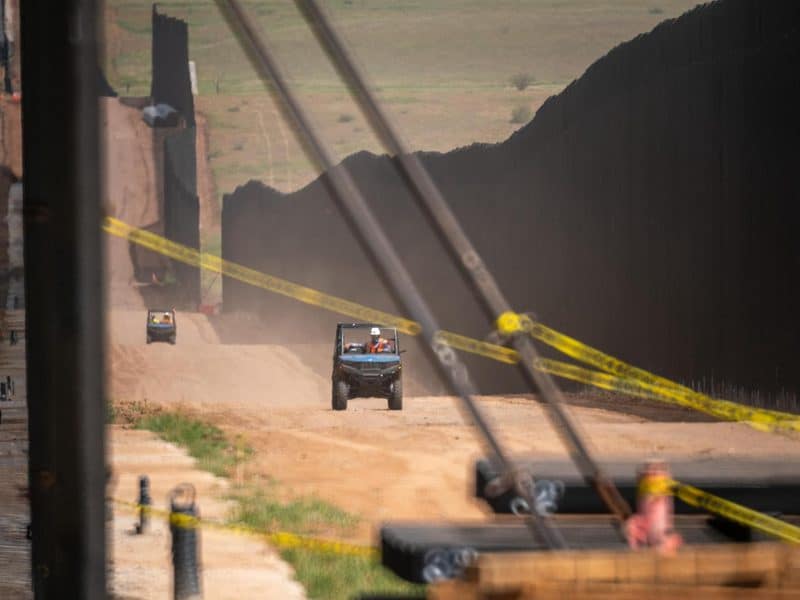
Introducing the Wall Watch Project and Contractor Database
Explore the companies, contracts, and construction projects reshaping the U.S.–Mexico border—and get ready for a new series of Wall Watch Dispatches.
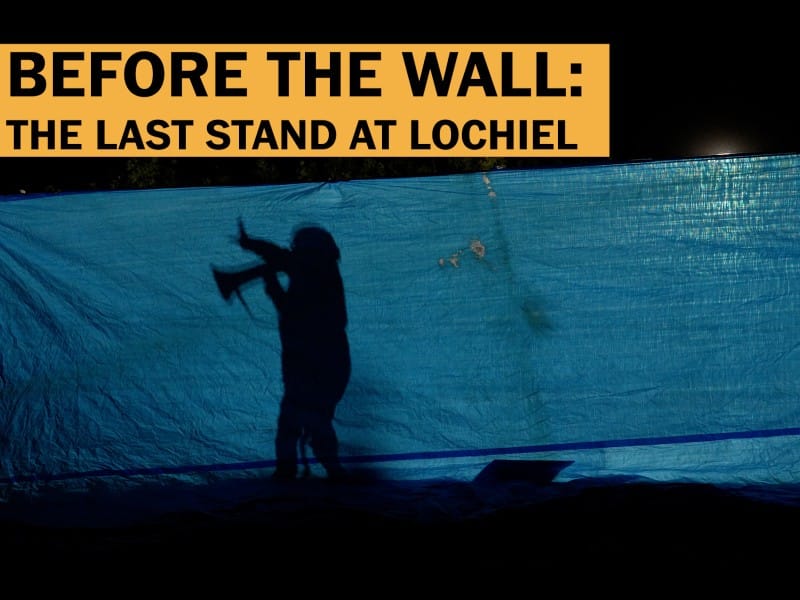
Before the Wall: The Last Stand at Lochiel
As a double border wall rises through Lochiel, protesters gather to defend the ancient cottonwoods and the San Rafael Valley.