Buh Bye Kristi Noem, and who the heck is Markwayne Mullin? Trump's new pick for DHS secretary. Plus, an epic novel about the U.S. and Mexico's joint erasure of Apachería, and historian and author Lydia Otero on Tucson's racial and urban history, and more.
Historian and writer Lydia Otero on growing up in the borderlands, Tucson's racial and urban history, and their most recent book, Storied Property: María Cordova's Casa.
In 2004, Michael and Chantell Sackett purchased a plot of land near Priest Lake, Idaho, in the picturesque northern reaches of the state’s panhandle. On one side of their lot, a row of houses separated them from the lake; on the other, a 30-foot-wide road separated them from a wetland called the Kalispell Fen. To construct a home on their marshy land, they began to backfill it with soil and gravel. When the Environmental Protection Agency caught wind of this, regulators told the Sacketts that because their property was part of a wetland, they had violated the Clean Water Act. The agency threatened the couple with a fine of $40,000 per day if they did not restore the site.
Instead of complying, the Sacketts sued the government. The case lasted decades, culminating in a Supreme Court case. In 2023 the court decided in the Sacketts’ favor. Its ruling narrowed the legal definition of the “Waters of the United States” (WOTUS), which are the waterways that the federal Clean Water Act oversees.
The text of that law broadly defines the WOTUS as navigable waterways and their adjacent wetlands. Yet in recent years, what exactly “adjacent” means has been a matter of debate. In its 5–4 decision in 2023, the court determined that protected wetlands must have a “continuous surface connection” to be considered adjacent to waterways.
For environmental advocates, the Sackett decision, as it’s known, dealt a major blow to water protection, disregarding scientific evidence about how waterways flow and connect. The decision was nowhere more impactful than in the U.S.-Mexico borderlands. That’s because after the Court’s ruling, the EPA determined that intermittent and ephemeral waterways—those that don’t run year-round—were no longer protected by the Clean Water Act. In both Arizona and New Mexico, over 90 percent of all stream miles don’t run all year. A decision made with Idaho homeowners in mind meant that much of the Southwest risked losing clean water.
The Sackett decision came on the heels of several previous cases that limited the scope of the Clean Water Act—and that had a particularly harmful impact on the borderlands. “This has just been an onslaught across the arid Southwest by agencies and justices that don’t understand the hydrology,” said Rachel Conn of the New Mexico environmental organization Amigos Bravos in an interview with TheBorder Chronicle. Additionally, many of those intermittent (seasonal) and ephemeral (carrying water only after storms) waterways cross the U.S.-Mexico border, meaning that regulating discharge into them isn’t just a local issue but an international one.
As the federal government steps back, New Mexico is leading the way in filling the regulatory gap.
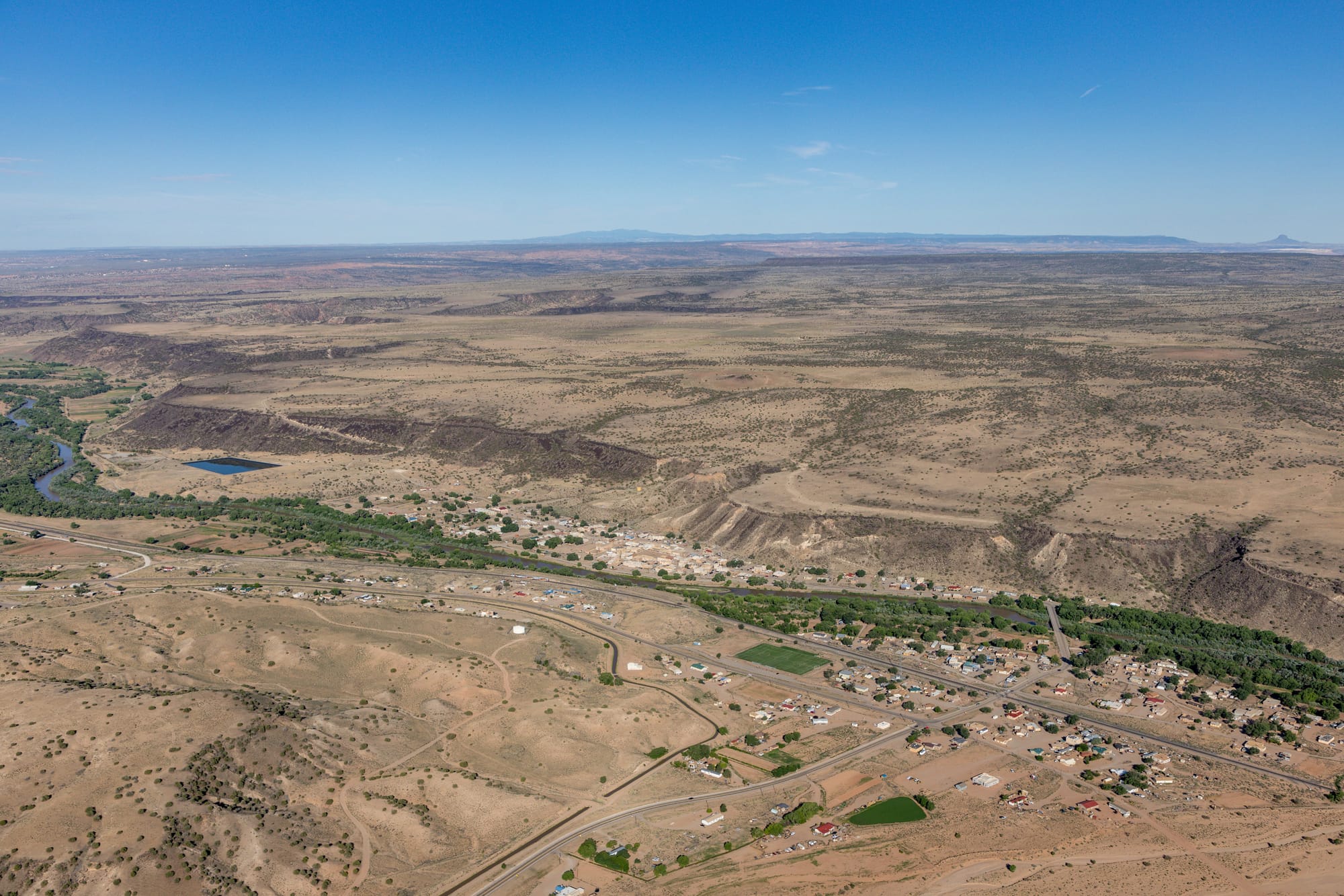
The Rio Grande near Albuquerque. The river increasingly runs dry for significant stretches. Though the EPA still requires permits for surface water discharges into it, “I’d be lying if I said this wasn’t a concern,” said Jonas Armstrong of the New Mexico Environment Department. (Image: Mitch Tobin/The Water Desk with aerial support by LightHawk)
The Clean Water Act, first passed in 1972, regulates the dumping of waste into waterways considered to be WOTUS. For 30 years, the law remained in its original form. Yet in the past 20 years, it has seen four significant reinterpretations.
In 2003, the Supreme Court determined that the Army Corps of Engineers had overstepped the Clean Water Act in requiring a permit to dump dredge-and-fill material into an isolated body of water in Illinois that did not connect to any navigable waters.
In 2006, the protracted Rapanos v. United States case created new uncertainty about which wetlands were protected by the act. This led to an interpretation called the 2015 Clean Water Rule. According to Conn, it caused a loss of protections for New Mexico’s closed basins—those that drain inward rather than to the sea—which make up 20 percent of the state’s territory.
In 2020, under the first Trump administration, the Navigable Waters Protection Rule was implemented to roll back the Clean Water Act’s protection of wetlands. The 2023 Sackett decision cemented its restrictions on the Clean Water Act.
Though initially the Biden administration’s EPA was tasked with creating a rule to implement the Sackett ruling, on November 17, 2025, the Trump administration’s EPA released its own, revised version.
“It takes the most extreme interpretation of the Sackett decision,” said Conn.
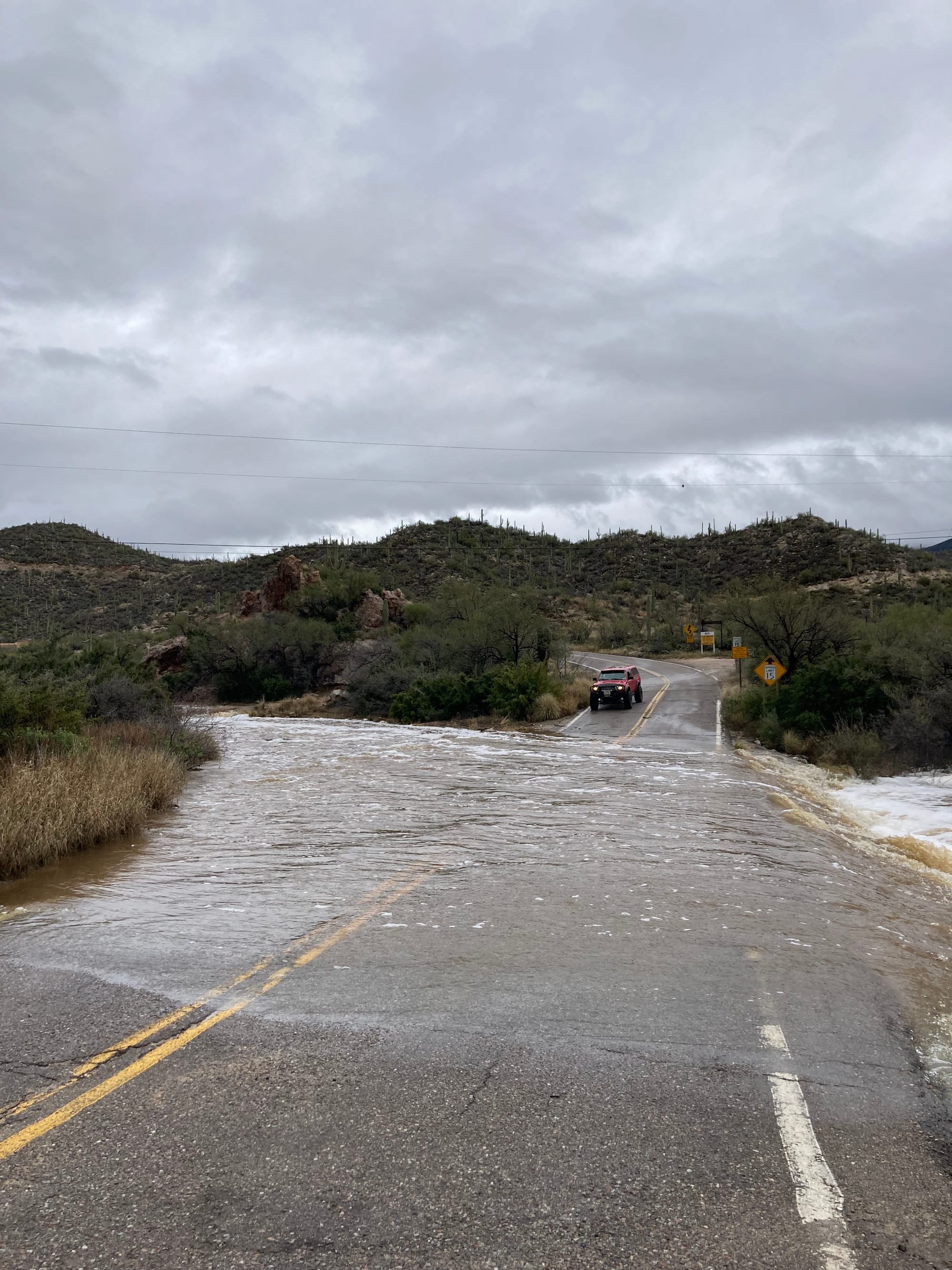
Southern Arizona’s Tanque Verde Creek, an ephemeral waterway, during a rain event. (Image: Caroline Tracey)
Many considered the Sackett decision devastating for the Southwest because it removed ephemeral and intermittent waterways from federal protection. Now, if a creek goes dry for part of the year, no permit is required to use it as a dumping ground for, say, waste from a construction site or oil well.
“What the Supreme Court said was that despite 50 years of precedent protecting ephemeral water, the Clean Water Act doesn’t actually do that,” said Jonas Armstrong, director of the Water Protection Division of the New Mexico Environment Department.
Just because a stream does not run year-round does not mean that it is not ecologically significant. As a 2008 EPA report states, “Ephemeral and intermittent streams provide the same ecological and hydrological functions as perennial streams by moving water, nutrients, and sediment throughout the watershed.” Because of the moisture they capture, ephemeral waterways also nurture plant and animal diversity. They also replenish groundwater sources that many communities rely on for drinking water.
“We might think, ‘How important can rivers that go dry really be?’” said Tricia Snyder, the New Mexico Wilderness Alliance’s Rivers and Waters program director, in an interview with TheBorder Chronicle. “But water is connected in ways that we can see and ways that we cannot see. We are talking about streams that bleed into some of our most iconic rivers, drinking water for communities. If we’re not protecting those streams, we’re risking much more as we carry on.”
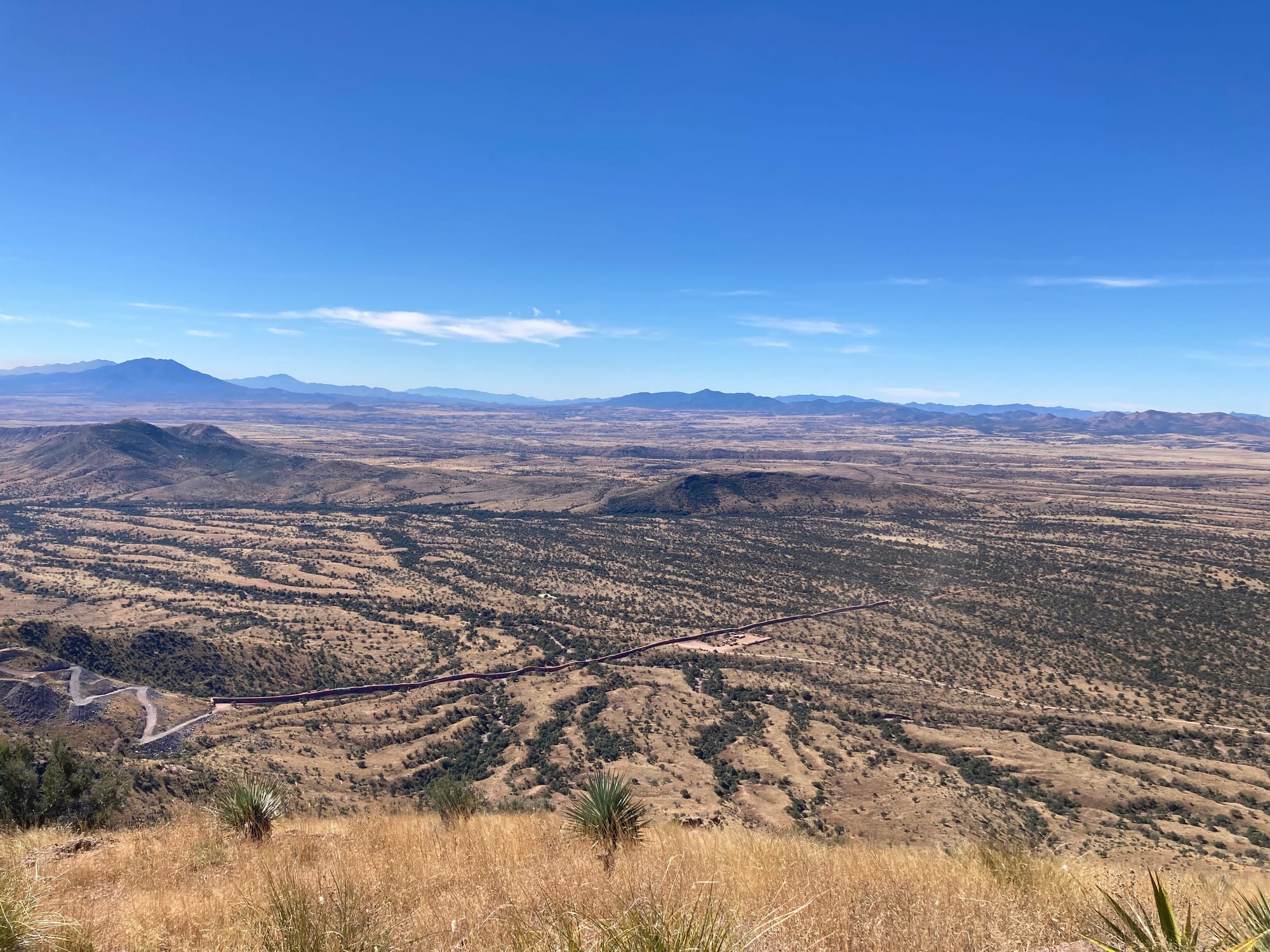
Looking from the Coronado National Monument into Sonora, Mexico, including ephemeral waterways, many of which cross the international border. (Image: Caroline Tracey)
In the Sackett decision’s aftermath, said Snyder, “arguably nowhere was more vulnerable than New Mexico.” According to her organization’s estimate, 96 percent of the state’s waterways lost federal protection thanks to the Supreme Court decision.
So, in January 2025 advocates and lawmakers responded with Senate Bill 21, the Pollutant Discharge Elimination System Act, which was signed into law by the governor on April 8, 2025.
The law oversees the waters that are no longer protected by the Clean Water Act, requiring a state-level discharge permit for any activity that no longer requires a federal one. In effect, the state is moving to protect what the federal government has abandoned.
“And if federal law continues to get narrower,” said Armstrong, “ours is elastic to continue filling the gap.” The nuts and bolts of the law’s implementation are being worked out, and the New Mexico Environment Department intends to begin issuing permits in early 2027.
In neighboring Arizona, about 95 percent of total stream miles are ephemeral. After the 2020 Navigable Waters Protection Rule, the state also created its own program to bridge the gap between the waterways protected by the narrowing federal oversight and those that the state considered important to regulate. The Arizona Department of Environmental Quality was given the authority to create a Surface Water Protection Program in 2021, and it became effective in 2023.
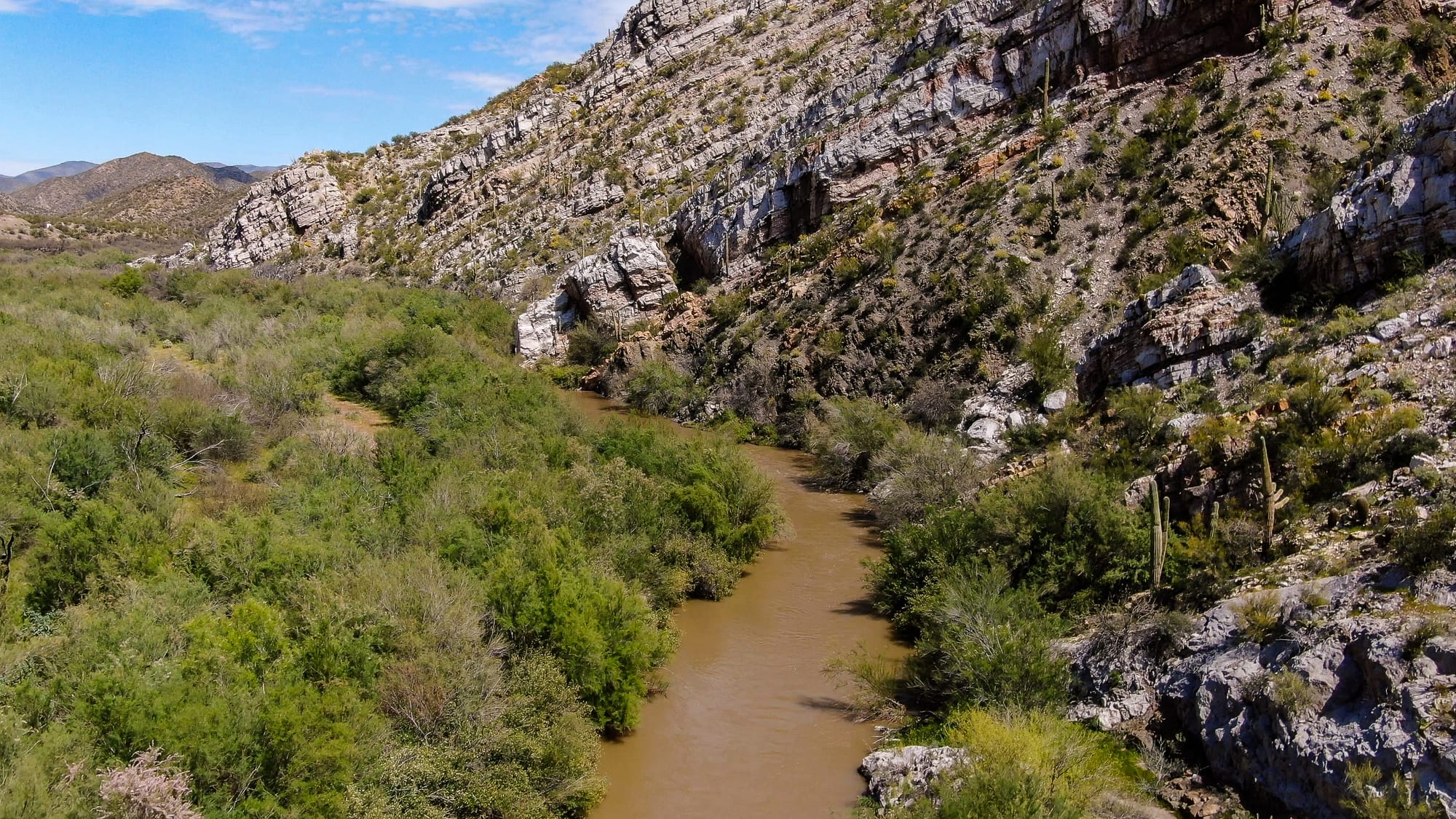
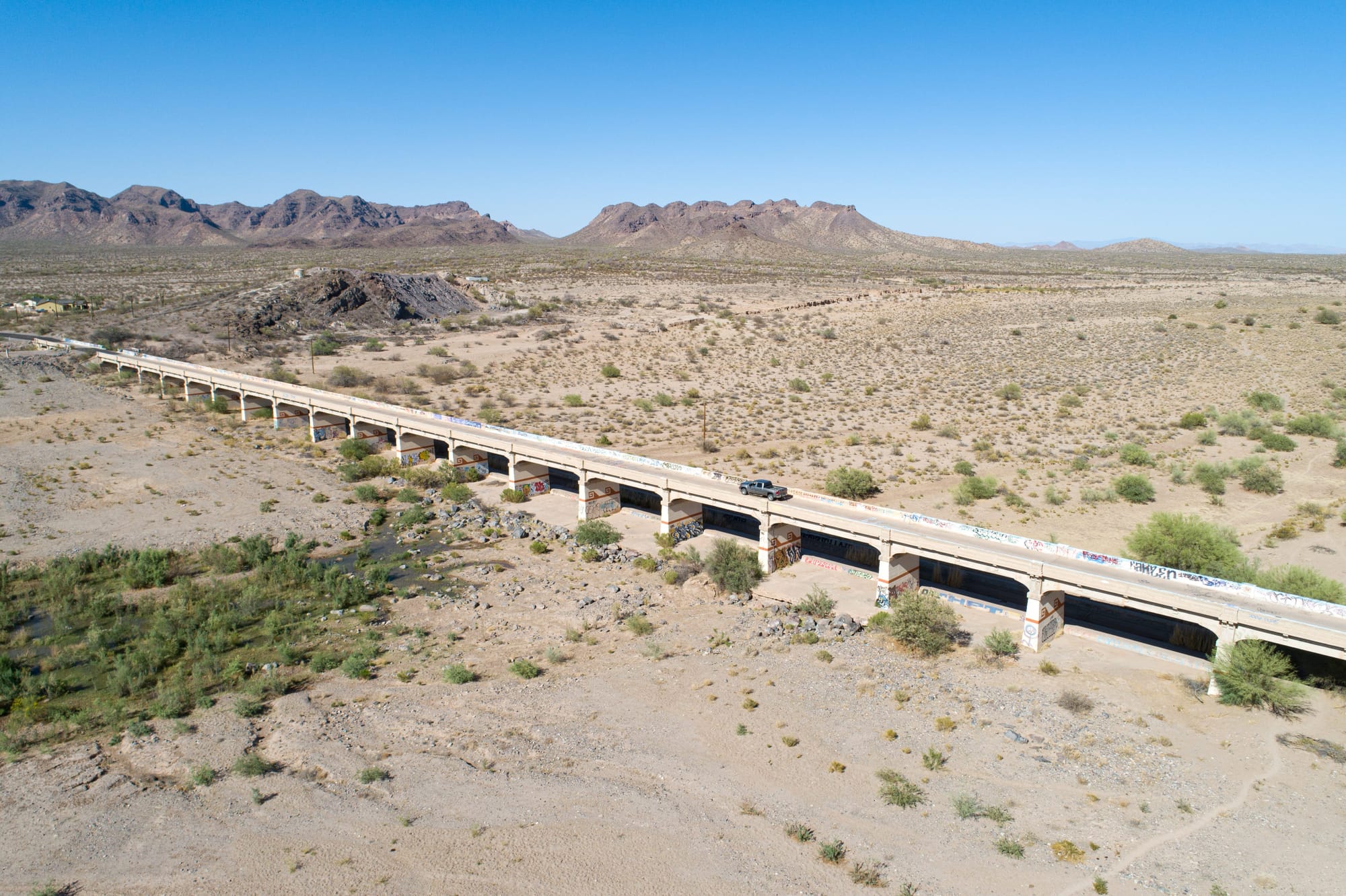
The Gila River near Winkelman, Arizona. Because the EPA’s new interpretation of the Clean Water Act no longer includes rivers that cross state boundaries, it may not include the Gila, which runs dry in stretches during much of the year. However, both Arizona’s and New Mexico’s state surface water protection programs include the river. (Image: Mitch Tobin/The Water Desk)
Like New Mexico’s SB21, Arizona’s Surface Water Protection Program is based on the Clean Water Act. It covers permitting and compliance, and imposes limits on discharge. With the federal law facing repeated re-interpretations, the state wanted to clearly establish which waterways required permits and oversight.
“The definition of WOTUS keeps going up and down depending on which administration is proposing a rule,” said Trevor Baggiore, director of the Water Quality Division of the Arizona Department of Environmental Quality. “The idea is that the surface-water protection program provides a baseline that no matter what the federal rule does, the state rule is going to protect certain waters.”
Where New Mexico’s SB21 covers both intermittent and ephemeral waterways, Arizona’s Surface Water Protection Program covers only intermittent waterways and those ephemeral streams that feed into the state’s eight major rivers. When asked whether there are plans to expand Arizona’s program to include all ephemeral waters, Baggiore replied, “That’s a great question for state leadership.”
It would also be a good question for leadership in Texas, another border state whose arid western half has many intermittent and ephemeral waterways that federal rollbacks have left open to unrestricted dumping. In its 2025 legislative session, California lawmakers introduced Senate Bill 601, aimed at regulating discharge into waterways no longer covered by the Clean Water Act, but it did not advance to become law. (Colorado, for its part, created a program to require dredge-and-fill permits for wetlands, but has not moved to protect its ephemeral waterways.)
“Now that the federal government has walked away, it’s up to the states to say these waters matter or not,” said Snyder. “In New Mexico, the answer is loud and clear that yes, we have to step up, we’re going to protect them for future generations.”
A dry stretch of the Gila River near Florence, Arizona. (Image: Mitch Tobin/The Water Desk)
This article was produced with support fromThe Water Desk.
Walking from a blasted mountain top--a planned site for new border wall construction--to a makeshift military camp along the border in a remote part of southern Arizona led to a tense yet revelatory moment.