Do you have questions about the recent buoy debacle on the Rio Grande? Our reporting has you covered, plus an important new hire at The Border Chronicle, and our new project Wall Watch.
As floodwaters swept hundreds of one-ton border buoys downstream, international bridges closed, commerce slowed, and officials struggled to get answers from DHS about a project advancing despite local opposition, environmental concerns, and treaty questions.
Hundreds of massive orange buoys staged for a controversial DHS floating barrier project broke free near Eagle Pass and are now drifting toward Laredo, threatening bridges, commerce, drinking water supplies and downstream communities.
Telling the Stories of Urban Change in the Borderlands
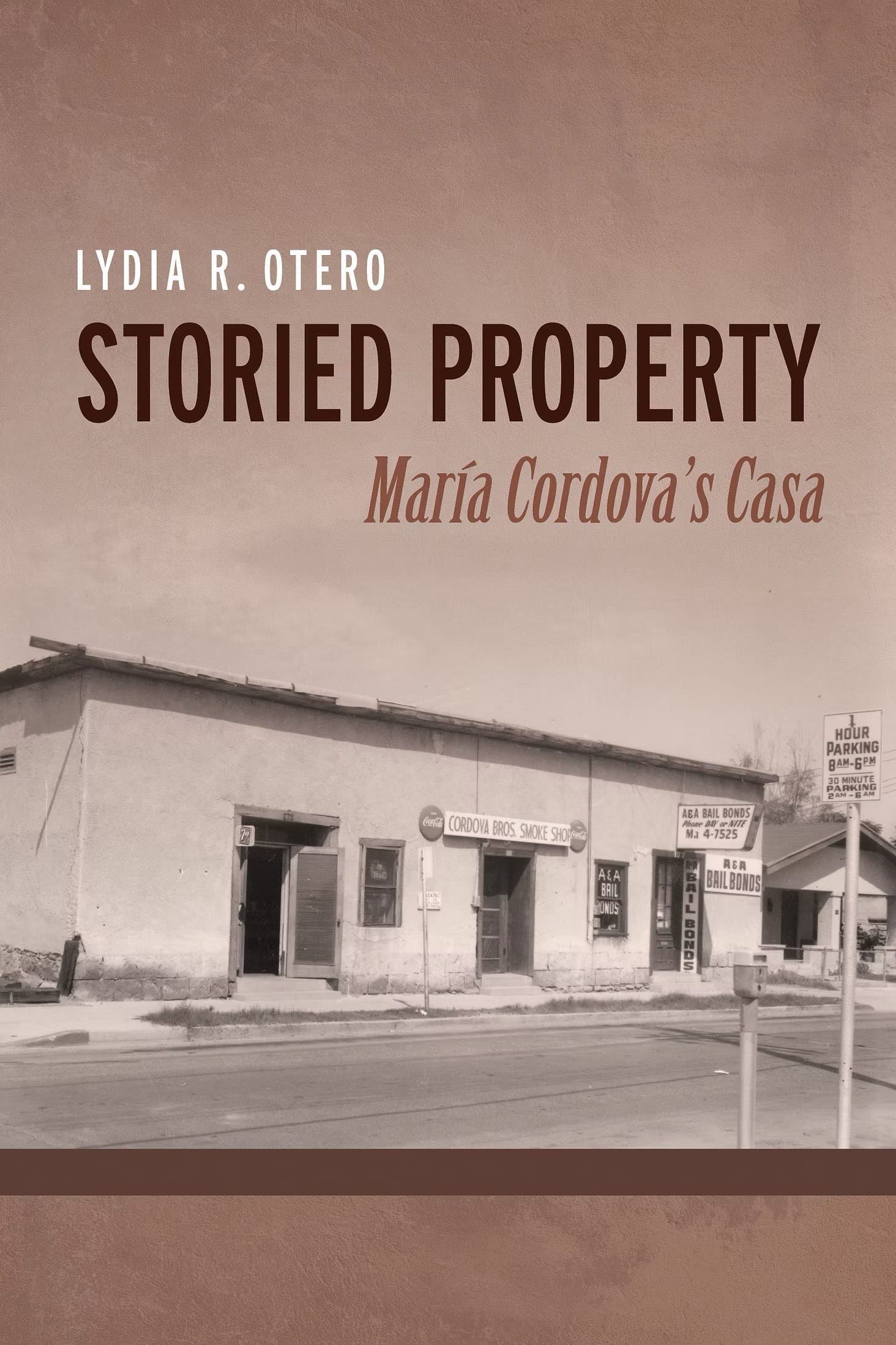
Historian and writer Lydia Otero on growing up in the borderlands, Tucson's racial and urban history, and their most recent book, Storied Property: María Cordova's Casa.
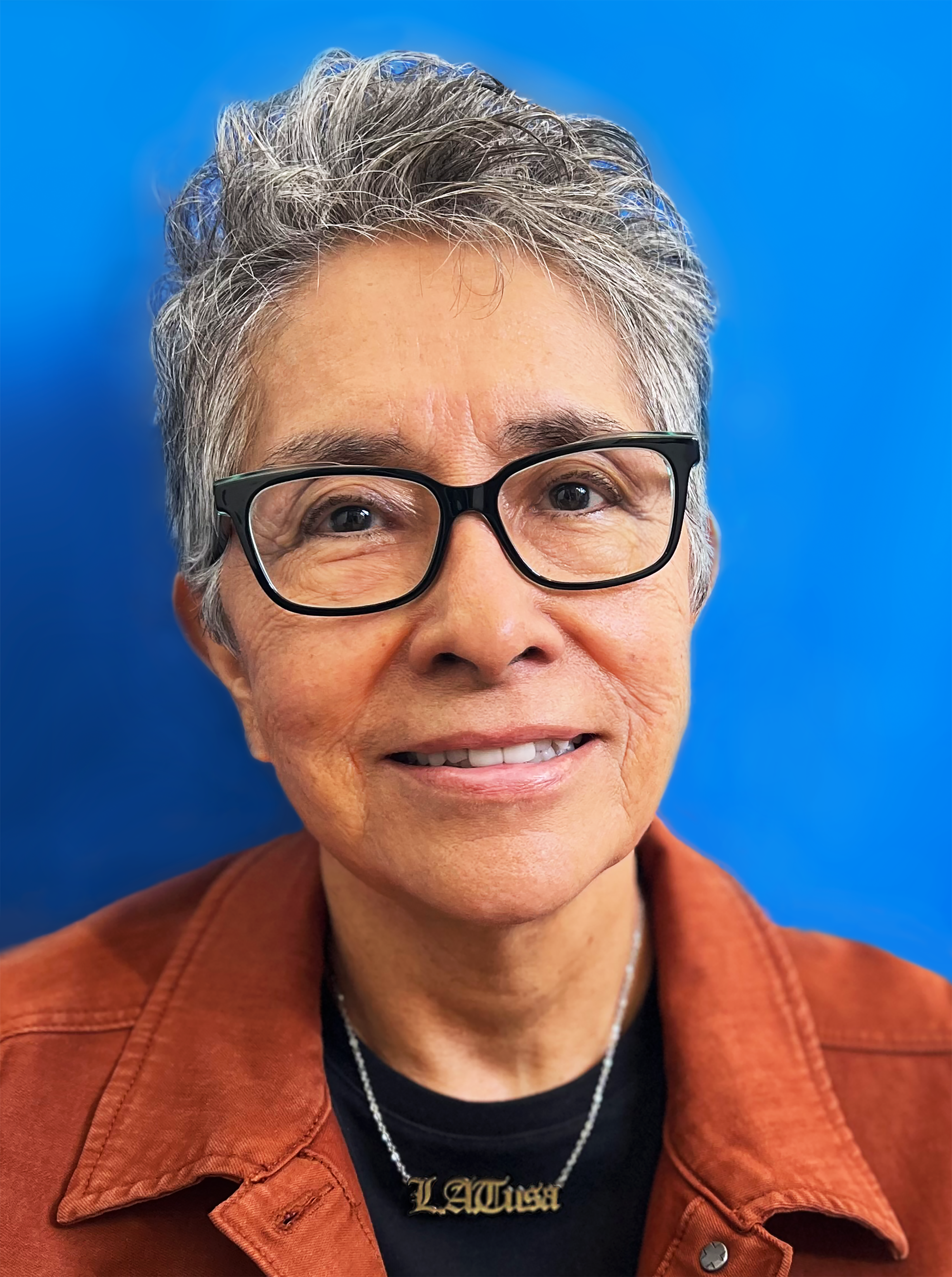
For Lydia Otero, researching the history of the Southwest is personal and political. Growing up in Tucson, Arizona, their family frequented a place they called La Calle that was bustling with shops and pedestrians. The family did not own a car, so they walked there.
Soon, the construction of I-10 through the city divided them from La Calle. Then, while Otero was living in Los Angeles working as an electrician and becoming active in LGBT+ organizing, La Calle was torn down as part of Tucson’s urban renewal initiative.
Otero decided to become the person to tell these stories. They returned to Tucson to pursue a PhD in history at the University of Arizona, where they later worked as a professor of Mexican American studies. They are the author of four books: La Calle, a history of urban renewal in Tucson; In the Shadows of the Freeway and L.A. Interchanges, both memoirs; and the new Storied Property: María Cordova’s Casa, which tells the story of one woman’s resistance to urban renewal and her efforts to save what Otero calls “the most important house in Tucson.”
For this episode of the Border Chronicle Podcast, reporter and editor Caroline Tracey is joined by Otero to discuss their life and work.
This episode is a must-listen for anyone familiar with Tucson, Arizona and anyone interested in doing their own place-based historical research and memoir writing.
Support independent, community based reporting with context. Become a paid subscriber today for just $6 a month or $59 a year. We can't do this without you!
Border Chronicle founders, Todd and Melissa, talk about how law enforcement surveillance, high-speed chases instigated by Border Patrol, unwarranted searches and seizures, and other heavy-handed policing that border communities have endured for decades has now moved into the interior of the country.
This conversation, hosted by Todd Miller, about a great borderlands adobe brick building project is going great, until Jacques Servin—of the political performance artist trickster and activist troupe called the Yes Men—fails to grasp the meaning of the term "border security."
With more than 40 percent of the U.S.-Mexico border now under military authority, we discuss our Border Chronicle/The War Horse investigation examining this unprecedented expansion of federal power and its impact on border communities.