
Telling the Stories of Urban Change in the Borderlands
Historian and writer Lydia Otero on growing up in the borderlands, Tucson's racial and urban history, and their most recent book, Storied Property: María Cordova's Casa.
Historian and writer Lydia Otero on growing up in the borderlands, Tucson's racial and urban history, and their most recent book, Storied Property: María Cordova's Casa.

Mexican writer Álvaro Enrigue’s new novel, Now I Surrender, is an epic about the U.S. and Mexico’s joint erasure of Apachería.
A protest against the buoy barrier in the RGV, a tense situation with military at the end of the wall in Arizona, and deported vets seek justice.

Historian and writer Lydia Otero on growing up in the borderlands, Tucson's racial and urban history, and their most recent book, Storied Property: María Cordova's Casa.

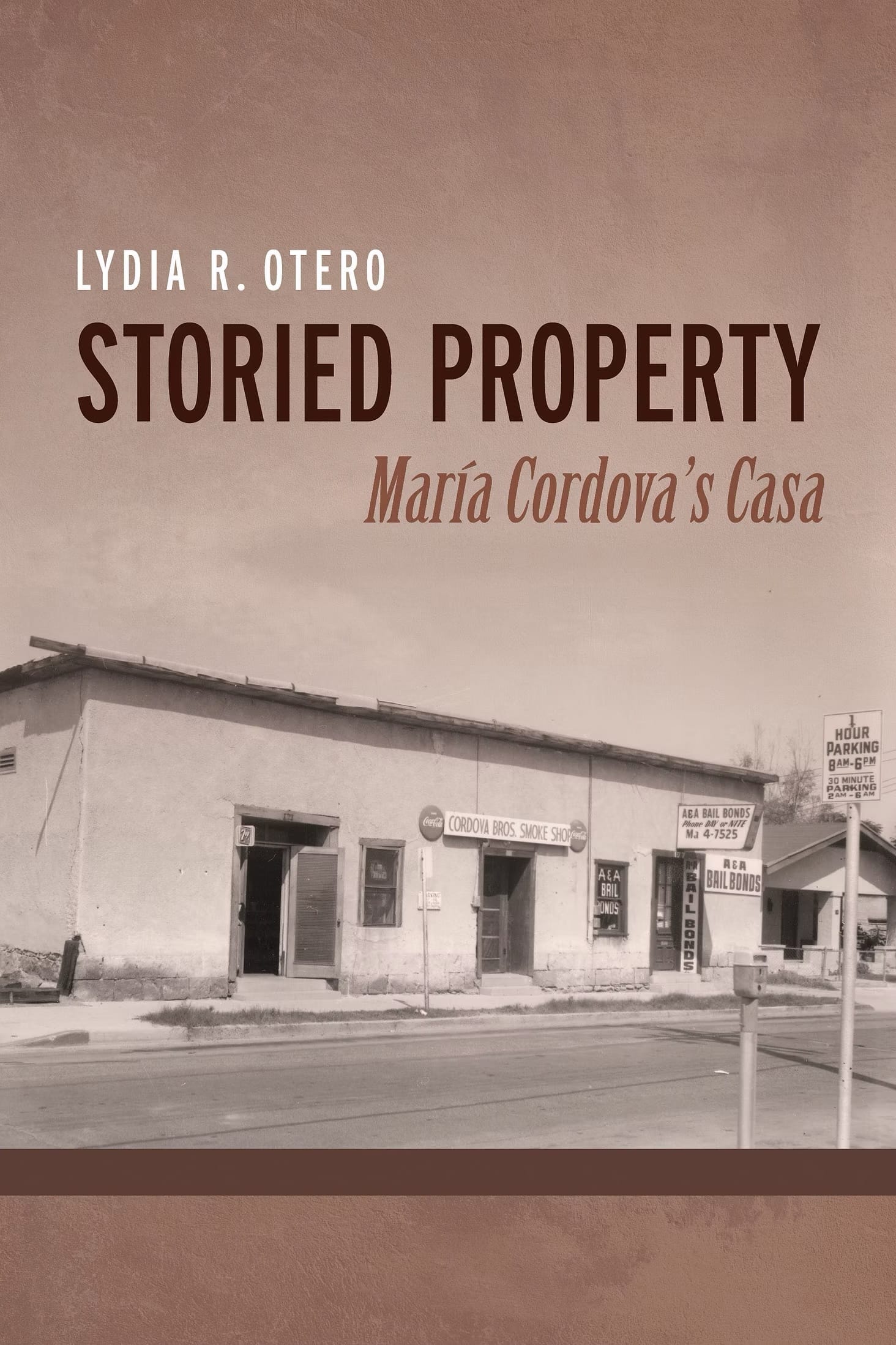
Lydia Otero's books are available from The Border Chronicle's Bookshop storefront.
Support independent, community based reporting with context. Become a paid subscriber today for just $6 a month or $59 a year. We can't do this without you!

Logan Phillips was born in Tombstone, Arizona—a town best known for Old West-themed gunfight tourism. In his new book, Reckon, Phillips explores his relationship to the unusual setting of his childhood through themes of masculinity, history, and land.
Independent news, culture and context from the U.S.-Mexico border.