Buh Bye Kristi Noem, and who the heck is Markwayne Mullin? Trump's new pick for DHS secretary. Plus, an epic novel about the U.S. and Mexico's joint erasure of Apachería, and historian and author Lydia Otero on Tucson's racial and urban history, and more.
Historian and writer Lydia Otero on growing up in the borderlands, Tucson's racial and urban history, and their most recent book, Storied Property: María Cordova's Casa.
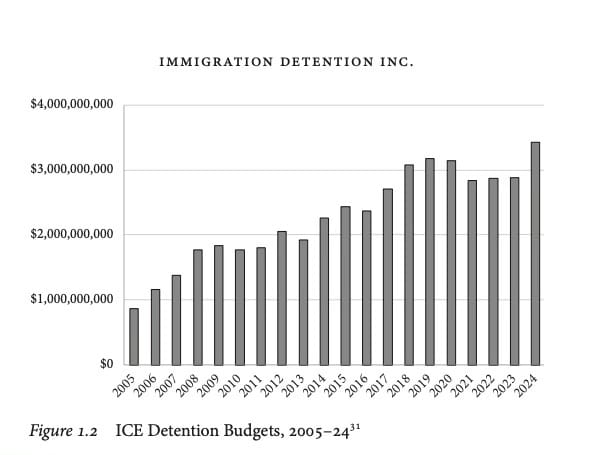
This book comes at a crucial time as the Trump administration attempts to carry out a mass deportation plan that will be financed by an estimated $45 billion budget, via the One Big Beautiful Bill Act.
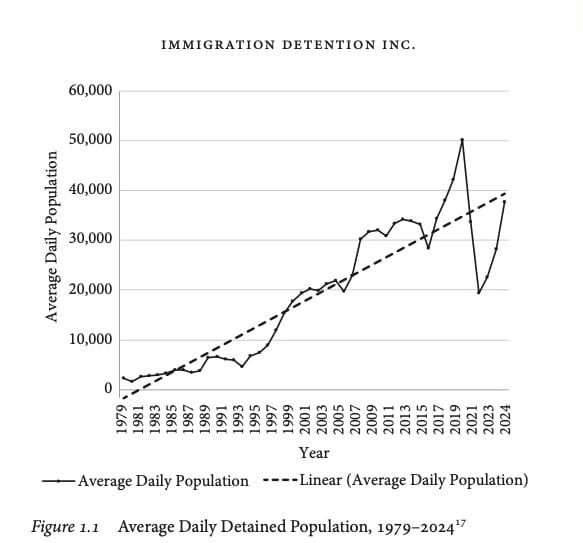
We discuss all of this: the billions made not only by major prison companies like Geo Group and CoreCivic but also by subcontracted services such as food, medical care, and commissary. The authors highlight that substandard food and health services are part of the business model. We discuss the financial dependencies that local governments have developed through their revenue-sharing agreements with ICE. Additionally, we examine the rapid growth of the detention industry—from 7,000 people in the early 1990s to 60,000 today—and how this growth has accelerated in the last eight months under Trump.
To be noted, the daily population has reached 60,000 this year, a significant jump from the end of 2024.
Finally, the authors suggest solutions. “Chip away that detention is effective or necessary … this is really a false narrative,” Hiemstra says, and “peel away what makes detention profitable, and peel away the ability to make money off it.”
Logan Phillips was born in Tombstone, Arizona—a town best known for Old West-themed gunfight tourism. In his new book, Reckon, Phillips explores his relationship to the unusual setting of his childhood through themes of masculinity, history, and land.