Mapping Surveillance in Border Communities: A Conversation with Dave Maass
The U.S. government is doubling down on surveillance, but residents have little input or idea of how it impacts their privacy. Maass talks about EFF’s new project to map the “virtual wall.”
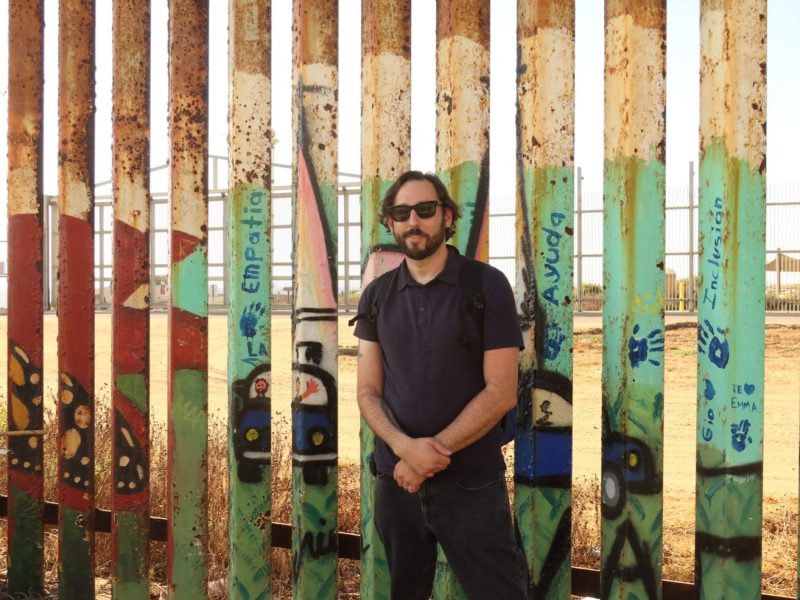
The U.S. government is doubling down and expanding its surveillance technology in border communities. But many residents don’t know the extent to which they’re being watched, given that the government rarely seeks their input.
This month, the nonprofit Electronic Frontier Foundation released new data and an interactive map of surveillance towers, which are part of the “virtual wall.” Melissa speaks with Dave Maass, EFF’s director of investigations, about his organization’s mapping and data project, which tracks the proliferation of surveillance tech at the southern border.
Contrary to public perception, the majority of these surveillance towers aren’t in the middle of nowhere, says Maass. “We hope to provide the evidence that really undermines that myth,” he says of the new project. “Many of [these towers] are in urban areas, residential communities and in the middle of public parks.”
Author

Related Articles

A Continuum of Control, from CBP One to CBP Home
Although they appear to be opposites, CBP One and CBP Home are two apps of the same digital border system that manage and control migrants regardless of the presidential administration.
“Forever Followed by ICE”
Long after they are deported, people are subjected to the Everywhere Border of surveillance, stigma, and economic hardship.

Tech, War, and the Everywhere Border
Going “back to normal” won’t end structural violence in the U.S. or anywhere else.