As DHS gaslights border communities, help document the reality on Wall Watch, our new community powered map for border wall construction, and a podcast from the resistance in Lochiel, Arizona, where protestors try to save the last ancient Cottonwood tree from bulldozers.
A vivid depiction of what has been happening during the last eight weeks of resistance against border wall construction in southern Arizona’s San Rafael Valley.
Wall Watch combines geospatial mapping, archival research, and community participation to provide the public with an accurate, continually updated record of border wall construction along nearly 2,000 miles of the international border.
“Re-envision No More Division”: A Reflective Photo Essay of 2025
Take a photographic stroll in 2025--from Inauguration Day in January to unauthorized cows crossing the Rio Grande in the fall--as we seek a “different way forward.”
We at The Border Chronicle wish all you dear readers the happiest of holidays! This is our last post of 2025. We will be back with you on January 6, the Día de los Reyes Magos. In the meantime, if you feel so moved , please help us continue our border journalism into the new year and beyond. We definitely can’t do it without you!
“Re-envision No More Division”: A Reflective Photo Essay of 2025
Take a photographic stroll in 2025—from Inauguration Day in January to unauthorized cows crossing the Rio Grande in the fall—as we seek a “different way forward.”
On January 20, the day of Donald Trump’s inauguration, I walked along the U.S.-Mexico border in Nogales. I brought with me Robin Wall Kimmerer’s new book, The Serviceberry: Abundance and Reciprocity in the Natural World, which she wrote in light of the election. Regardless of the election’s outcome, she said, “we would need a vision of a different way forward.” She focuses on the serviceberry, a gift from the land that illustrates how “sharing, respect, reciprocity, and gratitude” are integral parts of this vision.
Through photos and text, I aim to capture this different way forward, as articulated by Kimmerer—and expressed in the borderlands by its people, creatures, and rivers—during this often-turbulent 2025.
Each photo is anchored to a piece I wrote for The Border Chronicle this year. And all photos, except for one, are by me. I want to stress, however, that this represents just a fraction of our work, and I encourage you to explore more from all of our authors.
As I walked along the border on Inauguration Day, my first photo was of these flowers (above) that adorn the 20-foot wall in Nogales, Arizona. They are a memorial to José Antonio Elena Rodríguez, killed by Border Patrol in October 2012.
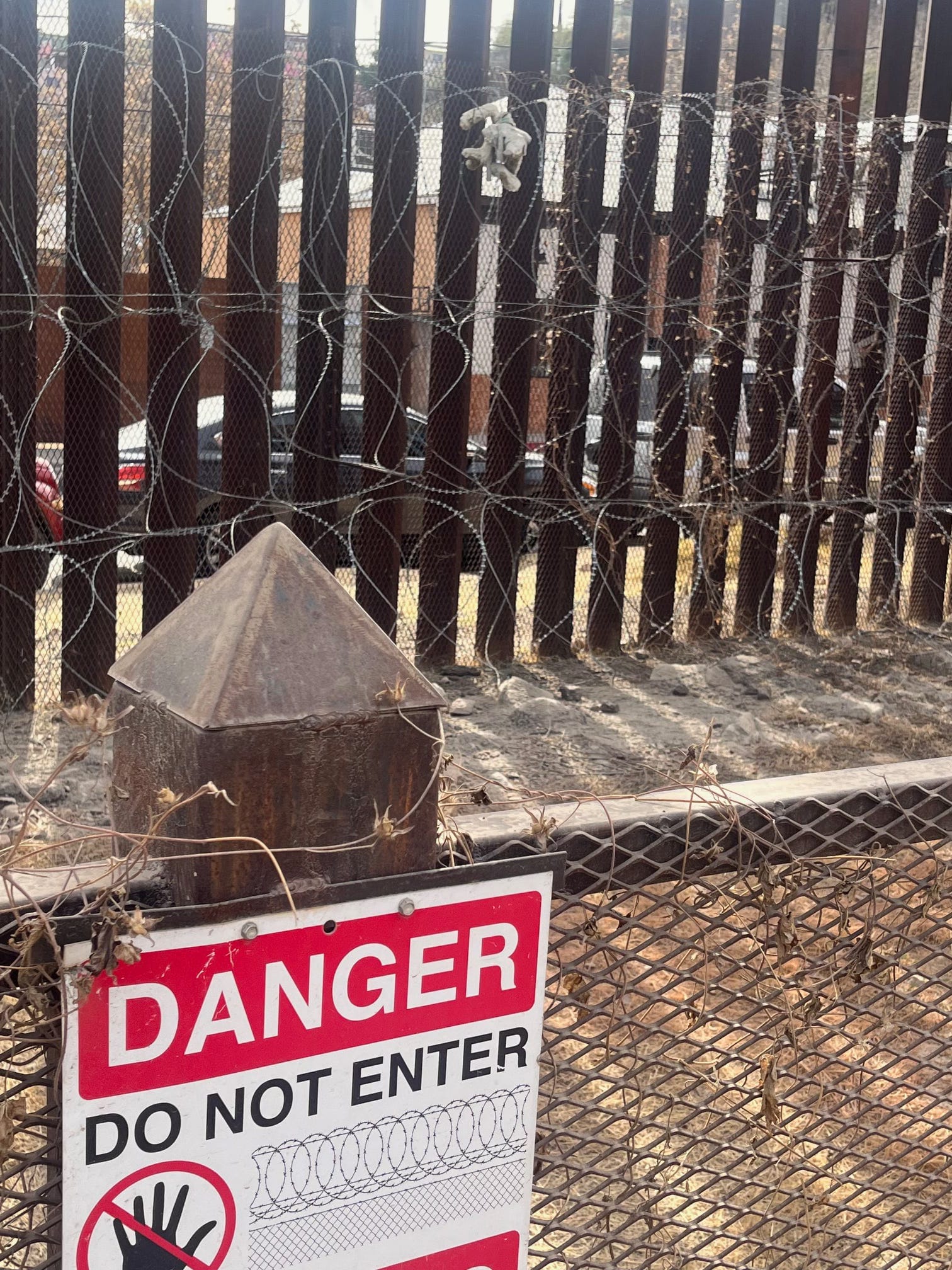
The border exists as part of a persistent narrative of fear. Look closely at the coiling razor wire, and you’ll see an ensnared teddy bear. Another Inauguration Day photo.
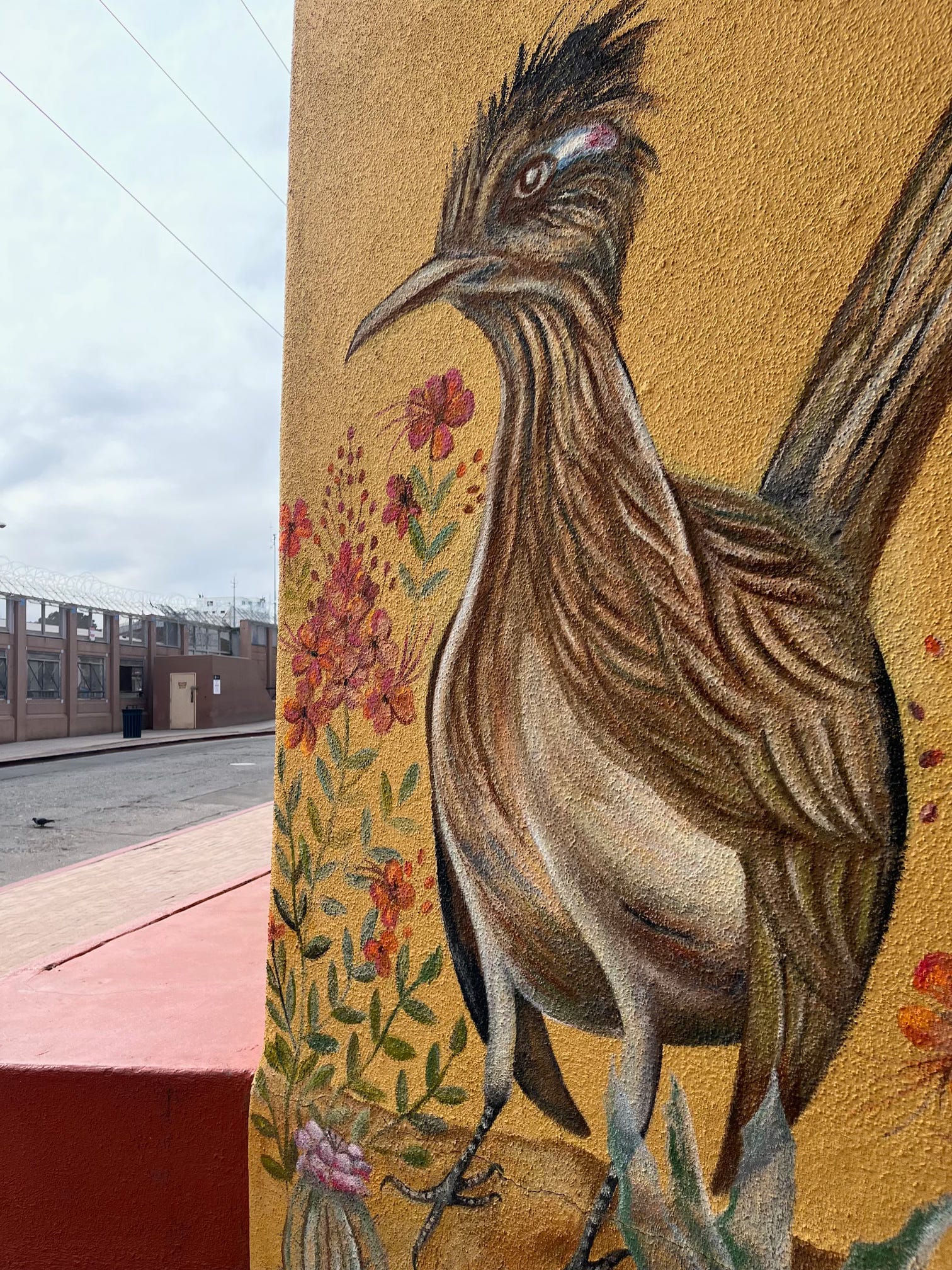
A roadrunner keeps watch over the streets of Nogales on Inauguration Day.
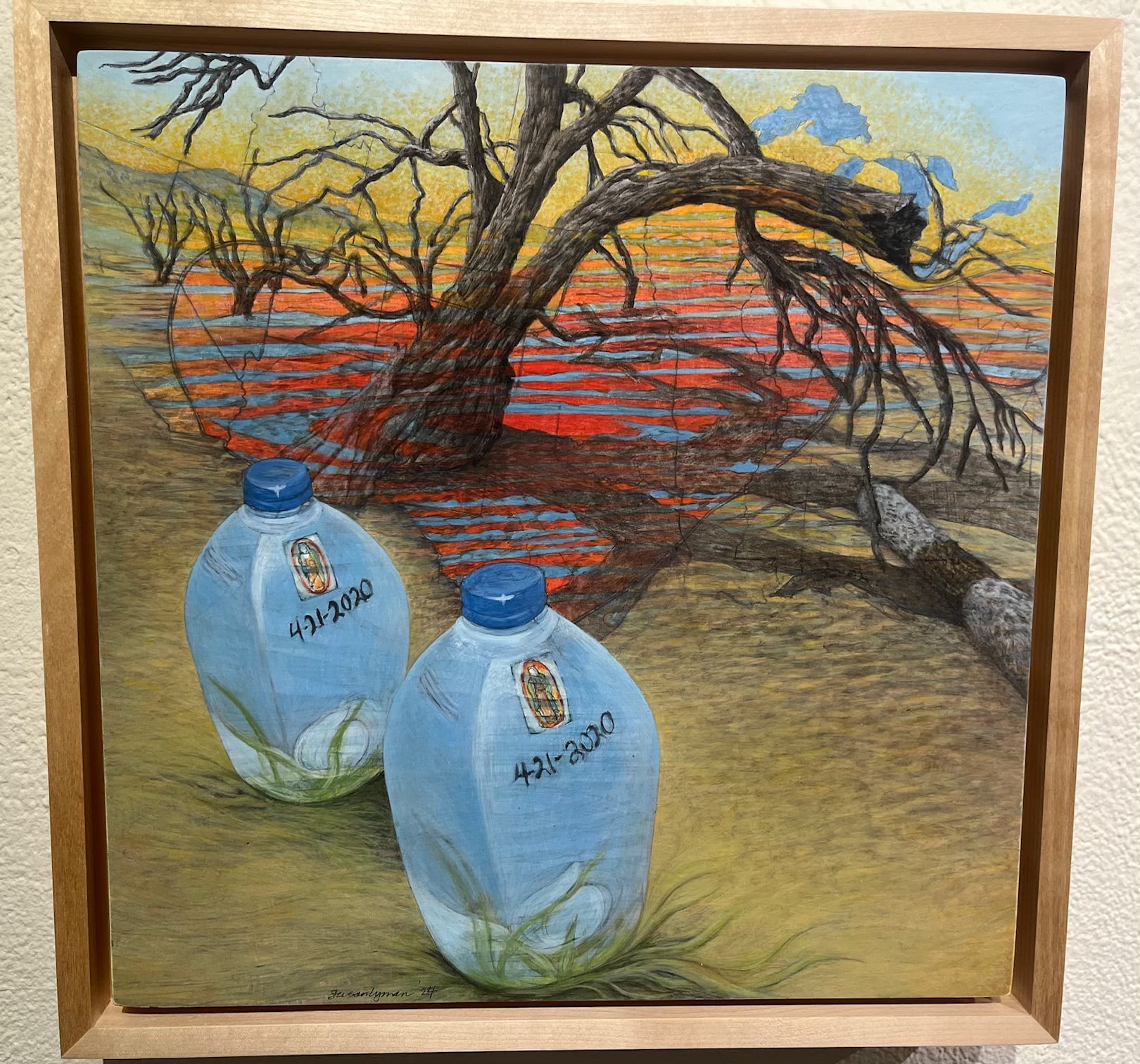
A painting by Susan Lyman, photographed in January at the Tohono Chul gallery in Tucson at her exhibit, Postcards from the Border. “I am documenting my visceral reaction,” the longtime artist says, “to the environmental destruction, death, inhumanity, and militarization at the border.”
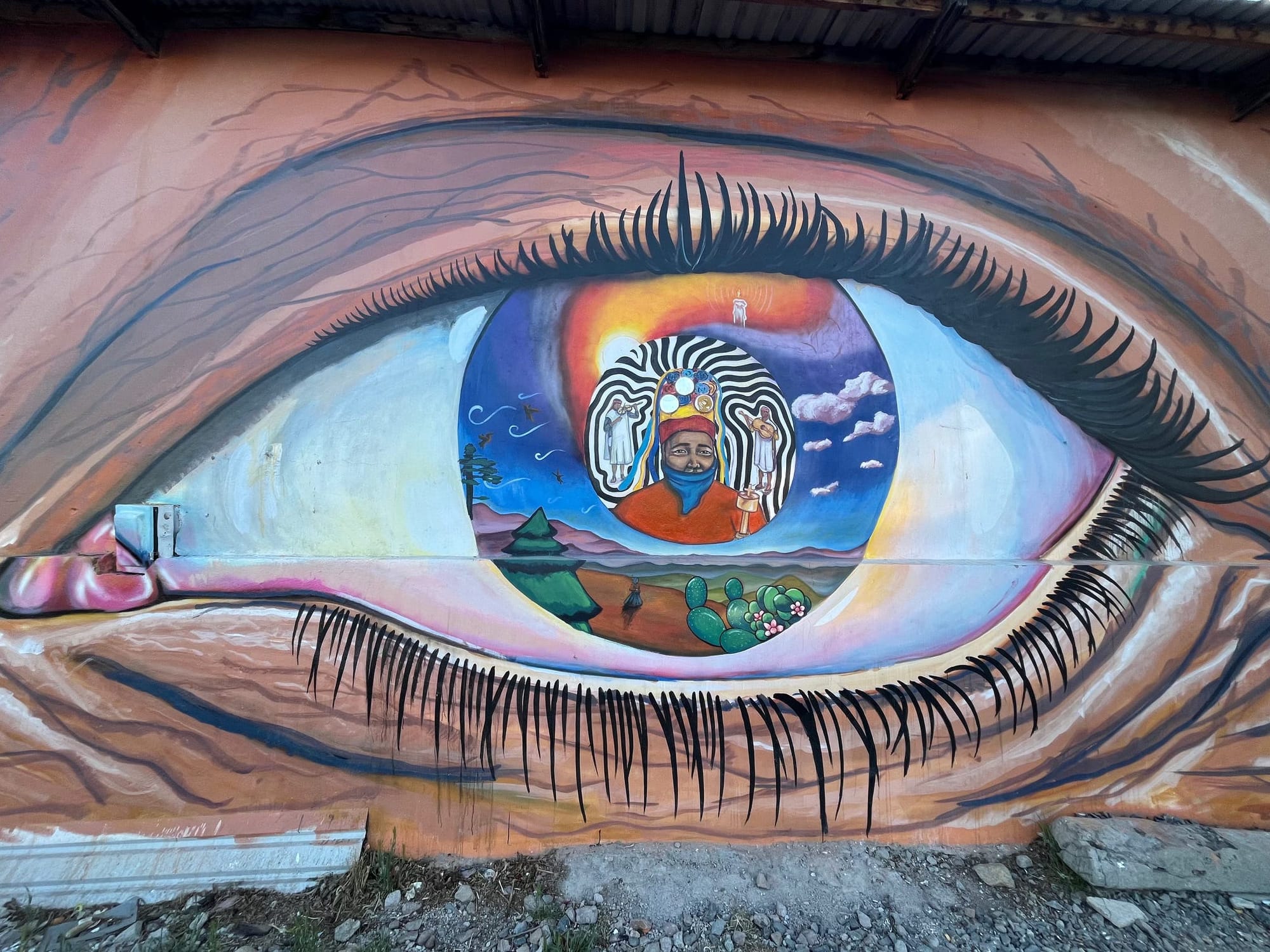
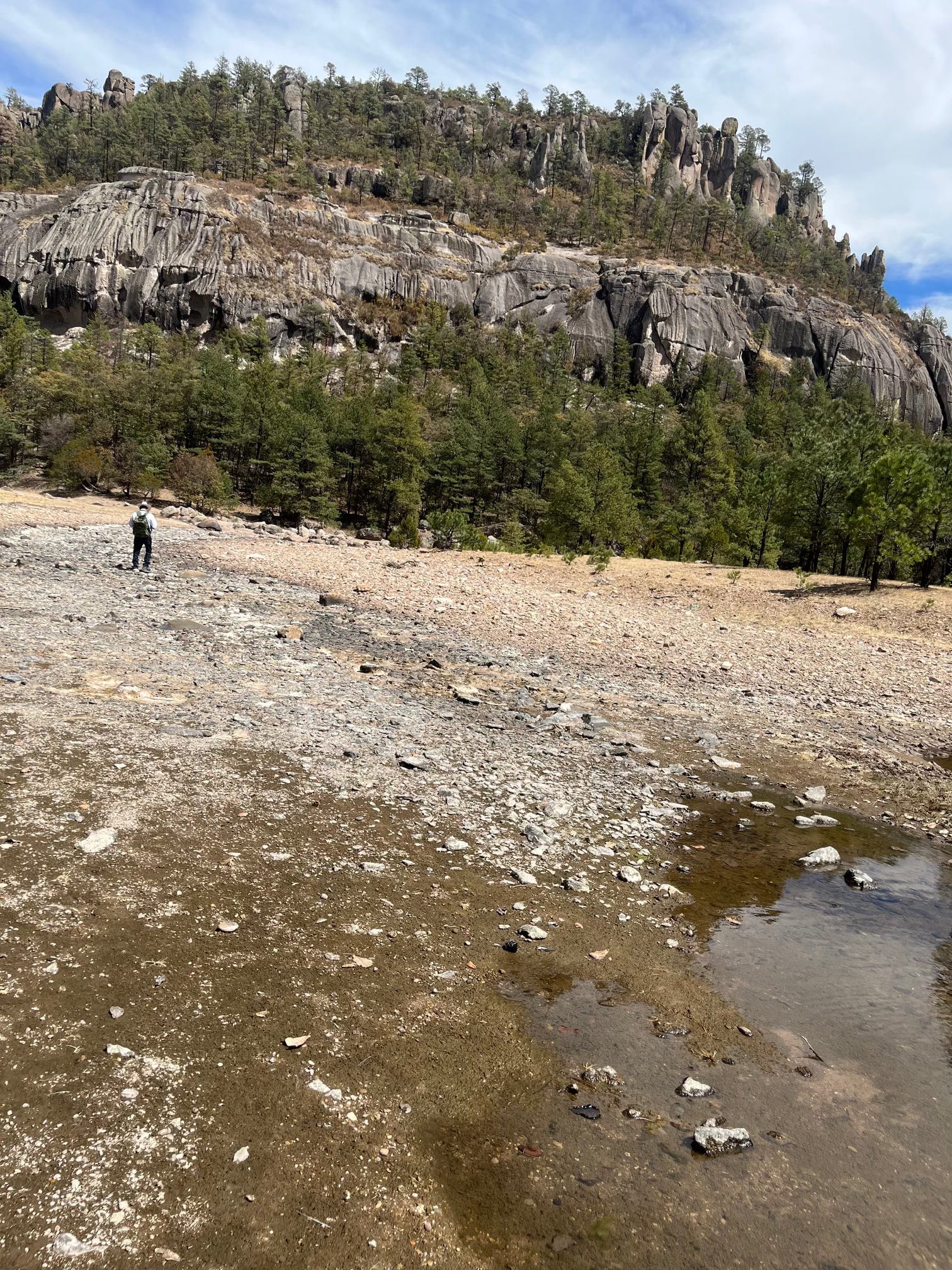
A mural in Creel, Chihuahua, by Adán de la Parra. In March, I was in the Sierra Tarahumara in search of the headwaters of the Río Conchos, the most important river in Chihuahua, which is also a conduit to deliver water to the United States under the 1944 Water Treaty. An eye holds a thousand universes, a thousand possibilities.
In late March, Rarámuri man Mario Quiroz Villalobos walks near the Río Conchos headwaters. You can see the impacts of an epic drought in Chihuahua, which is at its “most serious level.”
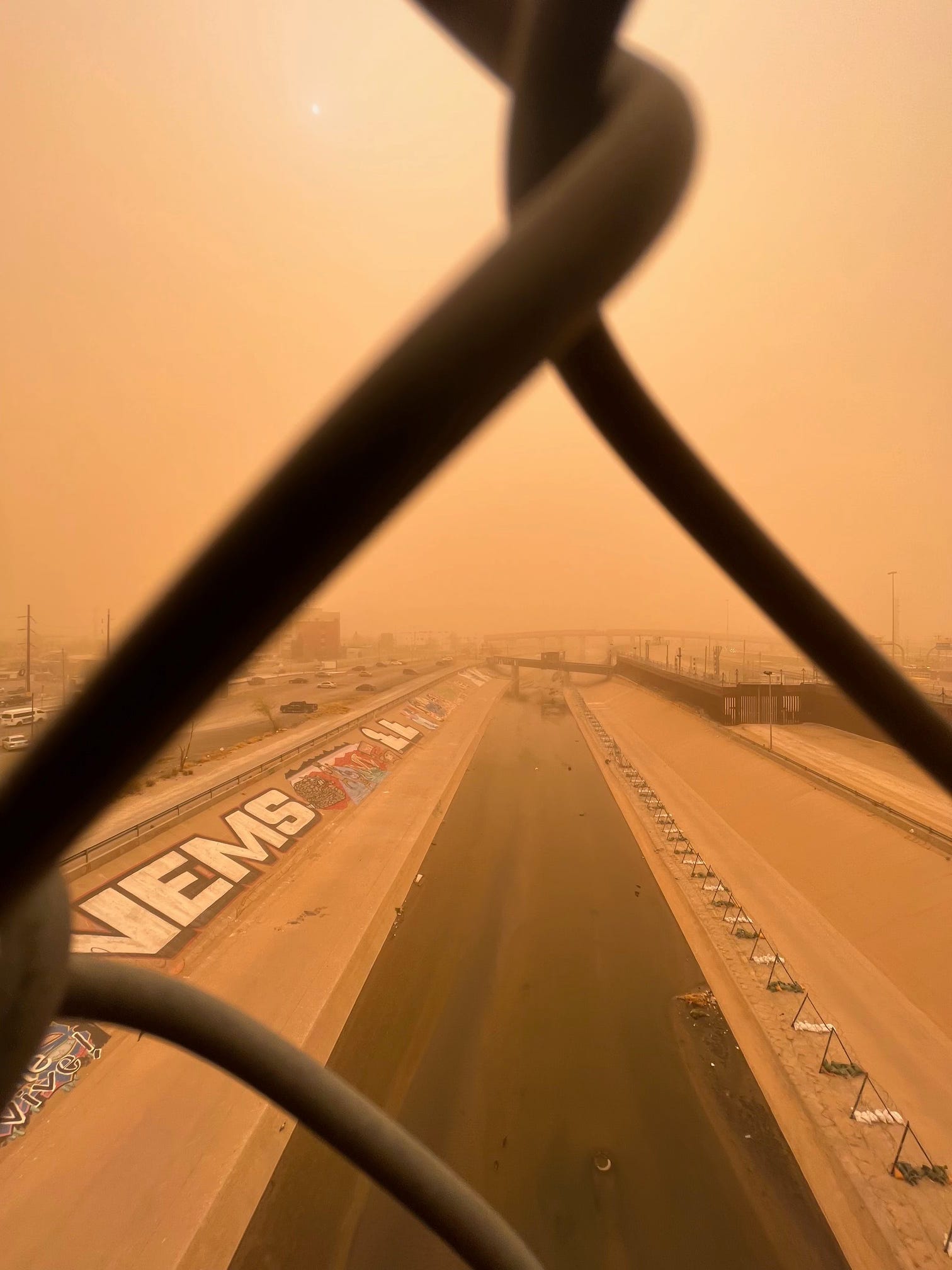
A ferocious dust storm hits El Paso during World Water Week, in March. This is a view of the U.S.-Mexico border and the Rio Grande from the Stanton Street Bridge.
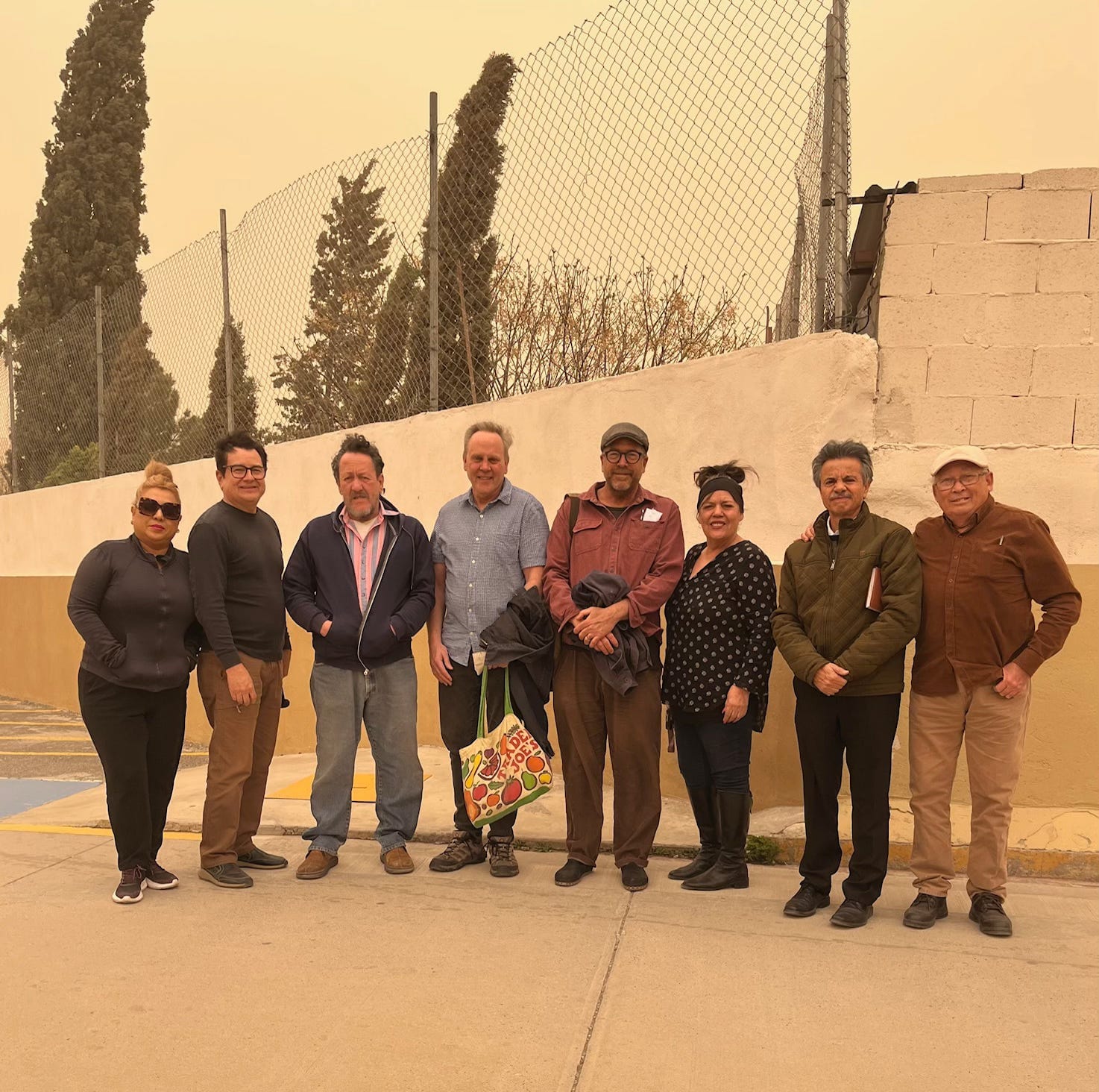
An impromptu binational gathering about water took place in Ciudad Juárez despite the dust and relentless wind. Because of the storm, organizers canceled the workshop “Advancing Transboundary Cooperation.” We still briefly gathered. As one participant said, “You want to talk about water, and we want to talk about water. Let’s talk about water.”
I take a surveillance selfie (it looks like I’m wearing shades!) at the Border Security Expo in Phoenix in April at the booth of the company Clear. This year, the expo featured Trump administration officials, including Border Czar Thomas Homan and Secretary of Homeland Security Kristi Noem. In her keynote Noem embellished about the president of El Salvador Nayib Bukele’s adoration of the United States via an epiphany he had at Target.
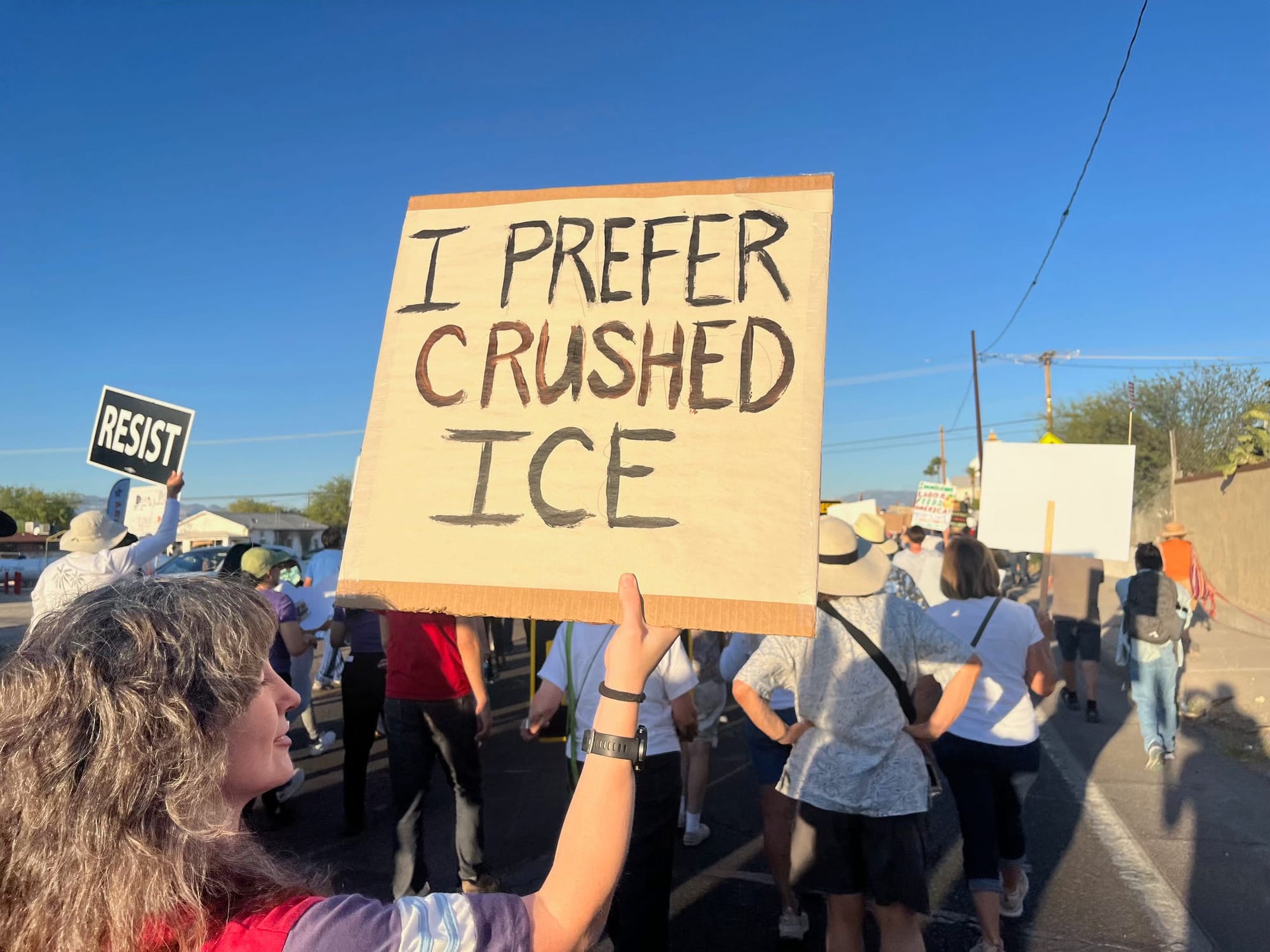
The May Day march in Tucson protested the Trump administration’s harsh immigration and border enforcement priorities. As friend of The Border Chronicle and legendary rights defender Isabel García said from the rally stage before the march, “We need to invest in human needs at the border, not more surveillance and militarization.”
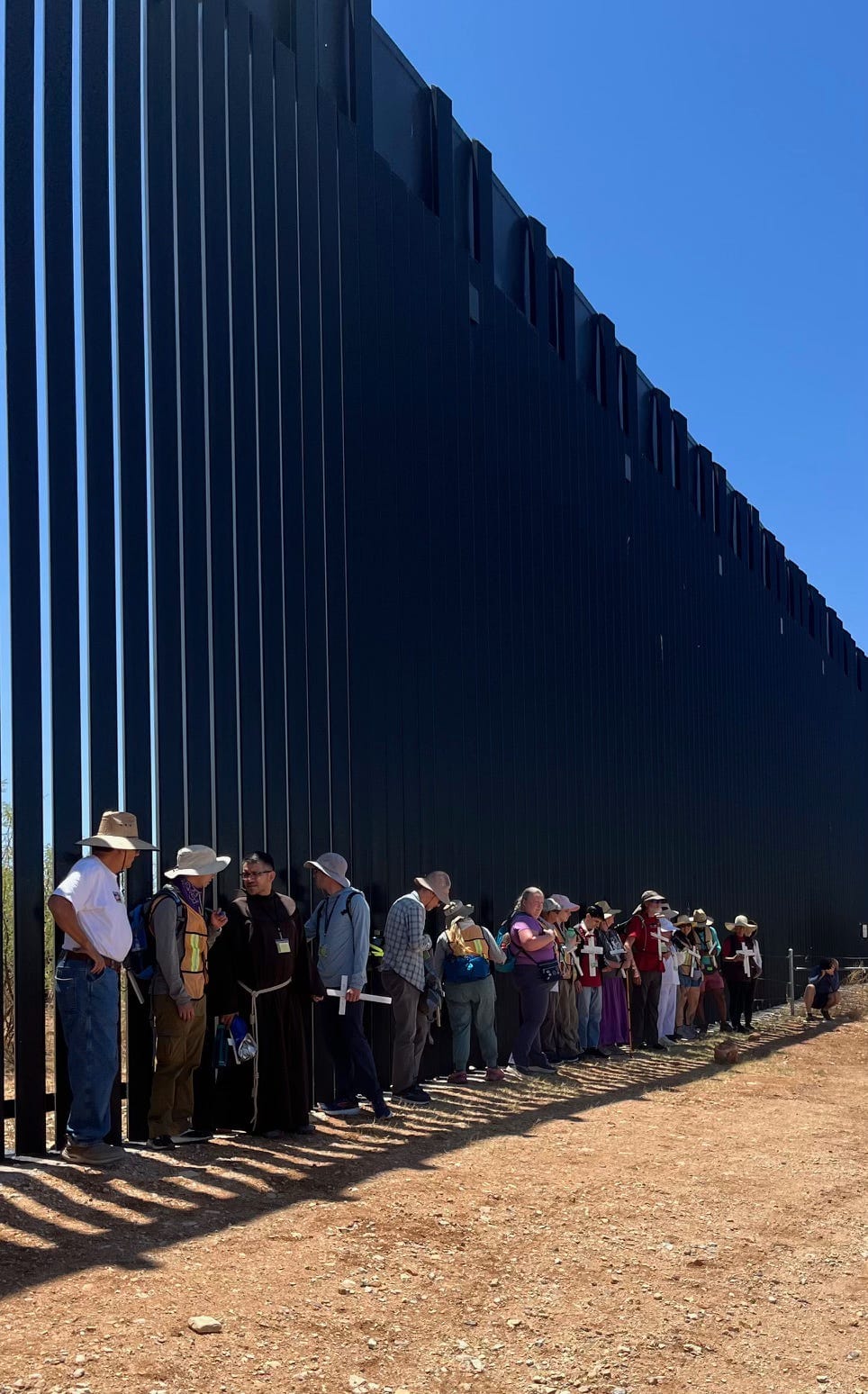
On Memorial Day, 43 people gathered in Sasabe, Arizona, to walk 75 miles to Tucson in what is called the Migrant Trail, in solidarity with those who have died crossing the border and those who continue to make the journey. At the press conference, Isabel García again stole the show, this time reciting the Navajo prayer “In Beauty May I Walk”:
In beauty may I walk
All day long may I walk
Through the returning seasons may I walk
Beautifully will I possess again
Beautifully birds,
Beautifully joyful birds
On the trail marked with pollen may I walk
With grasshoppers about my feet may I walk
With dew about my feet may I walk
With beauty may I walk
With beauty before me may I walk
With beauty behind me may I walk
With beauty above me may I walk
With beauty all around me may I walk
In old age, wandering on a trail of beauty, lively, may I walk
In old age, wandering on a trail of beauty, living again, may I walk
It is finished in beauty.
It is finished in beauty.
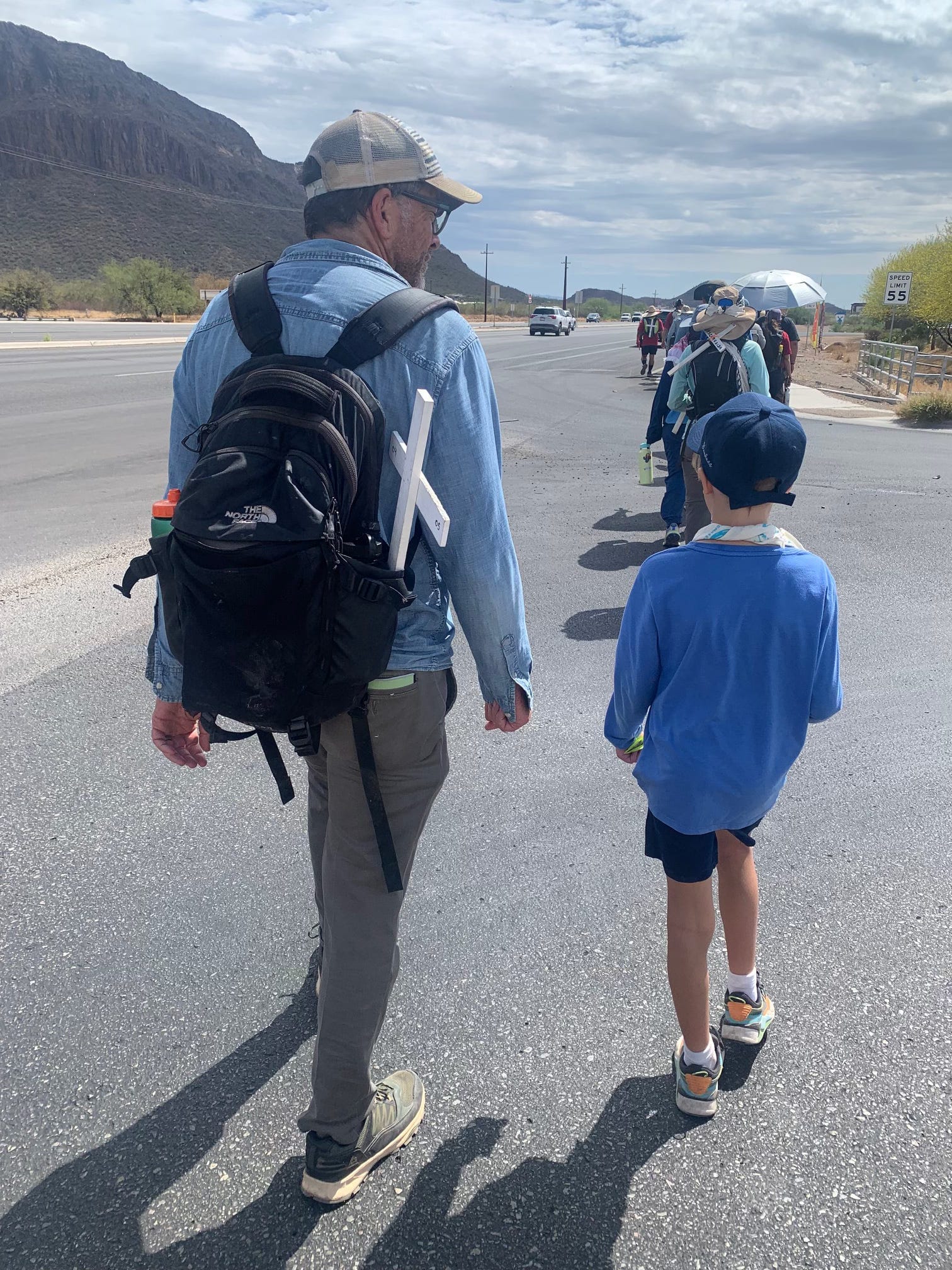
On the final day of the Migrant Trail, I walked six and a half miles into Tucson with my nine-year-old, William. (Photo by Melissa Nix).
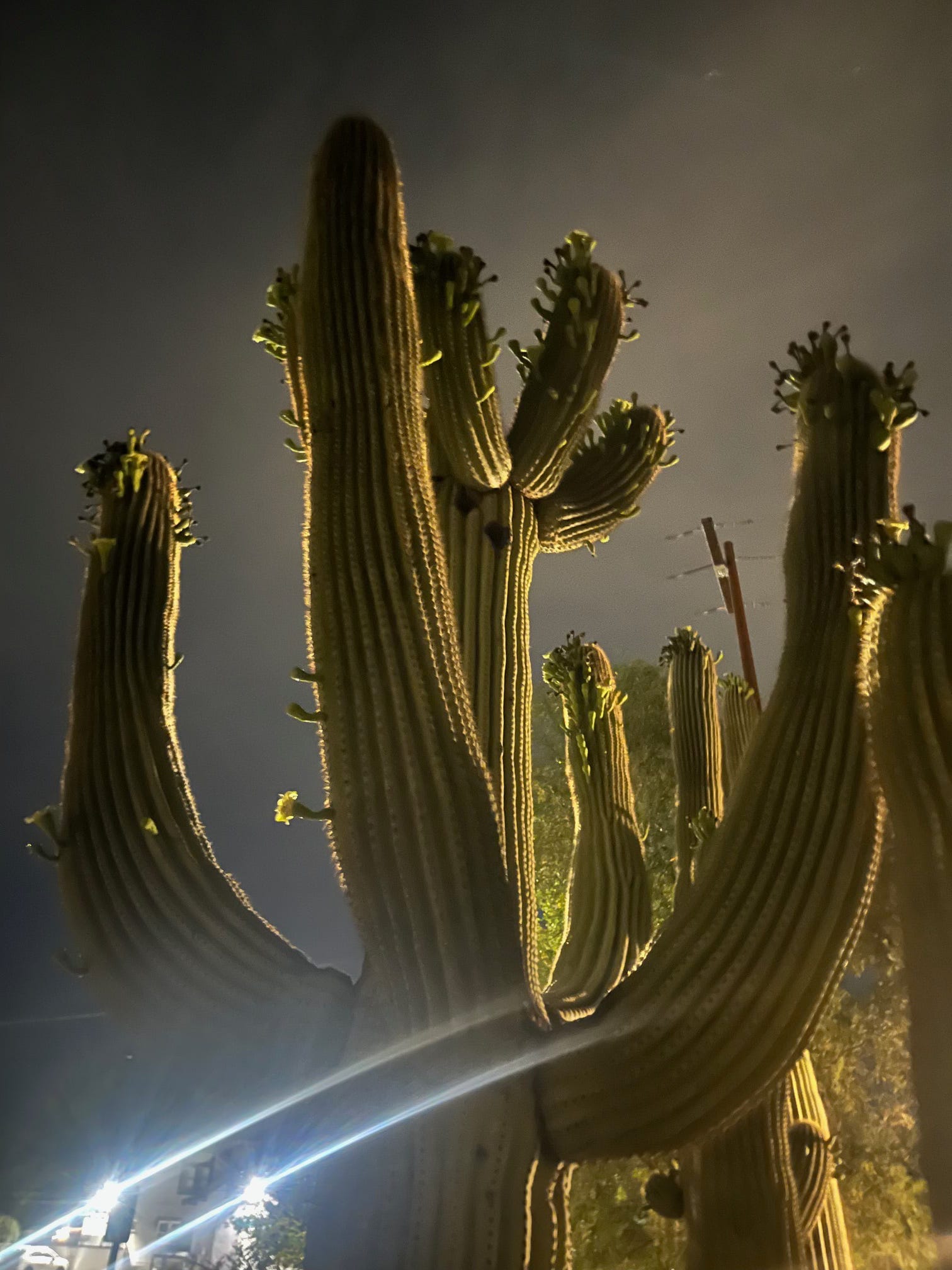
A saguaro with fruit in June in Tucson.
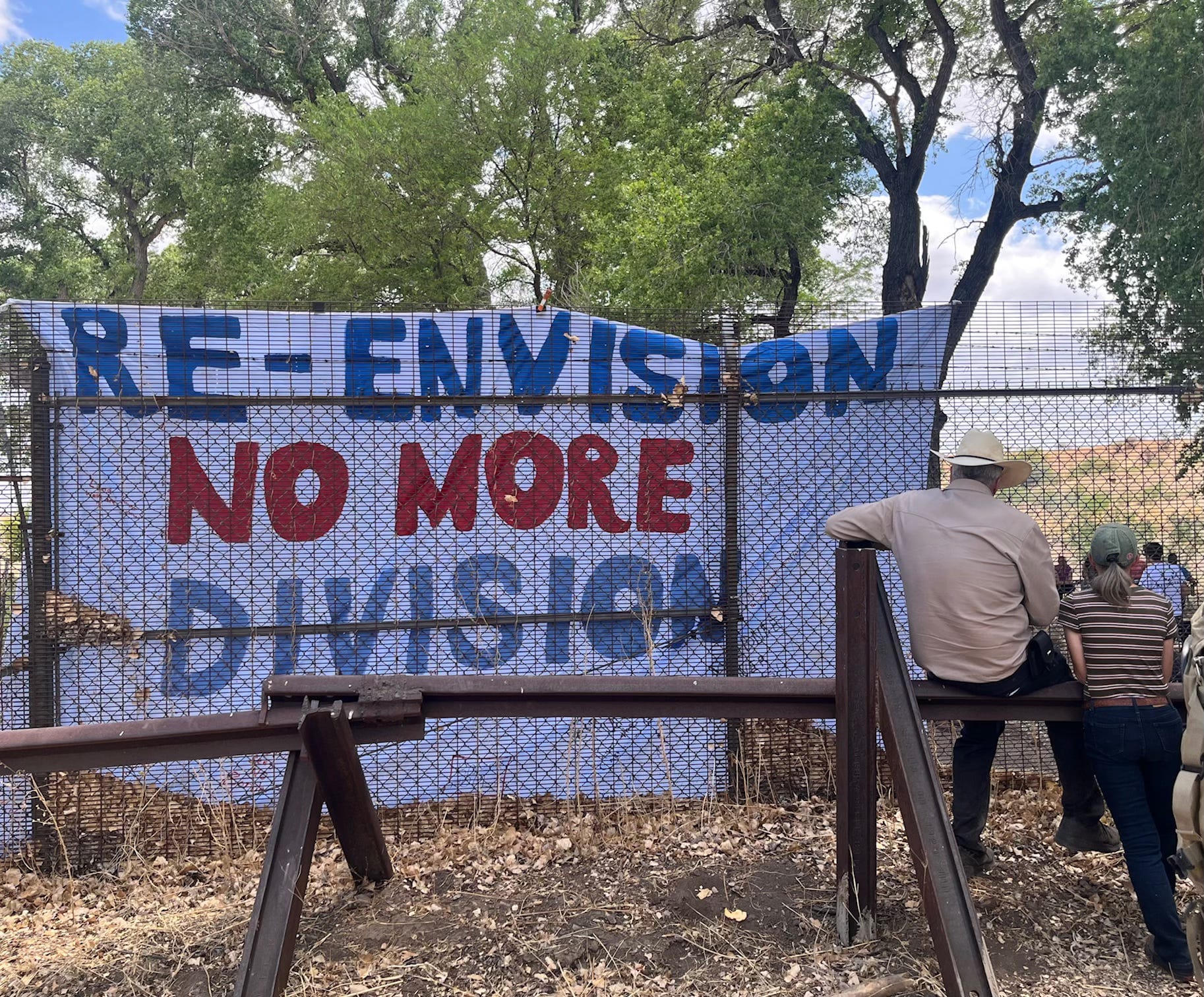
A cross-border celebration called the Binational Border Happening took place in Lochiel, Arizona, on May 31. The event protested the Trump administration’s construction of a 25-mile border wall in the San Rafael Valley. In the above photo, Santa Cruz County sheriff David Hathaway sits on the vehicle barrier at the gathering.
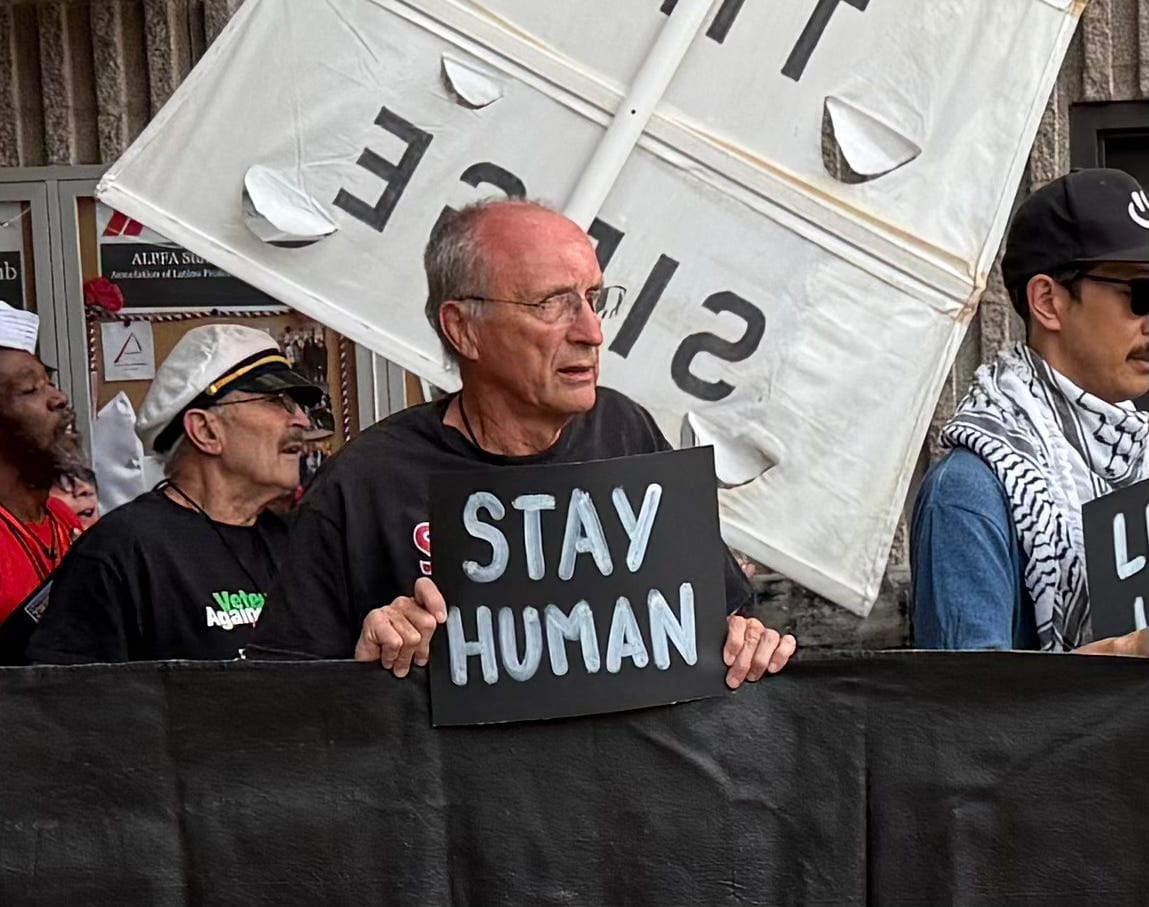
At the Veterans for Peace annual conference in late July, I learned that the term “border security” is not only a farce but an act of war, highlighting the need to seek peacemakers.
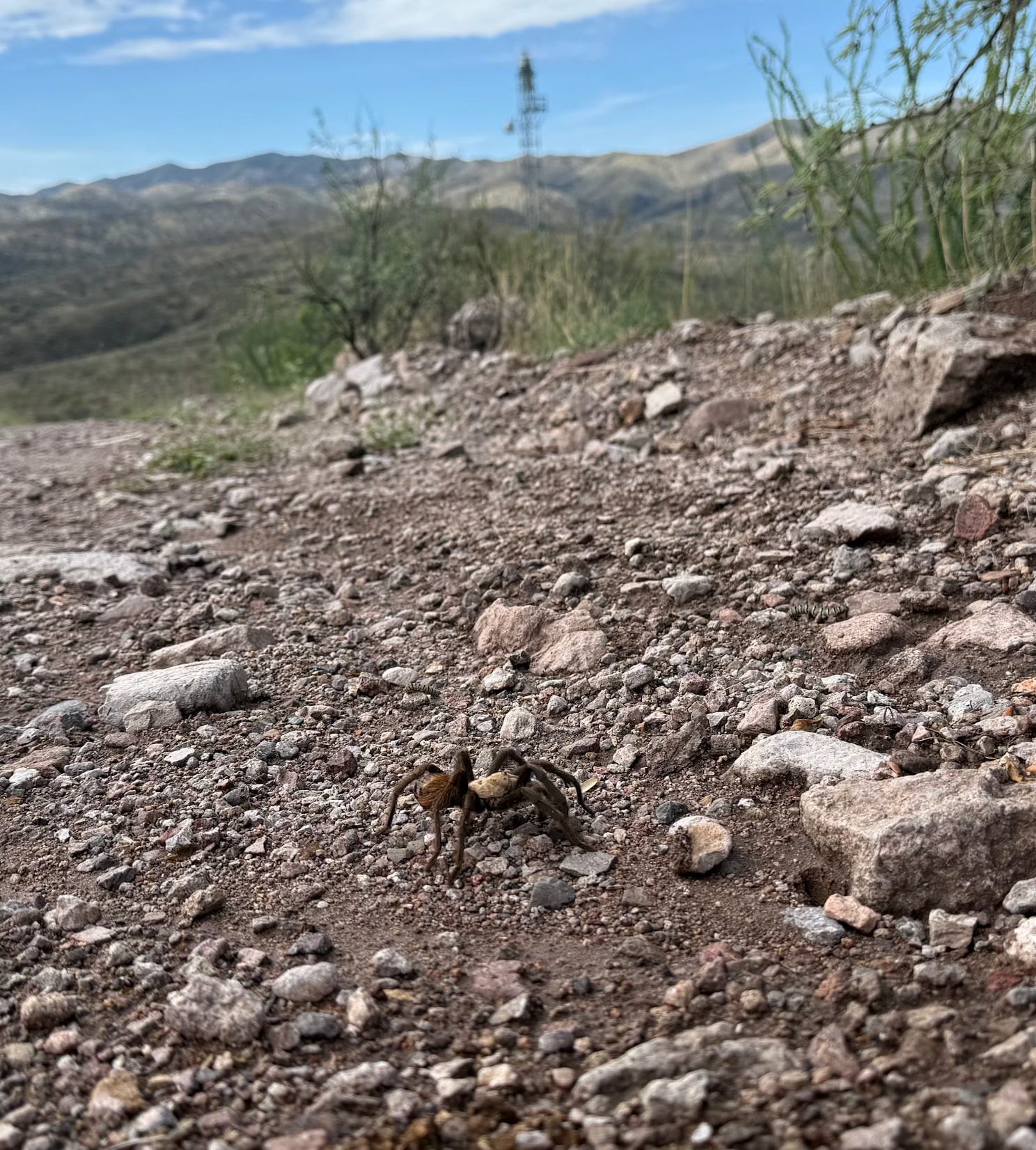
In late August, a tarantula stands in front of an Integrated Fixed Tower 10 miles north of Nogales, Arizona. The tower has been around since 2015, and the tarantula has existed since at least the Cretaceous period, 120 million years ago. It is clear who will win this battle.
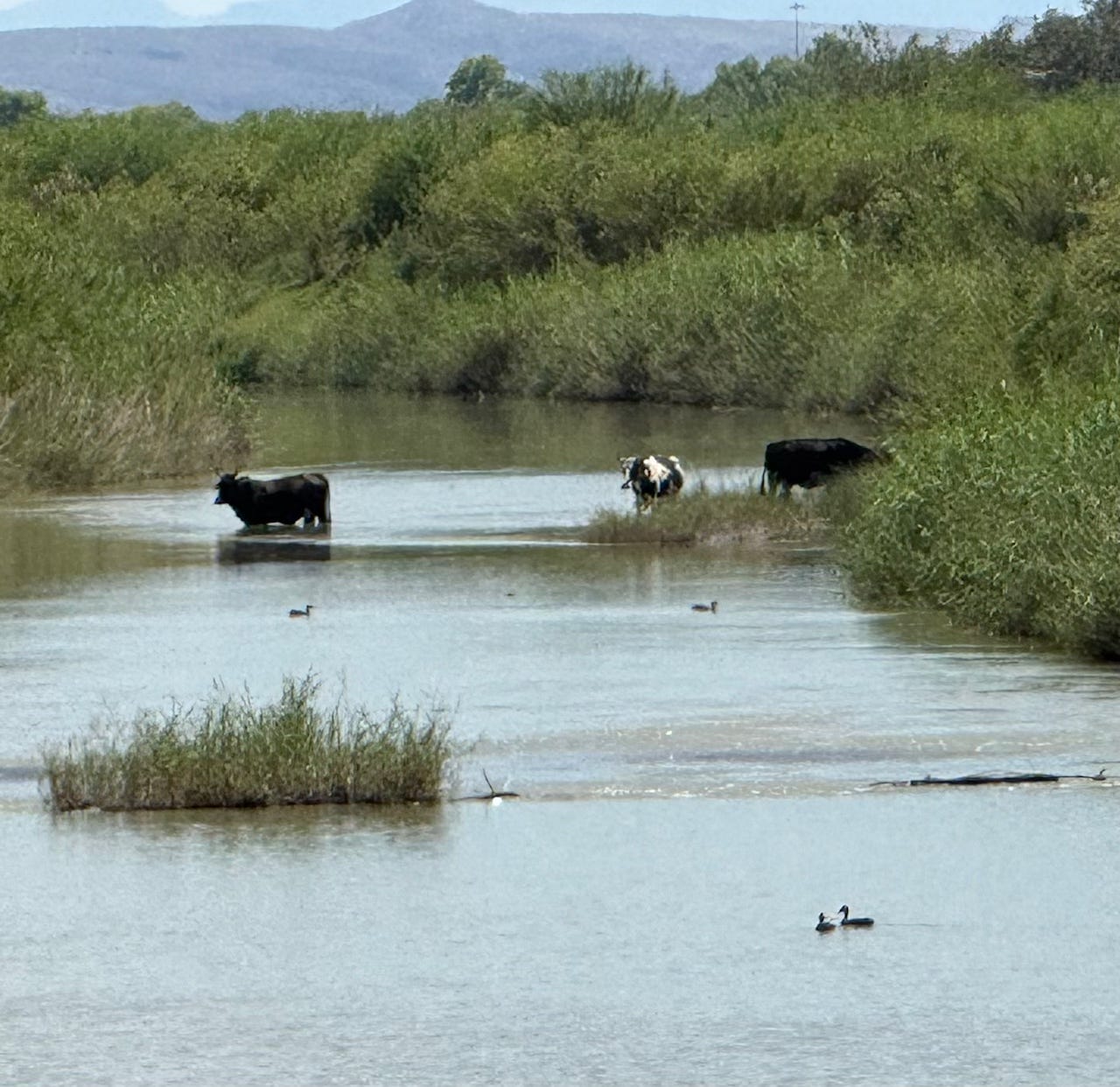
Cows without documents cross the Rio Grande at La Junta de los Ríos near Presidio, Texas, and Ojinaga, Chihuahua.
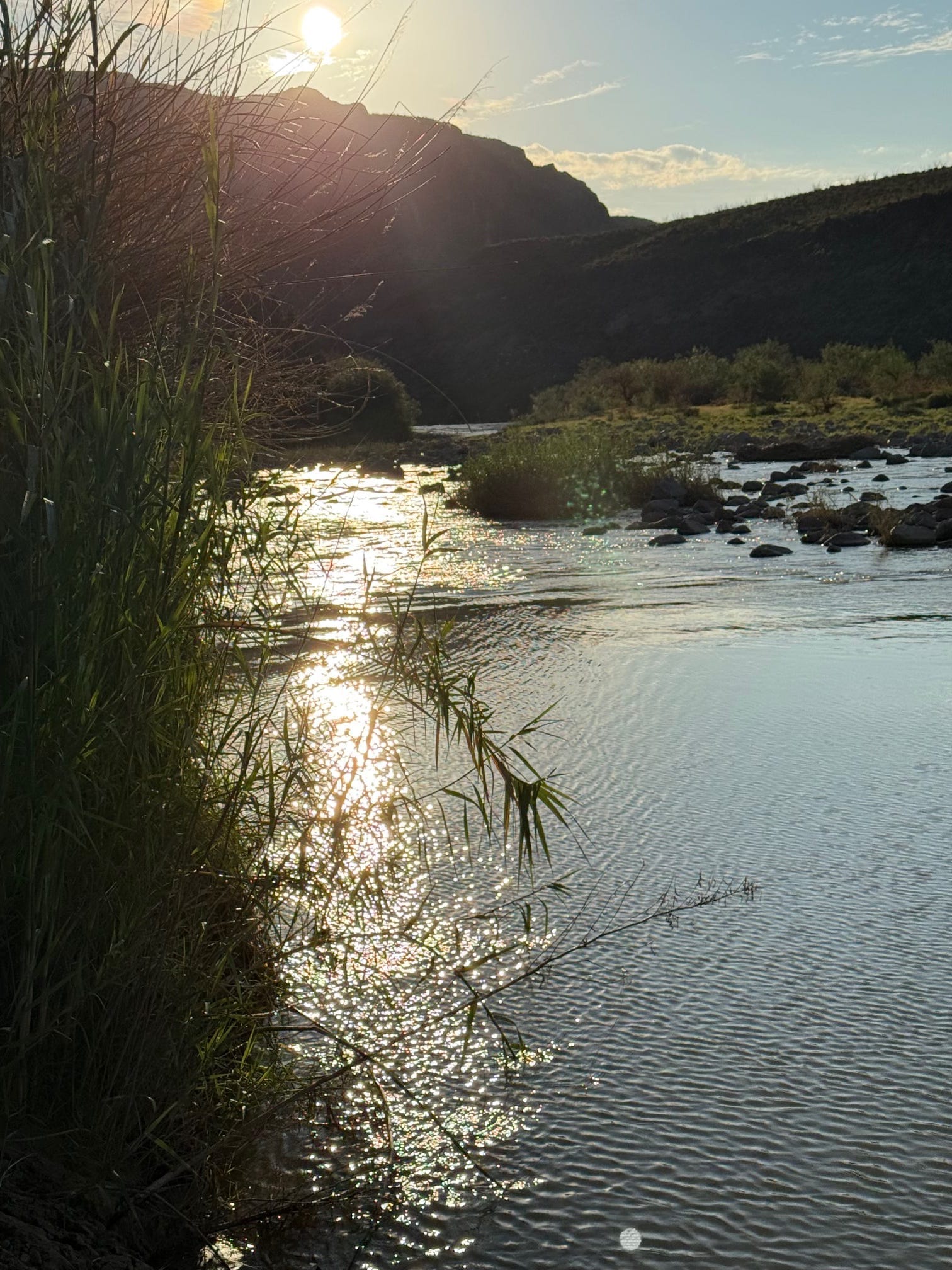
If we view the Rio Grande without acknowledging it as a divide between countries, we can see it simply as a river. It continually teaches us the central premise of Kimmerer’s The Serviceberry: “All flourishing is mutual.” This very well may be that sought “different way forward” as we head into 2026.
A vivid depiction of what has been happening during the last eight weeks of resistance against border wall construction in southern Arizona’s San Rafael Valley.
As floodwaters swept hundreds of one-ton border buoys downstream, international bridges closed, commerce slowed, and officials struggled to get answers from DHS about a project advancing despite local opposition, environmental concerns, and treaty questions.
Hundreds of massive orange buoys staged for a controversial DHS floating barrier project broke free near Eagle Pass and are now drifting toward Laredo, threatening bridges, commerce, drinking water supplies and downstream communities.