
Threat Multiplier: The U.S. Border and the Invisible Climate War
A vivid look at U.S. policy toward climate refugees through one family’s displacement after Hurricane Otis.
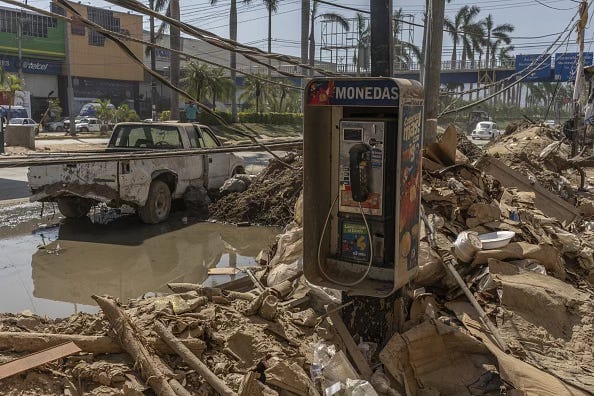
The first thing Cecilia told me was that there was no good cell signal in her community of San Isidro, near Acapulco. On October 24, she told me, they didn’t have the proper information about the approaching storm that would reportedly make landfall in the middle of the night, at about 3 a.m. The forecast was bleak, of course—a lot of wind, a lot of rain—but the early forecasts didn’t accurately predict what was about to happen. Passing over a stretch of abnormally warm water in the Pacific Ocean, the storm intensified rapidly, transforming into a hurricane, and then into a mega-hurricane, in 12 fast hours. As CNN reported, “Few in history have endured a storm as strong as Otis—Acapulco never has.” By the time it hit Acapulco and San Isidro, it was a wall of rain and wind blowing at 165 miles an hour, a category 5 hurricane. CNN called it a “slow-moving, 30-mile-wide, EF3 tornado.”
Cecilia also compared it to a tornado, describing the force of wind that hit San Isidro at 11 p.m. on October 24, hours before they were expecting it. The storm ripped the metal corrugated roof right off her house. She was with her two children, 12 and 15 years old, and her 22-year-old niece. Otis left only the roof’s skeletal foundation of wood slats. With the roof gone, they pushed furniture together and crowded under a bed as the wind howled and rain battered down for three hours. “The hurricane destroyed my home,” Cecilia told me.
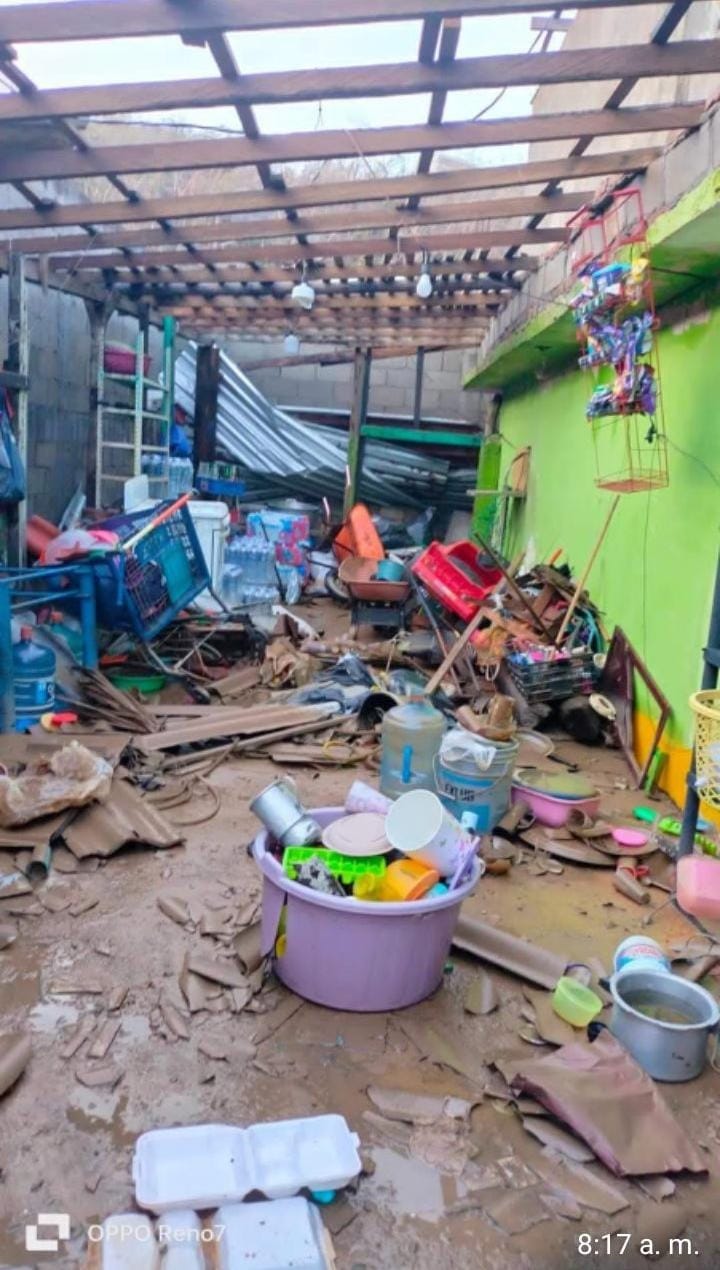
Mexican president Andrés Manuel López Obrador said that 250,000 families were left homeless after the hurricane, including Cecilia and her children. Despite its fame as a beach town for the rich and famous, Acapulco and its surrounding regions—where about 800,000 people reside—is one of the poorest places in Mexico. Cecilia’s house was among 50,000 destroyed and 273,844 damaged. And Otis is just one glimpse into Mexico’s climate woes. A week later the entire community of El Bosque, Tabasco, had to evacuate after the sea heaved in (no hurricane here on the Gulf of Mexico, just the rising sea) and destroyed 35 houses. According to a platform developed by NASA that allows viewers to see sea level rise projections from 2020 to 2150, the El Bosque incident might indicate things to come along the Mexican coastline, where coastal cities such as Acapulco, Cancún, and Cabo San Lucas might not even survive the next 100 years. According to Animal Politico, if you add the droughts and heat plaguing the country to Otis and El Bosque, and additional displacements due to mining projects and violence—there were at least 379,000 people displaced in Mexico at the end of 2023. Globally, the climate crisis is displacing an average of 23 million people each year, and according to projections, there will be many more climate refugees in the future, all in a world of increasing border fortification.
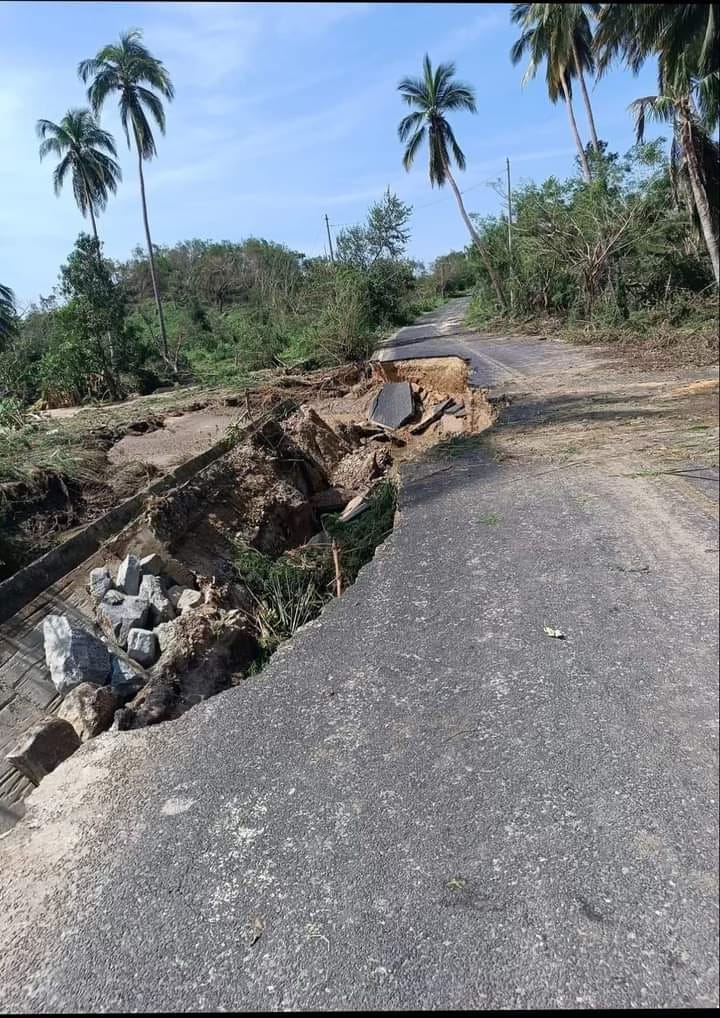
Back in San Isidro, Cecilia tried to deal with the aftermath of Otis. The damage to the roads isolated the small rural community. Not only were houses decimated but people were cut off from food and water. Work was impossible; Cecilia had to travel to Acapulco about 9 miles away to clean houses. With little aid arriving from outside, she contemplated heading north to the United States. “What else could I do for my children?”
“Did other people leave too?” I asked her when we talked by phone on January 23. Cecilia and her children were at a shelter in Tijuana. Yes, “some left, some stayed.” The first documented case of migration after Hurricane Otis was reported by Salvador Rivera of Fox 5 San Diego. On November 2, he wrote that the first family—two adults and three children—arrived to the U.S. border “seeking asylum” and that shelters were preparing for the possibility of more people. There was one big problem with this, as I was told by Amali Tower, executive director of the organization Climate Refugees: asylum does not exist for people fleeing a climate catastrophe. “Even if the U.S. gave people Temporary Protected Status,” as occasionally happens in disaster situations, “they have to be already in the United States to begin with to qualify,” Tower said. A climate refugee status does not exist.
So just what is the U.S. policy on climate refugees? When Joe Biden took office in 2021, he ordered the White House to investigate and better understand the connection between climate change and migration. For advocates, this seemed like a solid step in the right direction. Biden was the first U.S. president to make connections between these converging, important issues. In October 2021 the White House released its Report on the Impact of Climate Change and Migration. With the report came the formation of an interagency task force in the White House’s National Security Council “to mitigate and respond to migration resulting from the impacts of climate change.” Since then, however, “nothing has come of this task force,” Tower said. And it’s no accident that the working group on climate change migration is under the National Security Council. “They’re not kidding,” Tower said. “They see this as a national security issue.”
For decades, the United States has framed climate change and its humanitarian consequences as a national security issue. Annual threat assessments by the U.S. National Intelligence Directorate are the perfect example of this. The 2023 version mentions “migration” 17 times. Migration, it says in the section on climate change, could heighten tensions over resources such as water and arable land and cause instability.
The Department of Homeland Security Climate Action Plan piggybacks off these sorts of intelligence threat assessments:
“Climate change endangers national security and DHS’s mission of safeguarding the American people, our homeland, and our values. The Intelligence Community recently stated that a changing climate will create a mix of direct and indirect threats, including risks to the economy, heightened political volatility, human displacement, and new venues of geopolitical competition that will play out during the next decade and beyond. Climate change has already contributed to instability in strategically important areas; it is a “threat multiplier.””
In other words, from a U.S. national security perspective, Hurricane Otis is not the real threat; the real threat is people like Cecilia and her family. The real threat, no matter how unfounded, is the sudden appearance of 250,000 homeless people.
The border and its enforcement apparatus have been designed to be a climate battlefield. The DHS climate plan “calls for the Department to conduct integrated, scalable, agile, and synchronized steady-state operations across the depth and breadth of the area of responsibility, to secure the Southern Border and Approaches.” This includes Operation Vigilant Sentry, which “integrates the activities of the Department’s Components to prevent, deter, prepare for, respond to, and recover from an actual or potential maritime mass migration originating in the Caribbean region.”
That is to say, far from developing a climate refugee status (not mentioned in the DHS plan), U.S. border policy for climate migrants is to deter people with walls, armed agents, technological surveillance, arrests, detention, deportation, and mind-boggling, slow-moving bureaucracy.
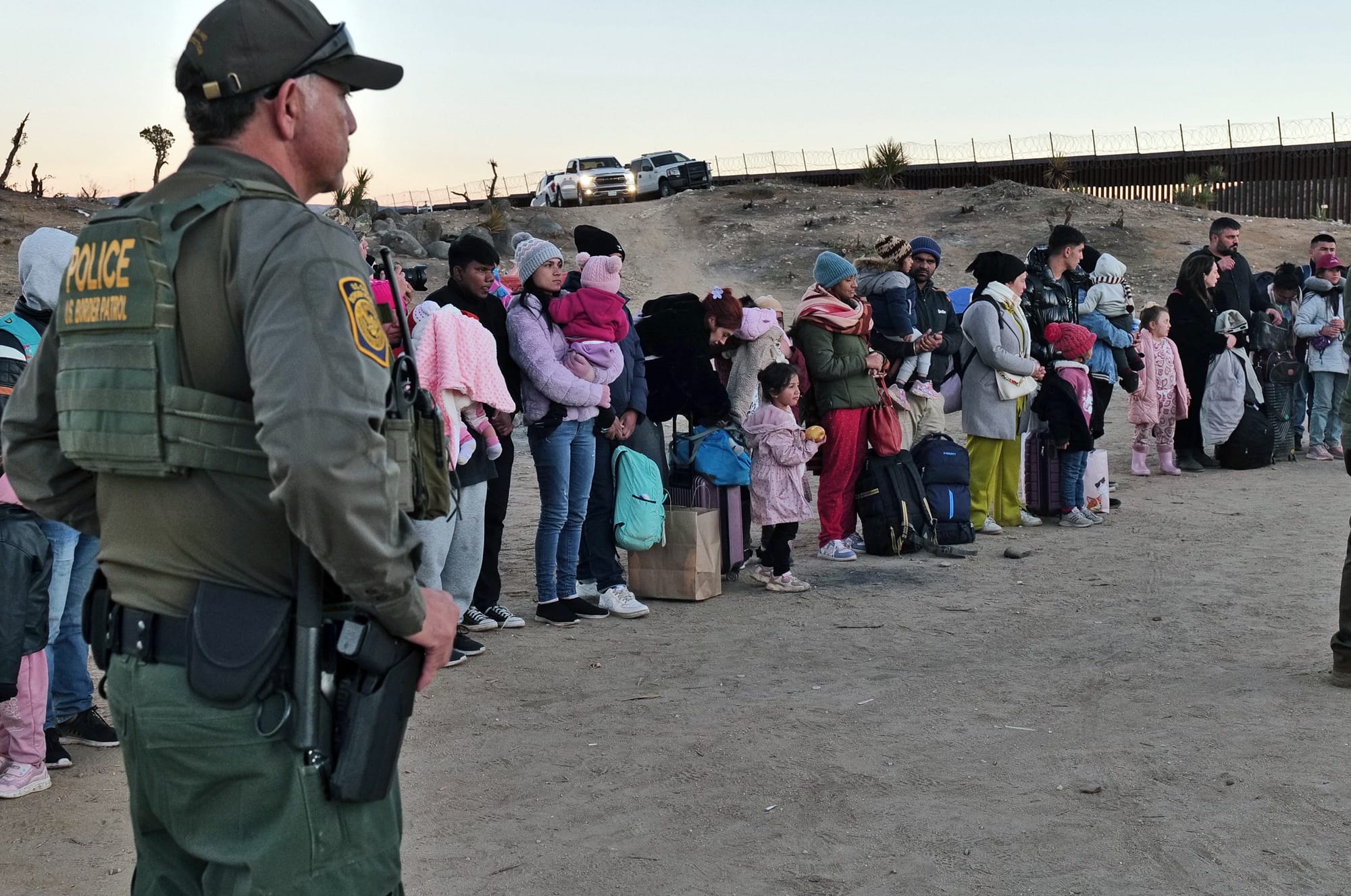
Cecilia ƒand her family have been in a Tijuana shelter for more than a month. They came north in December and like all people seeking asylum, she applied using the glitchy CBP One app and was awaiting word on that. According to the legal and humanitarian assistance organization Al Otro Lado, many people from Guerrero continue to arrive in Tijuana, particularly in the last year, many of them coming after the hurricane, though many say violence is the primary reason for their migration north. Guerrero seems to fall into what sociologist Christian Parenti calls the “catastrophic convergence” in his book Tropic of Chaos: Climate Change and the New Geography of Violence. People are migrating not because of just one issue, but a convergence of compounding dynamics that include violence (including state violence), economic marginalization, and increasing climate catastrophe.
When I asked Cecilia about returning to Acapulco, she said, “We don’t want to go back. Why would we?”
There was a long pause on the phone. Then she told me, “I don’t want to remember what happened,” her voice cracked with emotion on the final word.
The Border Chronicle is a reader-supported publication. To receive new posts and support our work, consider becoming a free or paid subscriber.
Author

Related Articles

Wall Watch: Mapping Trump’s $46 Billion Border Mega-Project
In this week’s podcast, Melissa del Bosque and Geographer Dugan Meyer explain how the Border Chronicle’s new project, Wall Watch, helps residents document and understand the massive construction project underway at the U.S.-Mexico border.
Protecting the Last Grandmother Cottonwood: A Podcast with Kate Scott
A vivid depiction of what has been happening during the last eight weeks of resistance against border wall construction in southern Arizona’s San Rafael Valley.

The Sonoran Desert’s Endemic Psychedelic: A Q&A with Writer Kimon de Greef
A new book tells the scandal-ridden tale of Sonora’s toad-smoking neo-shaman.