
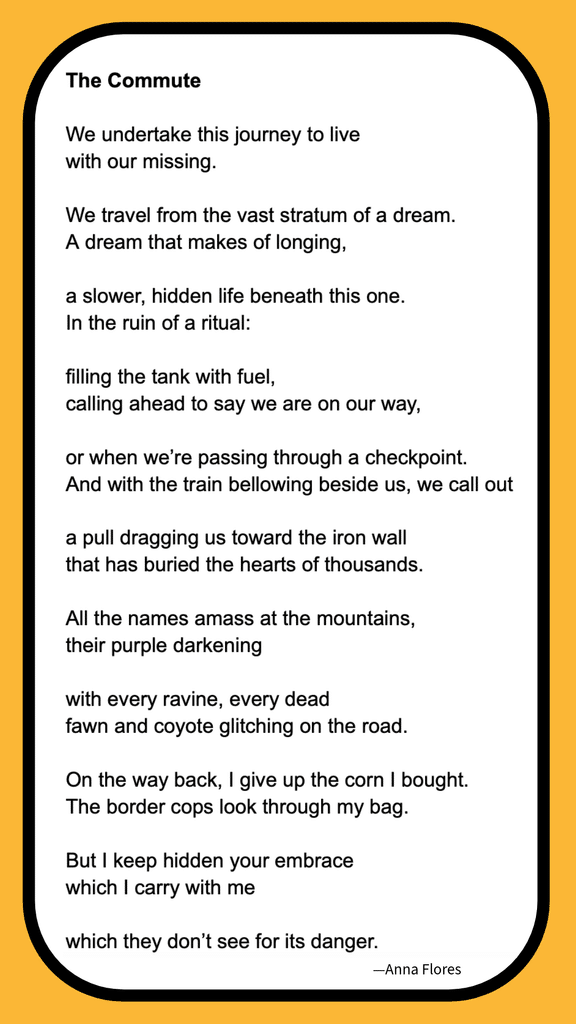
The Border Chronicle Weekly Roundup + Poetry Supplement: November 20
Experts weigh in on what border enforcement will look like in a blue Texas, a dispatch from the UN climate talks in Turkey, and a new report shows a nearly 2,000% increase in deaths at the border.



On Thursday, the Arizona-based nonprofit No More Deaths released a shocking but, unfortunately, not surprising finding in its updated data and map of migrant deaths across the U.S.-Mexico border region. Here it is in black & white from their report: “The mortality rate at the border has risen from 34 deaths per 100,000 apprehensions in 2024 to approximately 647 deaths per 100,000 apprehensions in 2026—a staggering 1,810% increase in the death rate over a period of less than three years.“
Yes, fewer people are crossing, but more people are dying. Let that sink in.
And anyone who has followed immigration and border policy for any amount of time knows that the more people the Trump administration deports — especially people with deep roots in this country— the greater number of people we will see at the border trying to return. Because it is only human to want to be with your loved ones. Especially at this time of the year as we enter the holidays.
Also, according to the new report, the Trump administration is no longer making any of the official data on these deaths available, and most likely is not even tracking these deaths.
According to Bryce Peterson, a No More Deaths aid worker who co-authored the latest report: “This is not just a case of an inhospitable desert killing people due to Border Patrol enforcement pushing migrants into more remote areas, but a situation where now one in every three deaths on the border can be attributed directly to Border Patrol actions or the border barrier.”
In January, many of the newly elected Democrats who promised to end the cruel policies inflicted by the Trump administration will be sworn in to Congress. These deaths occur due to policies made in Washington, and they can just as well be undone. In No More Deaths’ report, they offer a list of policies that could be ended to stop this suffering: End prevention through deterrence, abolish Border Patrol and ICE, and reopen legal asylum pathways, and urge medical examiners in border counties to follow the lead of the Pima County Office of the Medical Examiner, the New Mexico Office of the Medical Investigator, and the El Paso Office of the Medical Examiner in recording migrant deaths.
Let’s hope these newly elected officials act according to their consciences.

This Week in The Border Chronicle:
In “Blexas,” How Much Can Really Change?
Experts discuss what scaling back enforcement at the Texas border might look like. By Caroline Tracey
The Border Around the Negotiating Table: A Report from the UN Climate Summit
A bureaucratic wall determines who can and cannot participate in the world’s most important conference on climate change, and who has and doesn’t have a say in climate policy. By Amali Tower
More News from Across the Border Region:
Immigration observers report tense run-ins with Tucson police Arizona Luminaria
ICE officer injures 18-year-old student, then threatens her with gun and Taser Daylight San Diego
Brief: AG urges County to delay vote on massive data center, announces town hall Cochise Regional News
The ‘blue wave’ could foil the Trump administration’s Big Bend wall plans The Guardian
Gov.-elect Gina Hinojosa says she talked border with Trump, will roll back Abbott executive orders on H-1B visas, THC The Texas Tribune
And…Support a film? Independent Tucson filmmakers are seeking support to create a social impact film, “El Respiro” about the “nuanced nature of immigration enforcement and how Indigenous communities have to constantly fight for their right to exist.” You can find out more and support their project here.
Have a wonderful Thanksgiving!
Author
Related Articles
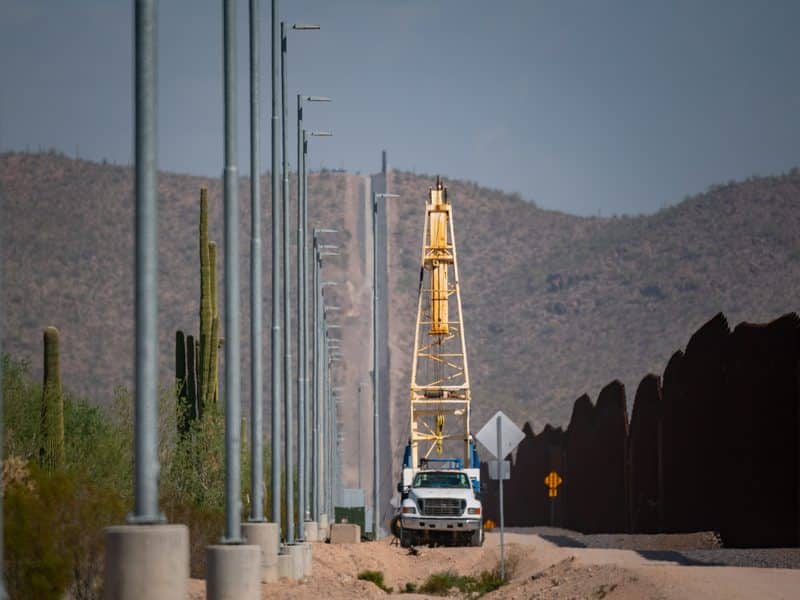
The Border Chronicle Friday Roundup + Poetry Supplement: November 13
How U.S.immigration policy impacts the working poor in Mexico, the Trump administration bulldozes a UNESCO site, and how a conservative opened an underground railroad for asylum seekers.

The Border Chronicle Weekly Roundup + Poetry Supplement: November 6
The border turns blue; now it’s time for a new vision for the borderlands. What the election means for humanitarian work, and a post-election dispatch from New Mexico.
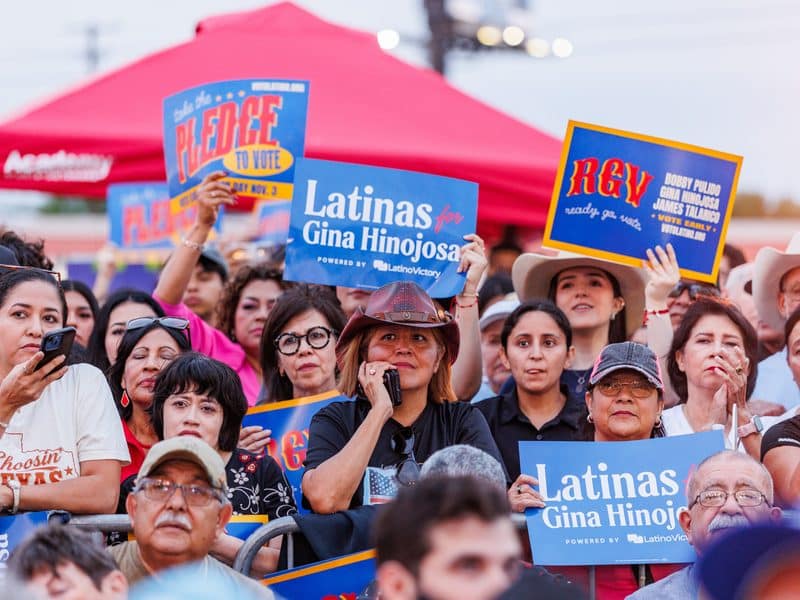
The Border Chronicle Weekly Roundup and Poetry Supplement: October 30
Will Latino voters help Democrats break a 30-year losing streak in Texas? And why do Democrats still sound like Republicans when they talk about the border?


Comments (0)
There are no comments on this article.