
A New Campaign to Get the Border Patrol to Stop Trashing Asylum Seekers’ Possessions
“There’s really no reason for what they’re doing other than to strip people of their humanity.”
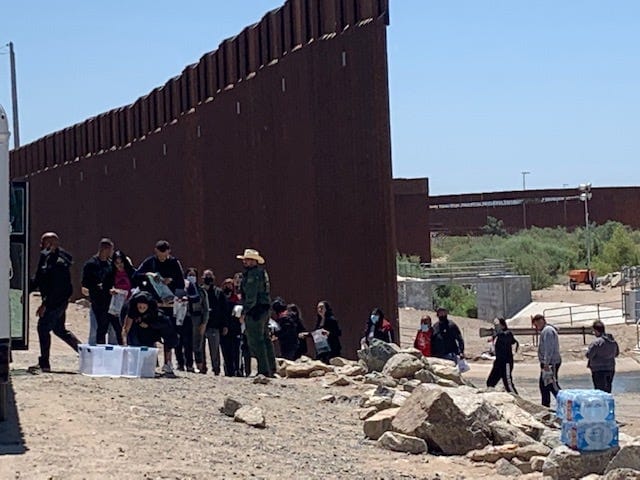
In May, I wrote about how Border Patrol agents in South Texas and Yuma, Arizona, are trashing asylum seekers’ personal possessions, including their passports and confidential documents, which are crucial for filing an asylum claim. The story also ran in the Guardian.
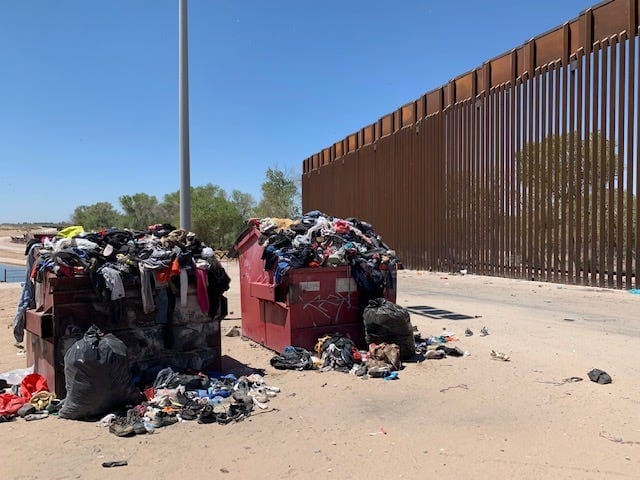
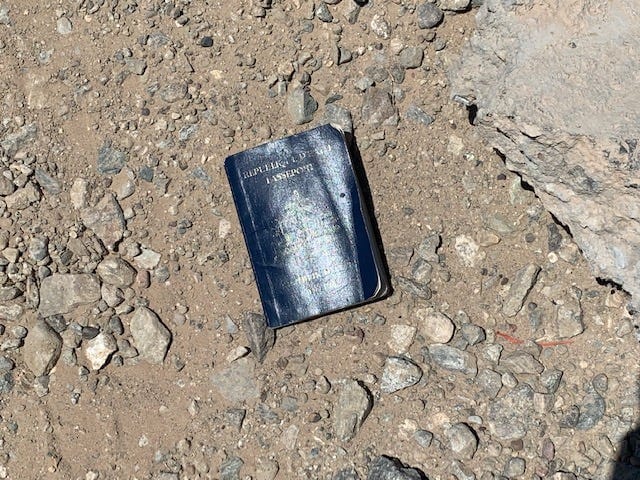
In late April, I visited the border wall near the Morelos Dam in Yuma, where I found a Haitian passport and several Cuban ID cards. They were lying in the dirt next to two dumpsters overflowing with backpacks, shoes, and other possessions. The Border Patrol allows each person only a small plastic Department of Homeland Security bag for all their things.
The same thing has been happening in the Rio Grande Valley sector of Texas. Scott Nicol, an artist and educator, has been collecting personal items left behind on the U.S. side of the border wall for more than two years, he said. As I wrote in my previous piece, he’s found birth certificates, passports, police reports, and other confidential documents.
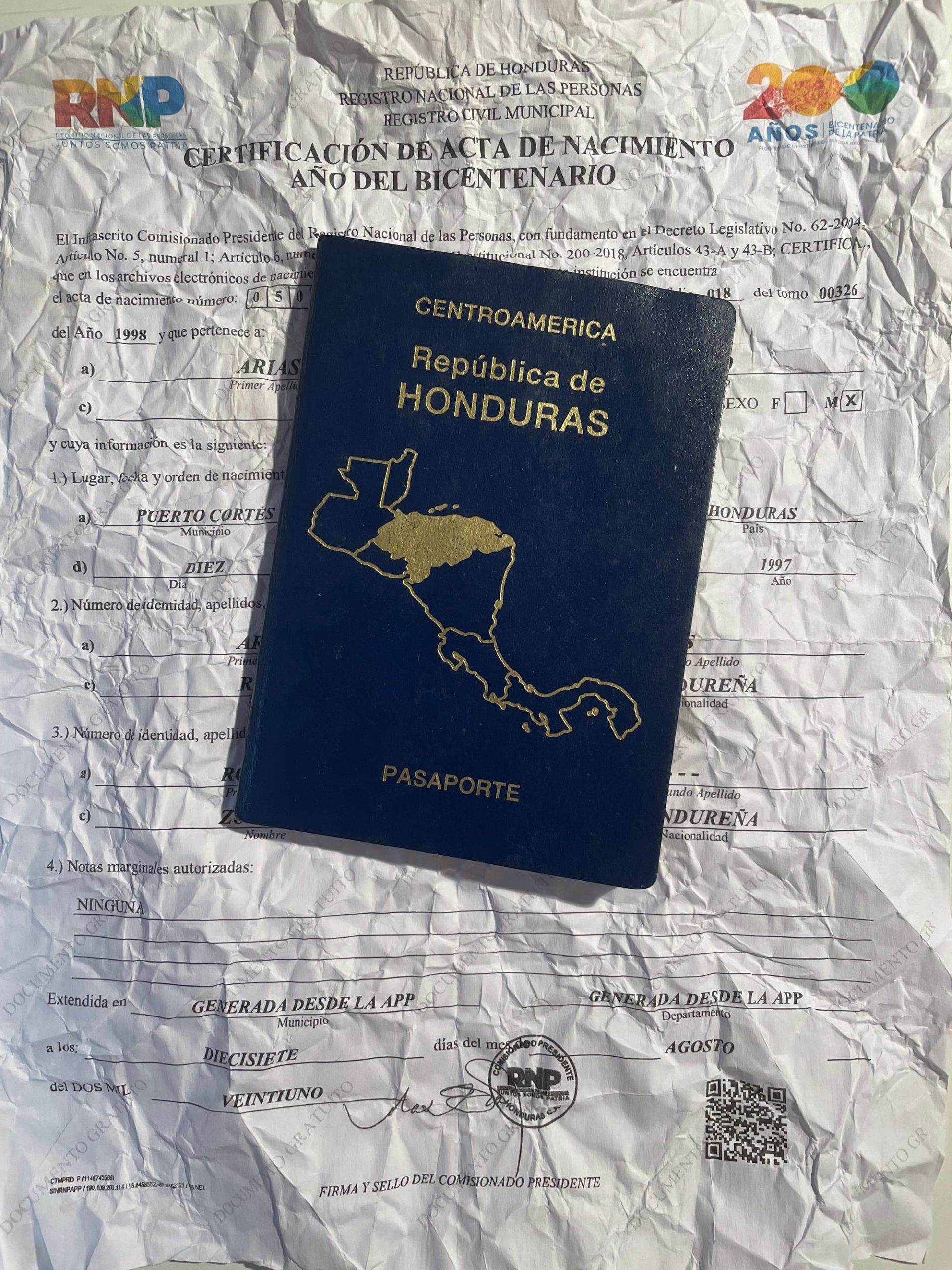
Asylum seekers are forced to do this. They don’t travel thousands of miles with important documents, many of which they need to make an asylum claim, only to trash them once they arrive in the U.S. Answers from Customs and Border Protection have been less than satisfactory. In an email a CBP spokesperson said he “could not speculate on the motivation of an individual discarding copies of personal vital statistic documentation.”
But after my article came out, a group of social justice and immigration advocates in Arizona, led by a Tempe-based nonprofit called the Uncage and Reunite Families Coalition, has pursued this issue. On August 4 the group held a press conference in Phoenix, launching its campaign to inform people about the problem and to get Border Patrol to change its practices. Participants included the Kino Border Initiative, Florence Immigrant and Refugee Rights Project, the AZ-CA Humanitarian Coalition, AZ Jews for Justice, and Shadow Rock United Church of Christ.
The coalition has made a video to get the word out.
Carolyn O’Connor, co-chair of the coalition, said that on June 3 the organization’s attorney sent a letter to DHS secretary Alejandro Mayorkas, Yuma Border Patrol chief Chris Clem, and Tae Johnson, acting director of Immigration and Customs Enforcement, as well as several other elected officials. The letter noted that what agents are doing in Yuma and the Rio Grande Valley violates federal, state, and international laws, including the Universal Declaration of Human Rights and Convention on the Status of Refugees.
The letter made several requests, including that Border Patrol abide by its own National Standards on Transport, Escort, Detention, and Searches. It also called for agents to be retrained in these procedures, for an investigation into the agents trashing the items, and for these agents to be disciplined.
The letter prompted Arizona congressman Raúl Grijalva (D-Tucson) to send a letter of his own, along with 22 other congressional representatives, asking for a nationwide review of CBP and ICE procedures relating to peoples’ possessions. The letter asks that both agencies respond to several queries regarding agents’ actions.
O’Connor said that Yuma BP chief Clem responded to the Uncage and Reunite Families Coalition, saying that his agents will now give each asylum seeker a claim ticket and will store their possessions for 30 days.
O’Connor, a retired college administrator who also volunteers every week at a welcome center in Phoenix for asylum seekers, said it’s ridiculous to think that a migrant can afford to return to Yuma to pick up his or her things—especially in such a short time. “There’s no way they can get back there,” she says.
Fernando Quiroz, a volunteer in Yuma with the AZ-CA Humanitarian Coalition, echoed this, saying that for migrants, returning to Yuma to retrieve their things is an “expense that they can’t afford.” They barely have enough money to reunite with their families, he said. “They’re going to Miami, New Jersey. They’re not going to be able to come back in person to Yuma and retrieve their things.”
Quiroz said he was told by a Border Patrol agent that possessions will be trashed after 30 days if they’re not claimed. Quiroz says he’s finding fewer backpacks and other personal items in the two dumpsters near where asylum seekers present themselves to Border Patrol agents at the border wall, but items are still being thrown away. “There are good agents and bad ones,” he says. “Some can care less that there’s been a policy change.”
On August 2 journalist John Washington, in a story published in AZ Luminaria and The Intercept, documented agents in Yuma forcibly removing and throwing away turbans worn by Sikh asylum seekers, who consider them sacred. The ACLU sent a letter to the Yuma Border Patrol sector protesting the practice.
“The issue is the culture of Border Patrol and ICE,” says O’Connor. “There’s really no reason for what they’re doing other than to strip people of their humanity.” In Texas, Chief Clem is best known for his “smoke and pony show” in El Paso during the Trump era. As I wrote in a September 2021 article, Clem, then deputy chief of the El Paso sector, hatched a plan to deploy heavily armed agents on foot and on horseback to the international bridge, along with helicopters, armored vehicles, and smoke that looked like tear gas for the news cameras a week before the 2018 midterm elections, as Trump railed on about caravans and an “invasion” of Central Americans. During Clem’s term in El Paso, they also kept migrants penned up in outdoor cages in the summer heat.
O’Connor said the coalition’s mission now is to get the word out about how the Border Patrol is trashing people’s things. In Texas the practice is still common. And O’Connor said she’d like to speak with social justice organizations in Texas about expanding their campaign. “We’re taking the show on the road, and taking it to churches, community organizations, and encouraging people to write to their elected officials,” she says. “Most people have no idea that this is happening. The response we’re getting so far is just amazement, and people are angry. They just can’t believe that this is going on.”
Author

Related Articles

Immigration Policy Is Maternal Health Policy
Research in Texas confirms what border communities already know: that harsh immigration policies harm maternal health. As border-style enforcement spreads across the United States, its consequences for mothers and infants will spread with it.
Why Local Pressure is Key to Impacting National Immigration Politics: A podcast with John Washington, author of “How to Close a Camp.”
In February, the country broke an ominous record: over 68,000 people were being held in detention by Immigration and Customs Enforcement, more than ever before.

From Fear to Hope: At a Tucson Summer Camp, Asylum-Seeking Children Find Joy Again
As immigrant families face detention, shrinking legal protections and the threat of deportation, Camp Hope offers children a rare chance to play, heal and dream. One former camper is headed to an opera conservatory in Italy.