Buh Bye Kristi Noem, and who the heck is Markwayne Mullin? Trump's new pick for DHS secretary. Plus, an epic novel about the U.S. and Mexico's joint erasure of Apachería, and historian and author Lydia Otero on Tucson's racial and urban history, and more.
Historian and writer Lydia Otero on growing up in the borderlands, Tucson's racial and urban history, and their most recent book, Storied Property: María Cordova's Casa.
Asylum at the U.S.-Mexico Border has Never Been More Complex: A Podcast with Caitlyn Yates
Yates, co-author of a new report on asylum processing, speaks of increasingly fragmented asylum policies at the U.S.-Mexico border as a historic number of people cross the Darién Gap.
Migrants and asylum seekers line up to be processed by Border Patrol after crossing the U.S.-Mexico border on December 07, 2023, in Lukeville, Arizona. (Photo credit: John Moore via Getty)
Asylum at the U.S.-Mexico Border has Never Been More Complex: A Podcast with Caitlyn Yates
0:00
/12000
It’s been almost a year since the U.S. government rolled out the CBPOne app, which was meant to reduce the number of migrants arriving at the U.S.-Mexico border.
But a historic number of people continue to arrive. In Lukeville, Arizona, people from all over the world line up to be processed by Border Patrol with the aim of applying for asylum, while in Matamoros, Mexico, migrants wait for months in camps with no running water or toilets for an appointment on CBPOne. And in Tijuana, and other border cities, wait lists grow for vulnerable migrants, just as they did for Title 42 exemptions. “I’ve never seen it so complex as it is now,” says Caitlyn Yates, a PhD student in sociocultural anthropology at the University of British Columbia, who released a new report, along with fellow migration expert Stephanie Leutert, giving us a snapshot of the increasingly complicated puzzle that is asylum policy at the U.S.-Mexico border.
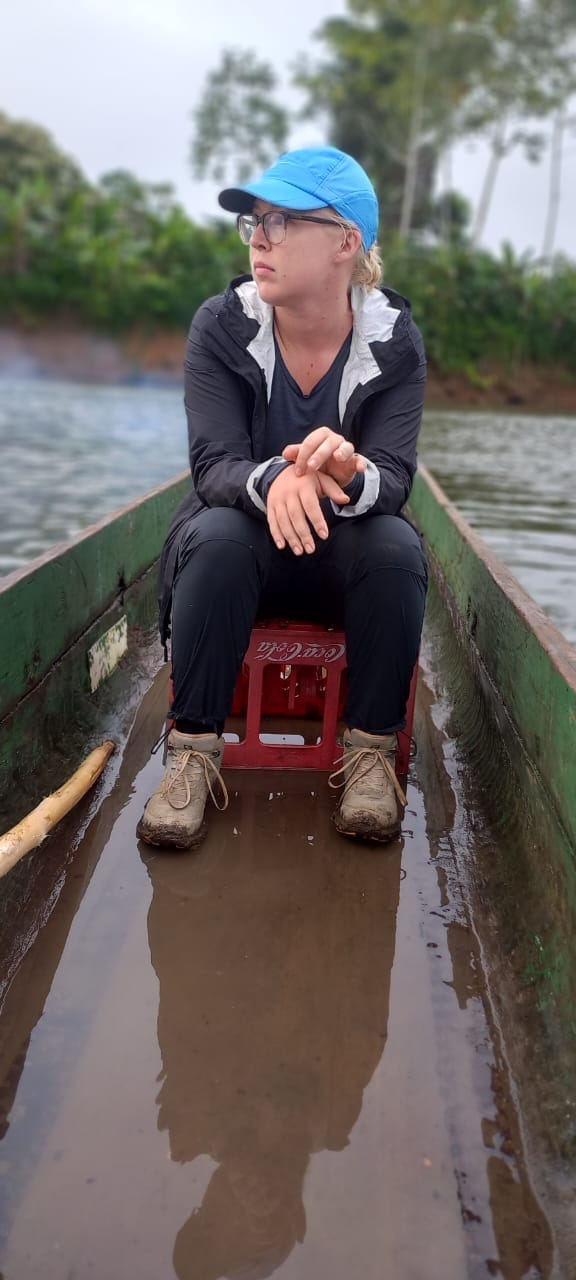
Yates joins us from Panama, where she studies the migration flow through the Darién Gap, one of the most dangerous migratory crossings in the world. This year, the jungle crossing will have seen a historic number of migrants, she says, most of whom are on their way to the U.S.-Mexico border.
Caitlyn Yates in the Darién Gap. (Photo courtesy of Caitlyn Yates)
Logan Phillips was born in Tombstone, Arizona—a town best known for Old West-themed gunfight tourism. In his new book, Reckon, Phillips explores his relationship to the unusual setting of his childhood through themes of masculinity, history, and land.