
Border Hacker: A Podcast with Levi Vonk
A rare in-depth look inside a migrant caravan and Mexico’s amped-up border enforcement, along with scathing revelations about humanitarian networks on the Mexican migrant trail

Greetings from 106 degree Tucson! Today we have a few announcements to make before we get started.
First, we have a special offer. The first five people who become paid subscribers after this podcast publishes will receive a free copy of the book Border Hacker: A Tale of Treachery, Trafficking, and Two Friends on the Run. Listen to the podcast and you’ll see why this is a score.
Second, we want to thank everyone who responded to our Tuesday post asking for support as we navigate the journalism world after our funding ends in September. The response and encouragement were both uplifting and deeply appreciated.
Last, we want to announce that we will have a discussion thread on Thursday, June 16, at 10 a.m. Pacific/11 a.m. mountain/noon central/1 p.m. eastern. The discussion will feature a comparative analysis of U.S. and European borders, and we will again be joined by experts who will both field questions and be in conversation with readers. Guests include Petra Molnar of the Refugee Law Lab (Petra has already made a valuable contribution to The Border Chronicle); Lauren Markham, author of The Faraway Brothers: Two Young Migrants and the Making of an American Life, who has also written extensively on European border enforcement; Mark Akkerman, a researcher at the Dutch organization Stop Wapenhandel (and Transnational Institute), who has examined the border industrial complex of Fortress Europe like no other; and David Alvarez, English professor at Grand Valley State, who brings a literary perspective, especially from the point of view of the Mediterranean coast of Gibraltar.
We offer our discussion threads for paid subscribers only. We are committed to offering as much of The Border Chronicle as we can for free. But as two working freelance journalists—as mentioned in our Tuesday post—we rely on paid subscriptions to keep the lights on. Please consider supporting The Border Chronicle with a subscription for just $6 a month or $60 annually (a deal!) and help us become sustainable in 2022. We appreciate ya!

Border Hacker: A Podcast with Levi Vonk
A rare in-depth look inside a migrant caravan and Mexico’s amped-up border enforcement, along with scathing revelations about humanitarian networks on the Mexican migrant trail
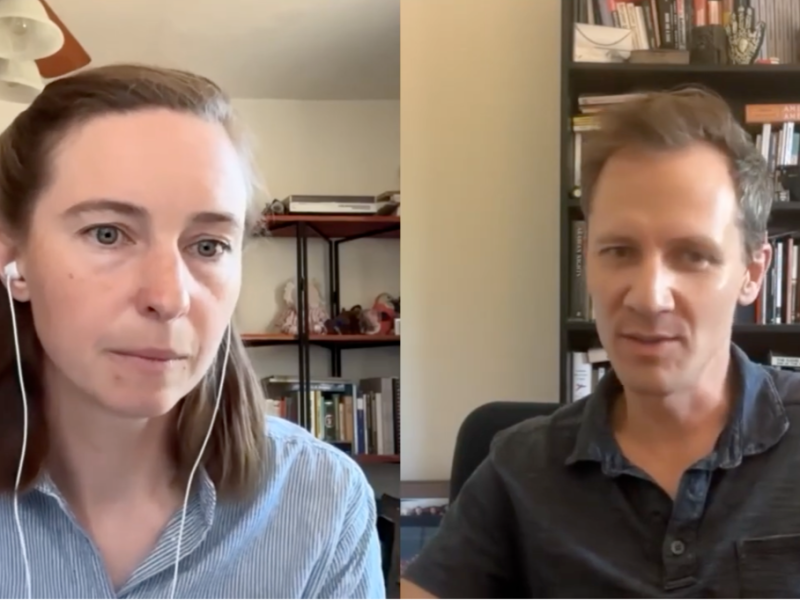
Right when the book Border Hacker: A Tale of Treachery, Trafficking, and Two Friends on the Run was published in late April, authors Levi Vonk and Axel Kirschner began to receive death threats. On one hand this extraordinary and page-turning book is about the unlikely friendship between an anthropologist from Georgia and a deported hacker from New York City (where he arrived at the age of one after his birth in Guatemala) after they met on a caravan in Oaxaca in 2015. On the other, Border Hacker is also a work of high-quality immersive journalism that not only gives close-up reporting on Mexico’s U.S.-pressured border enforcement apparatus, but also offers an intimate and scandalous view of the humanitarian network on the Mexican migrant trail. In other words, this book steps on some powerful toes. Levi talks about all this in the following interview, from the threats to a “shelter” that is really an auto shop, where migrants are detained and forced to work.
Border Hacker also dives into the friendship that forms between Axel and Levi. Through the prism of this bond, Levi makes a strong, persuasive case for taking a risk and fighting for a better world. Please enjoy.
The Border Chronicle is a reader-supported publication. To receive new posts and support our work, consider becoming a free or paid subscriber.
Author

Related Articles

Immigration Policy Is Maternal Health Policy
Research in Texas confirms what border communities already know: that harsh immigration policies harm maternal health. As border-style enforcement spreads across the United States, its consequences for mothers and infants will spread with it.
Why Local Pressure is Key to Impacting National Immigration Politics: A podcast with John Washington, author of “How to Close a Camp.”
In February, the country broke an ominous record: over 68,000 people were being held in detention by Immigration and Customs Enforcement, more than ever before.

From Fear to Hope: At a Tucson Summer Camp, Asylum-Seeking Children Find Joy Again
As immigrant families face detention, shrinking legal protections and the threat of deportation, Camp Hope offers children a rare chance to play, heal and dream. One former camper is headed to an opera conservatory in Italy.