Buh Bye Kristi Noem, and who the heck is Markwayne Mullin? Trump's new pick for DHS secretary. Plus, an epic novel about the U.S. and Mexico's joint erasure of Apachería, and historian and author Lydia Otero on Tucson's racial and urban history, and more.
Historian and writer Lydia Otero on growing up in the borderlands, Tucson's racial and urban history, and their most recent book, Storied Property: María Cordova's Casa.
Climate, Tech, Borders, and Gaza: A Podcast with Amali Tower
A lively conversation about how surveillance tech, created and tested in Israel & the US, targets climate refugees across the world. And how refugees have much better solutions than more of the same.
Climate, Tech, Borders, and Gaza: A Podcast with Amali Tower
0:00
/12000
In this episode the executive director of Climate Refugees, Amali Tower, crosses the globe from Israel/Palestine to the U.S.-Mexico borderlands to look at the technology that connects the seemingly disparate realities of warfare, surveillance, and immigration raids, putting them in the context of climate change and increasing global displacement. When people arrive to the U.S.-Mexico border, Tower says, they get “the same digital fortress, the same technical fortress, the same virtual wall, and the same physical wall that has been battle tested in Palestine and on Palestinians.”
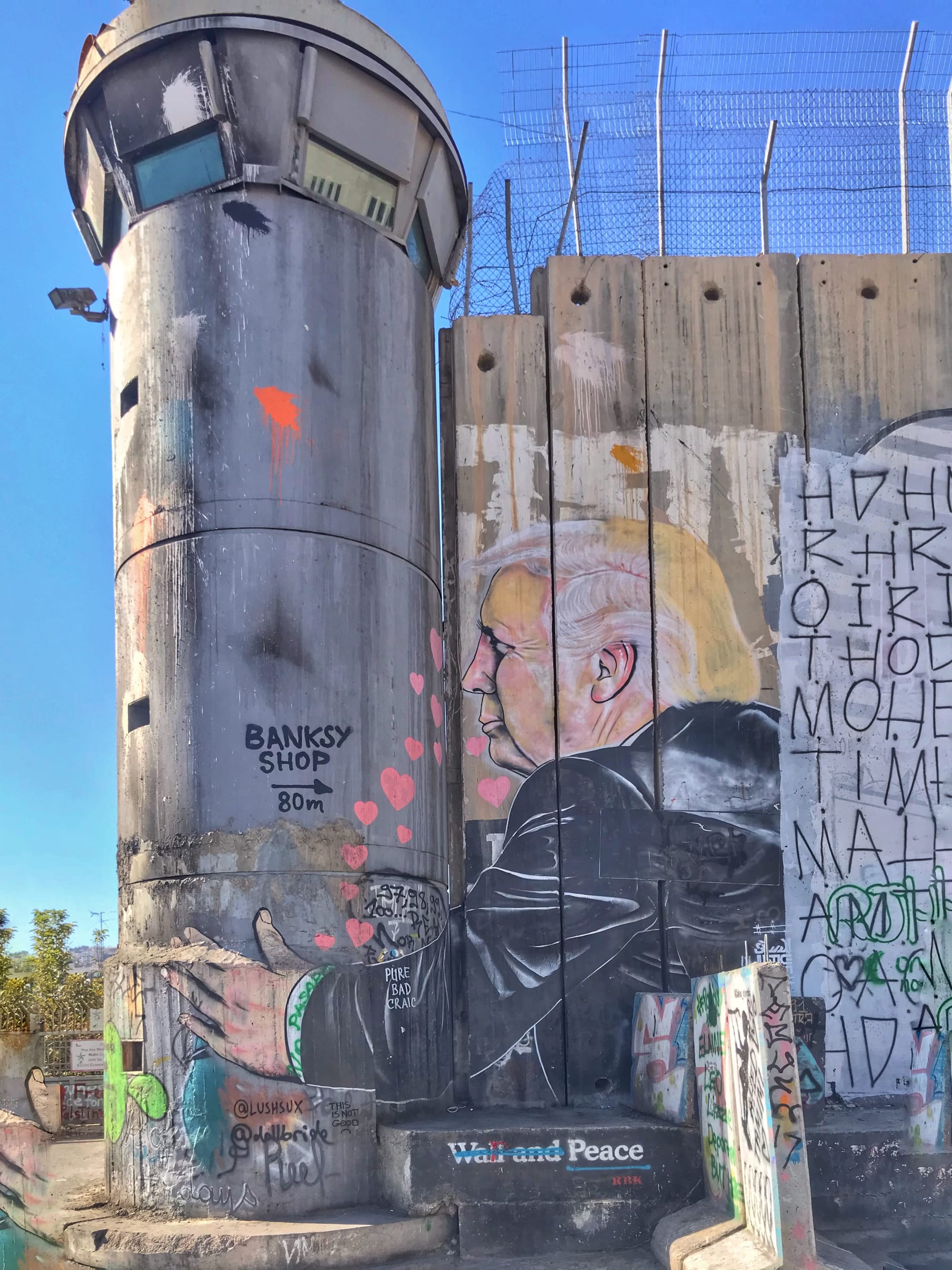
The separation wall in Bethlehem, Palestine in 2021. (Photo credit: Amali Tower).
Stay to the end of the conversation, when we turn to alternatives and what people can do to make the world a better place. Amali talks about her visit to Arizona and Sonora last year, when we visited the binational fair trade coffee cooperative Café Justo in Agua Prieta. As you’ll hear, this is a thriving example of an alternative to border militarization and an assertion of the right to stay home.
Amali says that in the 10 years that she’s been looking at the intersection of climate and displacement, she sees “blatant hypocrisy from countries seemingly supposedly caring about saving the planet for future generations to come” while they are simultaneously undermining “all those goals and plans and adaptations and all these wonderful things we are supposed to be doing for the so-called existential threat.”
Instead, she continues, “When it comes to war and militarism, when it comes to borders, when it comes to keeping people out, it’s incredible how we only have language and infrastructure and architecture to do that.”
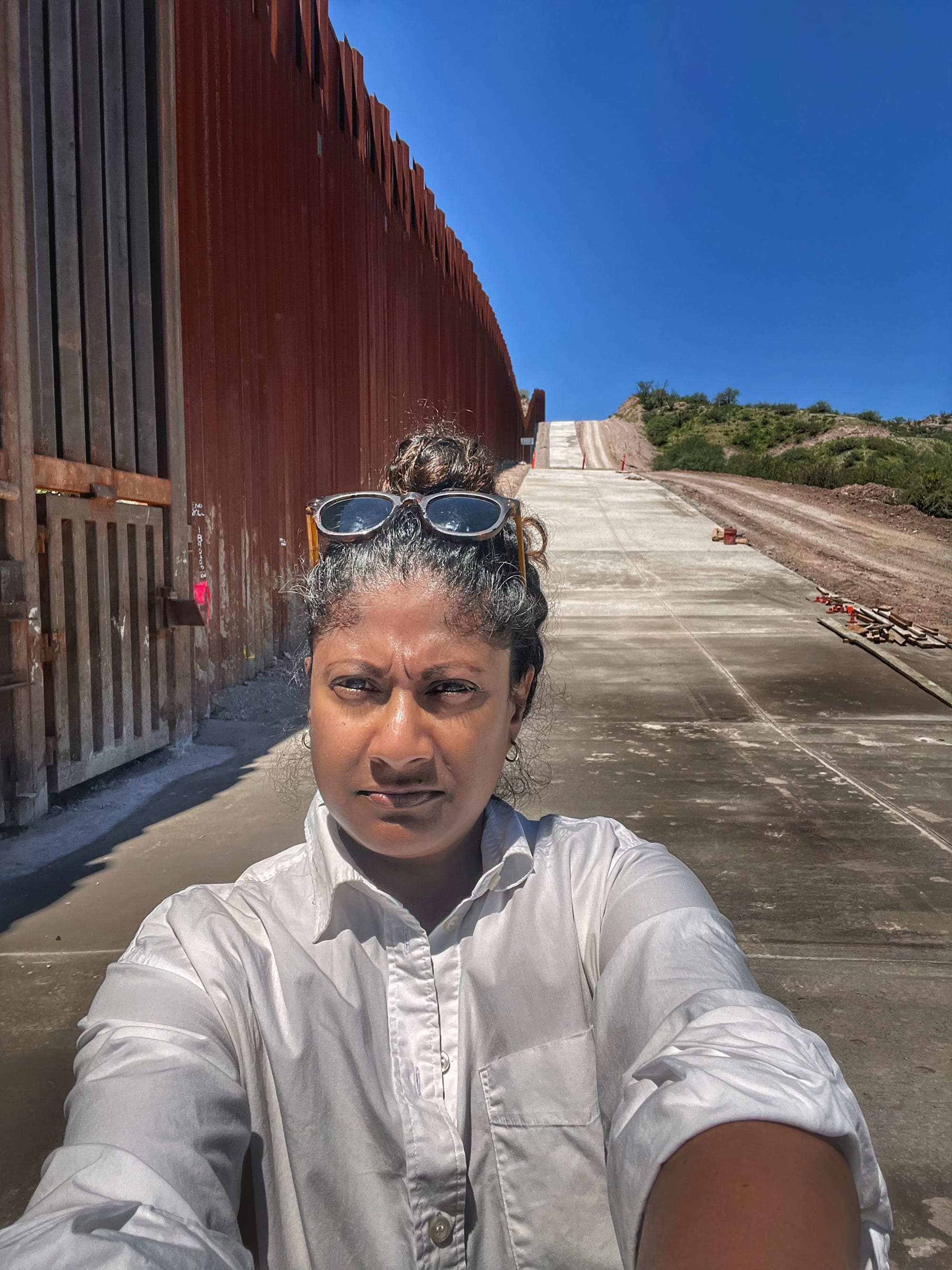
Walking from a blasted mountain top--a planned site for new border wall construction--to a makeshift military camp along the border in a remote part of southern Arizona led to a tense yet revelatory moment.
Logan Phillips was born in Tombstone, Arizona—a town best known for Old West-themed gunfight tourism. In his new book, Reckon, Phillips explores his relationship to the unusual setting of his childhood through themes of masculinity, history, and land.