Buh Bye Kristi Noem, and who the heck is Markwayne Mullin? Trump's new pick for DHS secretary. Plus, an epic novel about the U.S. and Mexico's joint erasure of Apachería, and historian and author Lydia Otero on Tucson's racial and urban history, and more.
Historian and writer Lydia Otero on growing up in the borderlands, Tucson's racial and urban history, and their most recent book, Storied Property: María Cordova's Casa.
No Borders as a Practical Political Project: A Podcast with Nandita Sharma
0:00
/12000
As the late Uruguayan writer Eduardo Galeano put it in his book Upside Down: A Primer for a Looking Glass World, the terminology used in mainstream political discourse often describes precisely the opposite of reality. Cut-throat capitalism is free trade. Violence is law and order. Extraction of natural wealth from communities is increasing revenue.
So where does “border security” fit in to this? Part of the answer is that borders do not produce security but subordination. This point has been made for two decades now by sociologist Nandita Sharma (see the essay “Why No Borders?,” which she cowrote with Bridget Anderson and Cynthia Wright). The point of borders is not to keep people out but to keep them in line. Borders are foundational to a global system fraught with injustice.
The struggle for no borders, Sharma explains, is a practical political project.
During our conversation, I wondered aloud whether “no borders” is still a practical political project, now that Donald Trump will take office for a second term. She responded without hesitation, “It’s not only a viable step, it’s the only step.”
As we concluded, we discussed the provocative quote from Italian thinker, philosopher, and Marxist Antonio Gramsci: “The old world is dying. The new world is struggling to be born. Now is the time of monsters.”
Those monsters are easy to identify with the incoming Trump administration and the nation-state it represents, along with increasing climate catastrophe. “This is the moment of solidarity,” Sharma said. “This is the moment for mutual support.” Indeed, she hinted, the moment has arrived to not only imagine but also to work for another possible world.
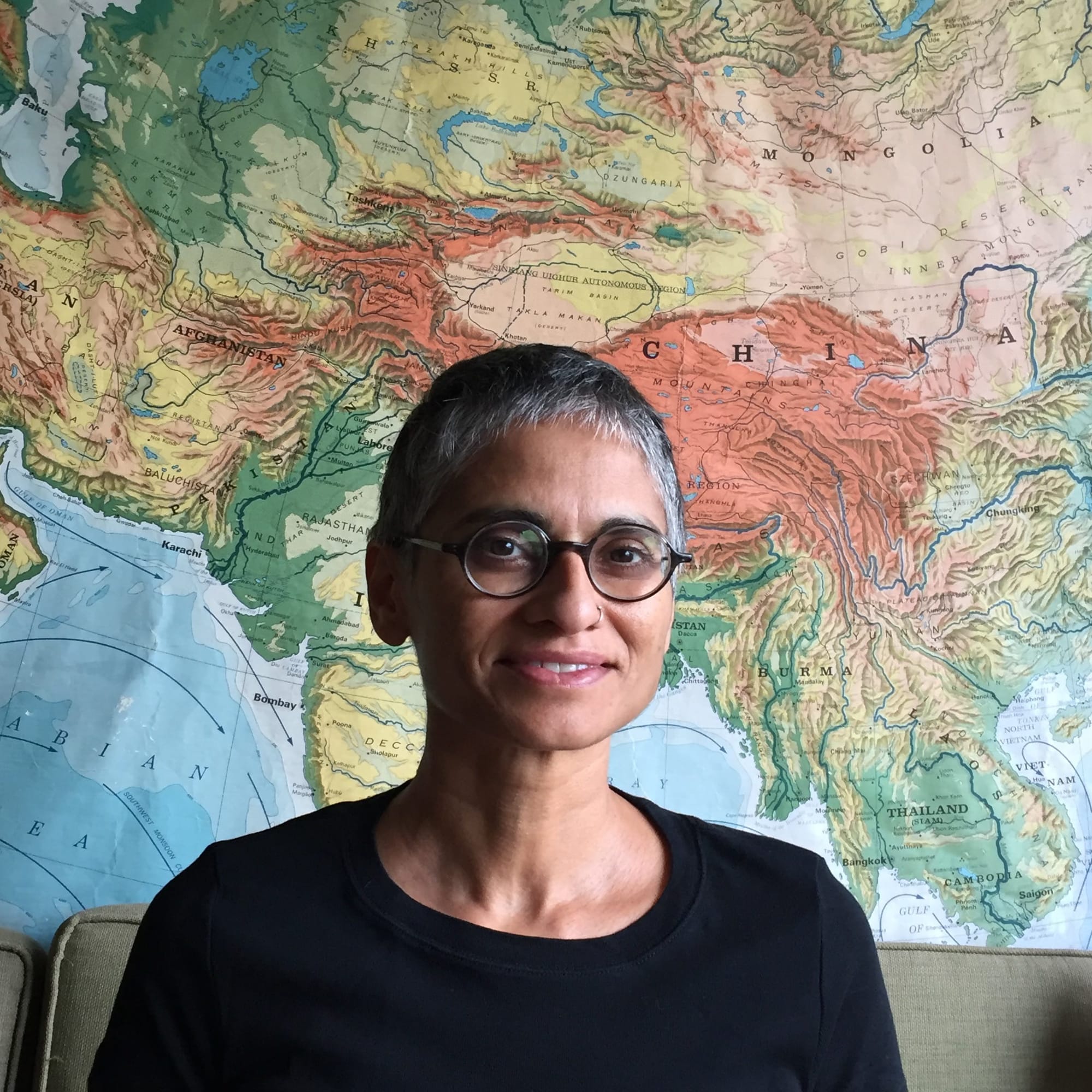
Photo courtesy of Nandita Sharma
The Border Chronicle relies on its readers to continue. Support independent journalism from the U.S.-Mexico border today for just $6 a month or $60 a year.
Logan Phillips was born in Tombstone, Arizona—a town best known for Old West-themed gunfight tourism. In his new book, Reckon, Phillips explores his relationship to the unusual setting of his childhood through themes of masculinity, history, and land.