
On Challenging Racism, and Creating a New Narrative about Border and Immigrant Communities: A Podcast Interview with Linguist Otto Santa Ana
An expert in critical discourse analysis, Santa Ana is a professor emeritus at the University of California in Los Angeles, where he’s spent decades analyzing political speech and media representations of Latinos and immigrants.

Otto Santa Ana, a linguist, once analyzed more than 6,000 of Donald Trump’s tweets, and his political speeches, for a Supreme Court case to defend the Deferred Action for Childhood Arrivals immigration program. He’s also parsed the speeches of former Arizona Senator Russell Pearce, who sponsored SB 1070, as evidence for a constitutional and civil rights lawsuit against Pearce’s anti-Latino “show me your papers” legislation.
Listening to so much of Trump’s racist language, Santa Ana says, made him and some of the university students who assisted him in the court case physically ill. “People became physically and mentally exhausted listening to this tirade day after day,” he says, “It was like listening to your family and your community being sworn at.”
An expert in critical discourse analysis, Santa Ana is a professor emeritus at the University of California in Los Angeles, where he’s spent decades analyzing political speech and media representations of Latinos and immigrants. He’s the author of Brown Tide Rising as well as numerous other books and academic articles.
In today’s podcast, Santa Ana talks about why metaphor and narrative are so crucial to help us navigate the world. He also discusses America’s history of anti-immigrant and racist political speech. Santa Ana also has good advice for journalists, elected officials, and anyone else who wants to present a more equitable, inclusive narrative about the border and immigrants. “Provide the voices of the people who aren’t heard,” he says. “The families, the children, and the hard-working adults who want to make the lives of their children better.”
Author
Related Articles

Immigration Policy Is Maternal Health Policy
Research in Texas confirms what border communities already know: that harsh immigration policies harm maternal health. As border-style enforcement spreads across the United States, its consequences for mothers and infants will spread with it.
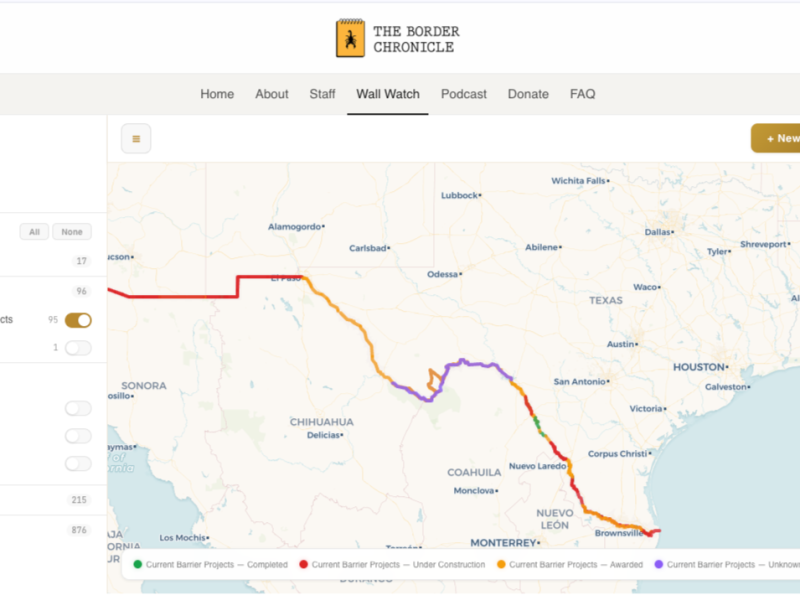
The Border Chronicle Launches Wall Watch, a Community-Powered Mapping Project
Wall Watch combines geospatial mapping, archival research, and community participation to provide the public with an accurate, continually updated record of border wall construction along nearly 2,000 miles of the international border.
Welcome to Indian Country: 250 Years of Democracy and Authoritarianism in the U.S.
Worried about the future of democracy in the United States? Look to Indigenous histories; they have much to teach us about the struggle between liberty and empire.