
Driving While Brown: The Rise of Arizona Sheriff Joe Arpaio and the Latino Resistance That Defeated Him
A Q&A with journalists Jude Joffe-Block and Terry Greene Sterling on their new book chronicling Arizona’s anti-immigrant movement.
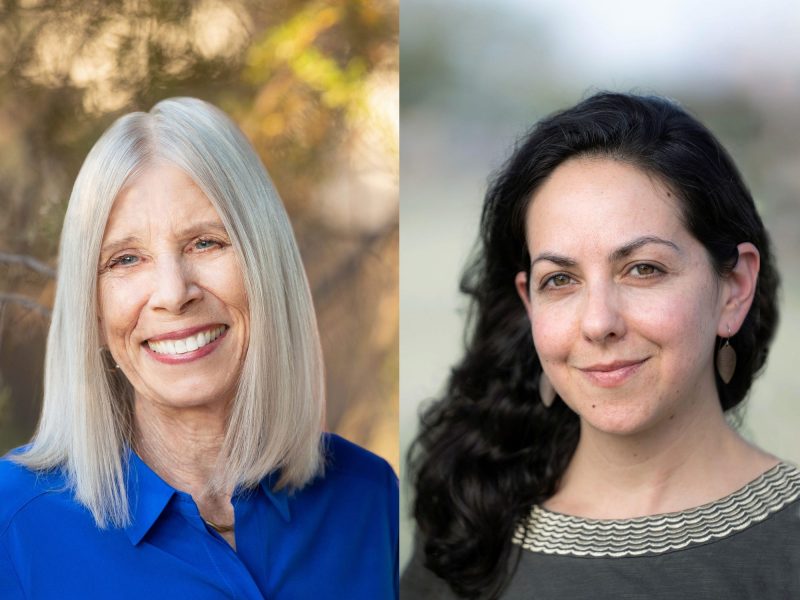
Today, The Border Chronicle is highlighting a Q&A with journalists Jude Joffe-Block and Terry Greene Sterling who covered the rise of Arizona sheriff Joe Arpaio as he waged a campaign of terror against the state’s Latino community. In their book Driving While Brown: Sheriff Joe Arpaio Versus the Latino Resistance, the two document the racial-profiling lawsuit against Arpaio that eventually proved victorious. They also show the human costs of this effort, showcasing the struggles of the Latino civil rights activists who fought unconstitutional policing. This insightful and well-researched book also charts the first meeting of Arpaio and Donald Trump, who went on to become the “national Arpaio,” demonstrating how their relationship became pivotal to both men’s political careers.
What inspired you to write this book?
Joffe-Block: I had been following Arizona immigration issues for a long time and saw how the Melendres racial profiling trial challenging Arpaio’s policies crystallized a lot of the themes playing out in Arizona politics at the time: Like, what should the role of local law enforcement be in immigration enforcement? Whose civil rights matter to us? And what is the role of Latino activism in changing the direction of the state? And so it just felt like, this is the moment. It needs to be documented.
Sterling: It’s hard for people to understand unless they were present in Arizona at the time, how powerful Arpaio was. He was one of the most popular figures in Arizona, and to see this resistance bring him down bit by bit through this coordinated effort, and through great personal sacrifice, was astonishing.
Your book takes a deep dive into history, documenting racial prejudice going back to the 19th century. Why did you choose to delve so far into the past?
Joffe-Block: We wanted to remind readers that Arizona, at one point, was Mexico, and the context of that—we’re talking about decades and decades of a Mexican experience in Arizona that builds upon itself. And how some of the figures who ended up joining this resistance to fight Arpaio’s and Arizona’s policies were shaped by earlier movements to assert Latino, Chicano, and Mexican American rights in Arizona. For example, one of the activists in the book, [former Arizona Senate Majority Leader] Alfredo Gutierrez, his father was deported from Arizona in the 1930s as a U.S. citizen teenager. At the time, the mass deportations didn’t distinguish between Mexican Americans and Mexican nationals, and so Gutierrez is shaped by this understanding that he might not always be safe here, even as a U.S. citizen.
Sterling: We also wanted to contextualize the influence of the eugenics movement on immigration, and on Arpaio’s life. We also write about how southern Arizona was part of the Confederacy. Confederate sympathizers who grew cotton and farmed and developed agricultural wealth became thought leaders in Arizona and in the state legislature. For example, the city of Tempe had a good number of Ku Klux Klan leaders in it. All these things factor into attitudes toward people of color.
It’s interesting how Arpaio, who is the son of Italian immigrants—and who was himself discriminated against—becomes this leading anti-immigrant figure. In all your years of interviewing him, do you believe that he is deeply racist or just a political opportunist?
Joffe-Block: When he first became sheriff, he would say it wasn’t a good use of his agency to be rounding up undocumented people. As late as 2005, there were times when he had talking points that put him on the side of immigrant rights. He often attributes the 2006 Arizona state human-smuggling law that caused him to pivot to immigration. I think it basically provided a pretext for him to reinvent himself as an immigration enforcer, because that’s what his base demanded. It got him on cable news, it got him to the point where he was getting donations from all over the country for his local sheriff’s race. And I think he was very politically astute. And he saw that this was the direction his base was going in. And he was somebody who really craved attention and popularity, and this was an issue where he could get it.
Sterling: I don’t disagree with Jude on any of this, but as a reporter covering Arpaio and events on the streets, those were days of absolute terror. I saw the terror firsthand. And there has to be something within a person to be able to perpetuate and order that terror against people of color. The fact that he came from a childhood in which he was taunted and bullied because of his Italian father, because Italians weren’t considered white then, several people who have read the book have suggested that part of it was an attempt to ingratiate himself with white people and show that he was white too. I have no idea if that’s true. We asked him many times about his motives and about criticisms that he was racist. He would always answer that he was not racist and that he was just enforcing the law.
There’s a passage in the book where you describe the first time Donald Trump and Joe Arpaio meet, and how important this relationship became for both men. Can you talk about that? Also, how similar are the two?
Joffe-Block: They first met at a rally in Phoenix in July 2015. At the time, Trump was a very new candidate. He hadn’t yet had a big event. This was really his first, and Arpaio introduced him that day. Most of the spectators I interviewed were there because they saw Trump as a novelty. He had been on The Apprentice, and they were just curious. And then, within weeks, Trump’s campaign took off. After that meeting, the two men would help each other in significant ways. Arpaio was the first to endorse Trump, along with Jerry Falwell Jr. This was in Iowa in January 2016. And then, of course, Trump pardons Arpaio when he is facing sentencing in his criminal contempt of court case. So the relationship was incredibly pivotal to both men.
Sterling: Both had authoritarian fathers. They both reviled the press, and yet relied on the press and validated themselves by the kind of press coverage they received. Then there’s the details. Arpaio’s favorite song is Frank Sinatra’s “My Way,” and when Arpaio attended Trump’s inaugural ball the first song Trump danced to was “My Way,” which really struck Arpaio. They also have the same birthday, which is Flag Day, in June. We asked Arpaio whether he mentored Trump in immigration policy and populism. And he said, “Well, I wouldn’t say mentored. We’ve had conversations.” But I do think Trump modeled himself on Arpaio when he saw how successful Arpaio had been.
Can you talk more about this groundswell that made Arpaio so popular? What was his appeal?
Sterling: Before he ever got into immigration, he was already America’s toughest sheriff. He ran the first time in 1992. There had been a scandal in the sheriff’s office in connection with a mass murder at a Buddhist temple on the outskirts of Maricopa County. People were on edge in Arizona, and in the United States, because there was a lot of buzz about a crime wave. And so the botched temple murder investigation, plus the fear of the crime wave, gave some Arizonans the jitters. And so Arpaio said, “I’m a law-and-order guy. I’ll take care of you. I’ll make sure that you’re safe.” This made him enormously popular. The final effect was in place when he pivoted to immigration. We had a lot of immigrants in Arizona and a lot of Midwestern transplants who were not used to seeing Mexican faces and were jittery about that. It wasn’t the crime wave anymore, it was all the Mexicans.
Joffe-Block: What’s interesting is that as the restrictionist movement was building in Arizona, Arpaio wasn’t at the forefront. He was briefly on the pro-immigrant side and got a lot of heat for it, before he pivoted. His first big tactic was to work with the Maricopa County attorney at the time, Andrew Thomas, to create policies to convert undocumented people into felons. The 2006 Arizona human-smuggling law was intended to make it a felony to smuggle someone into the country. But he and Thomas constructed it so you could also arrest the migrants on conspiracy charges to smuggle themselves. Arizona also had a law that said you couldn’t get bond if you were undocumented and booked into jail for certain felonies. So now they’ve gone from being passengers in a car to being felons who are held without bond. The same kind of pattern happens with undocumented workers in these work-site raids, where they are being arrested for identity theft, and forgery, because Arpaio is using state law to criminalize undocumented people. Then he’d send out press releases about all the undocumented criminals in his jail, creating more fear, yet glossing over the fact that in a different jurisdiction they wouldn’t necessarily be considered criminals. To me it was like a train picking up more and more steam. They use the crackdowns to heighten the issue in the media and among the public who become even more frightened and want more crackdowns.
In the book you mention how Kansas attorney Kris Kobach played a prominent role in drafting ant-immigrant policies. Are there other people and groups who kept popping up in your reporting, who were pushing this anti-immigrant movement?
Sterling: FAIR [the Federation for American Immigration Reform] was supporting local groups in Arizona. Also, Jan Brewer, who jumped on the bandwagon in 2010. She wanted to win the Republican primary election. And she was largely elected governor because she supported Senate Bill 1070, which was intended to criminalize undocumented immigrants.
Joffe-Block: Also, [former Arizona State Senator] Russell Pearce, just because he was so prolific, and laser focused. And had made it a priority to pass this kind of legislation.
Can you talk about Lydia Guzman and other activists and how they came together to fight back against Arpaio and Arizona’s wave of anti-Latino policy making?
Joffe-Block: Many of them were in a room together for the first time to plan the big 2006 immigrant rights march in Phoenix, which was part of a national wave of immigrant rights marches that happened all over the country in response to the Sensenbrenner bill, which had sought to criminalize being undocumented and make it a federal crime. And so the activists who gathered in Phoenix, once Arpaio started his crackdown, they wanted to organize a response and pivoted to a local resistance.
Sterling: Some of the members were in their 50s and 60s and had already been active for many years as Chicanos and as civil rights activists in different iterations. Some were lawyers, and some politicians. Alfredo Gutierrez had been active all his life. As had Danny Ortega and Lydia Guzman.
Right now, Texas governor Greg Abbott is arresting undocumented border crossers on criminal trespassing charges. Is this a continuation of what you saw happen in Arizona? Or is it different?
Joffe-Block: Abbott’s use of the criminal trespassing charges to arrest migrants is the biggest parallel to Arpaio’s efforts. It will be very interesting to see what the courts say about it. The argument that knocked most of SB 1070 down was that the state was attempting to preempt federal immigration law. I think Texas is trying to test the boundaries. And as we’re seeing with Roe v. Wade, we can’t count on legal precedent. It will be interesting to see how it shakes out when it is tested this time. One thing that interests me is whether there are parallels with the grassroots resistance movement we saw in Arizona, which had a strategy, a coalition of people of varying walks of life, who were basically using street protest, legal challenges, and election-related voter outreach, and they were trying to shift the narrative in the media and in the public square. And it will be interesting to see whether that is also part of the conversation in Texas.
Sterling: For a long time, I had this photograph of Russell Pearce, when he had tried to pass SB 1070 into law, the year before it finally passed. He held a press conference in front of the state Capitol with Arpaio. They were surrounded by people holding signs that said, “Illegal immigrants are murderers” and “Illegal immigrants cause disease.” Pearce called it a trespassing bill. Later, they called it something else, like “safe streets and neighborhoods” or something like that. But initially it was a trespassing bill. And it’s the same concept as the one in Texas. With the same sort of animus behind it. So my first thought when I heard about Texas was “Oh no, here it comes again.”
You also describe how the resistance movement to Arpaio was key in turning Arizona blue in the 2020 election. How did this happen?
Joffe-Block: It wasn’t just the anti-Arpaio organizing. Young DACA [Deferred Action for Childhood Arrivals] recipients were having an especially hard time in Arizona. They began to organize politically at a very young age and became very savvy political organizers. There were also people who became active with the recall of Pearce in 2011. So you can see this direct line from Arizona’s entrenched restrictionism and the onslaught of policies. And young people of color who came of age trying to fight them and who have matured into a politically savvy ground game for mobilizing voters. The big question now is that many of the politicians these young people helped elect have ultimately disappointed them. They helped elect Kyrsten Sinema, for example. So I think parties and candidates who are interested in trying to benefit from the campaign smarts of these young folks are going to need to tap into what will keep them politically engaged. Because it’s one thing to defeat somebody that you want to see out, but at a certain point, you want to start to win. And so when I think about the future, and about these people who’ve been fighting for so long, at what point do they give up or go in another direction?
Sterling: The other thing about the 2020 election is that there’s no doubt the Latino resistance was a force in turning Arizona blue. But there were other elements too. Indigenous voters were huge, and also McCain Republicans and suburban women. They all coalesced because there was a national Arpaio, which was Trump, in the White House. And while we turned blue at the federal level, we didn’t at the local level, and I don’t know what that means or how that is going to play out.
Author

Related Articles
The Accidental Revival of José Revueltas
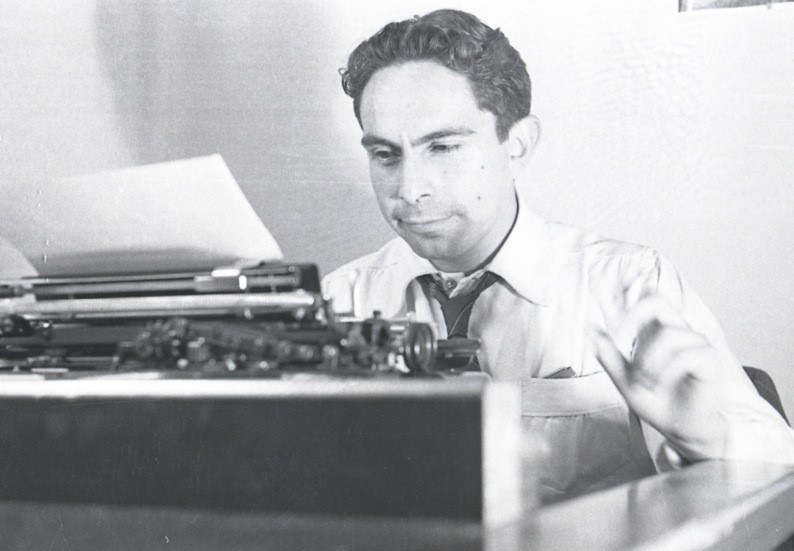
How a prolific Mexican writer, all but unknown in the United States, became the patron saint of some of this year’s most important borderlands books.
In a Mexicali Novel, a Secret and an Unraveling Childhood Friendship
Elma Correa’s award-winning Donde termina el verano follows two girls from the working-class outskirts of Mexicali whose friendship, guilt and memories are shaped by a childhood disappearance and the borderlands around them.