
The Borderlands Are Beautiful: A Podcast with Petey Mesquitey
The legendary storyteller takes us on a trip through the Arizona borderlands, its sky islands, flora and fauna, all the way to the border wall with Mexico.
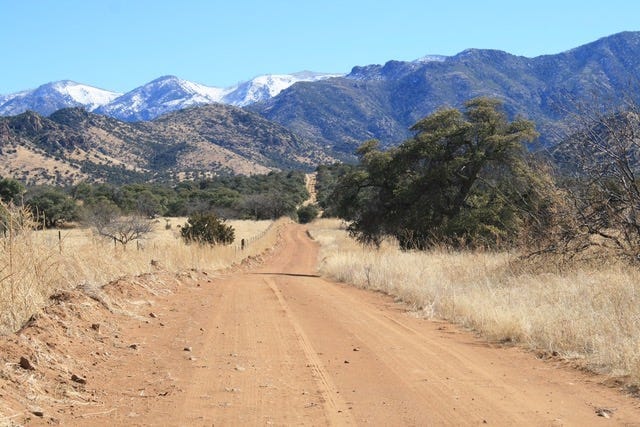
“The borderlands are beautiful.” That’s how Petey Mesquitey always ends his weekly show Growing Native on the Tucson community radio station KXCI. And that was my first question to Petey in this interview: Why are the borderlands beautiful?
What follows is the legendary storyteller’s observations from more than 30 years of living in the rural borderlands, what it’s like to walk every morning through diverse biomes, what it’s like to see a bear, a coatimundi, or a box turtle; what it’s like to experience a forest of saguaros or a forest of oak trees.
In other words, a description of the borderlands that is much different from what we usually get, with sparse adjectives like dusty and desolate. Petey is an expert storyteller who lets the words tumble out of his mouth in all directions—a chaotic, coherent, sweet, and joyful poetry—and this interview is no different.
It was a joy, as it has been for decades, to hear his descriptions and see with fresh eyes what a unique and beautiful place the borderlands is.

He also talks about all the changes that he’s seen in his time here. “When I moved here,” he says,
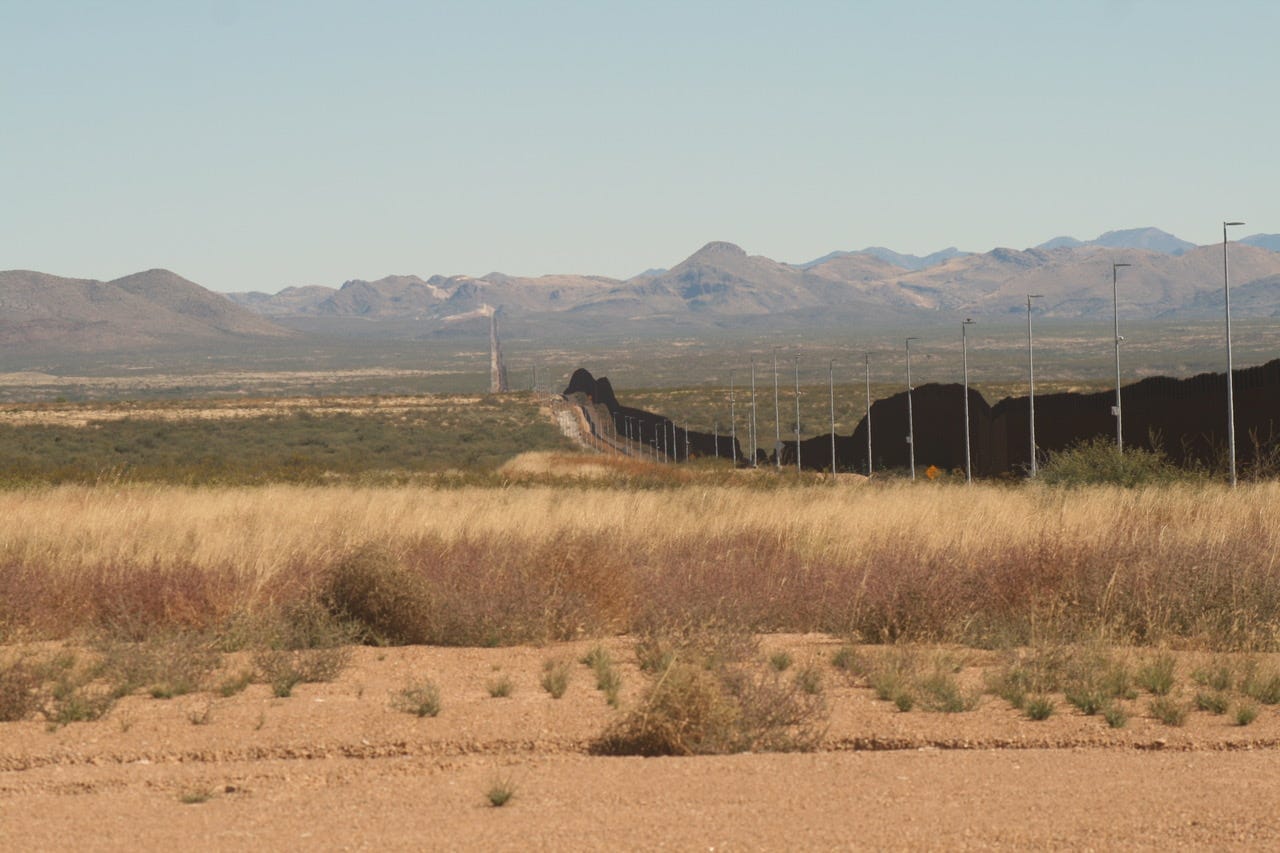
“I had a friend who had a ranch on the other side of the San Bernardino in Mexico. We just jumped back and forth through the barbed-wire fence—to go in and out, in and out—to look at plants. Wait, there’s a plant on the other side of the border, but it’s in Mexico. It would just crack you up. It’s so sweet. I’m in Mexico. I’m going back and forth. And, you know, there’s always the history—of course, workers came through. People expected them to come through. I don’t know how it all went to hell. And became such dreadful, angry, hateful thing.”

On a side note, I am moving (within Tucson) and somehow lost my recorder. I apologize if the sound is off at all. I think it still sounds pretty good, especially because of the magic of our audio editor.
Support The Border Chronicle and independent border journalism today by becoming a paid subscriber for just $6 a month or $60 a year.
Author

Related Articles

The Accidental Revival of José Revueltas
How a prolific Mexican writer, all but unknown in the United States, became the patron saint of some of this year’s most important borderlands books.

In a Mexicali Novel, a Secret and an Unraveling Childhood Friendship
Elma Correa’s award-winning Donde termina el verano follows two girls from the working-class outskirts of Mexicali whose friendship, guilt and memories are shaped by a childhood disappearance and the borderlands around them.
The Sonoran Desert’s Endemic Psychedelic: A Q&A with Writer Kimon de Greef
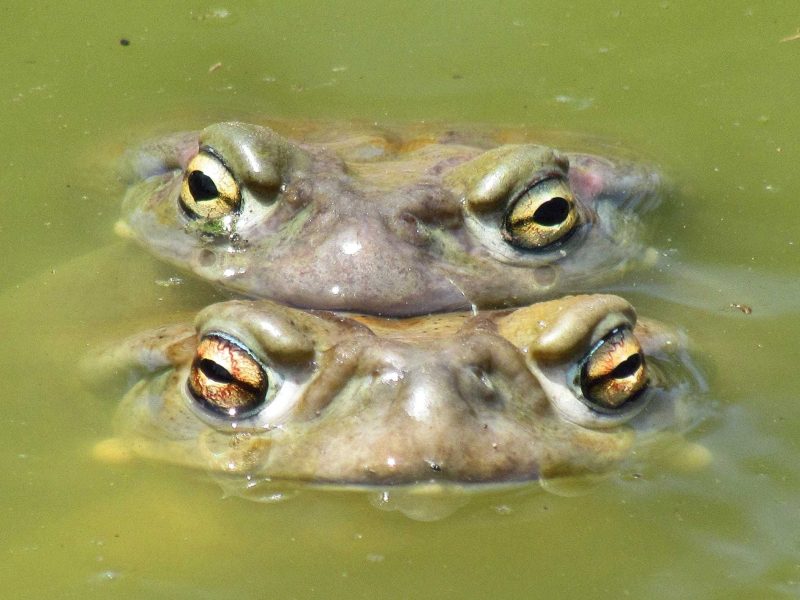
A new book tells the scandal-ridden tale of Sonora’s toad-smoking neo-shaman.
