Do you have questions about the recent buoy debacle on the Rio Grande? Our reporting has you covered, plus an important new hire at The Border Chronicle, and our new project Wall Watch.
As floodwaters swept hundreds of one-ton border buoys downstream, international bridges closed, commerce slowed, and officials struggled to get answers from DHS about a project advancing despite local opposition, environmental concerns, and treaty questions.
Hundreds of massive orange buoys staged for a controversial DHS floating barrier project broke free near Eagle Pass and are now drifting toward Laredo, threatening bridges, commerce, drinking water supplies and downstream communities.
If you want to learn about border technology, listen to this conversation about a new book on surviving migration in the age of artificial intelligence.
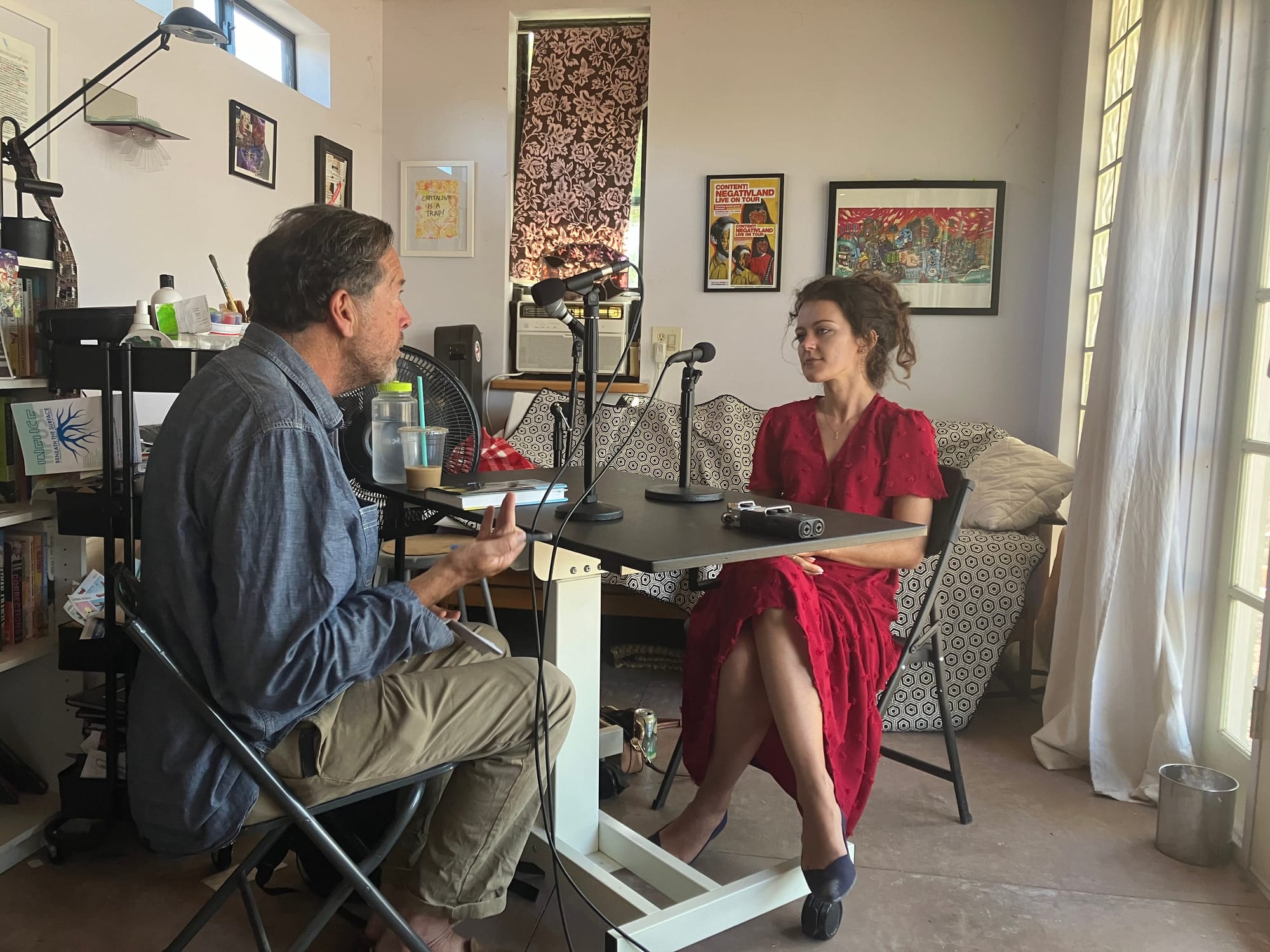
Last week I attended the 17th annual Border Security Expo in El Paso, Texas, which focused on border enforcement technology. I mention this because I can’t think of a better person to talk to about this than anthropologist and lawyer Petra Molnar, whose new book, The Walls Have Eyes: Surviving Migration in the Age of Artificial Intelligence, is hot off the presses. I’ve been awaiting this book for years, and I was fortunate enough to interview Molnar for this podcast while she was in Tucson for a book event.
Petra Molnar speaks at a book event at the Good Shepherd UCC church in Sahuarita, Arizona on Saturday. (Photo credit: Steev Hise)
It is essential to know about border technology and its evolution, and how it affects people crossing borders and people living in borderlands around the world. Molnar, on the leading edge of reporting and analysis on this issue, helps us understand how border tech connects to larger political and economic power structures, and how it is not a humane alternative to a wall.
She splits her time across the hemispheres, in North America and Europe, which brings a global perspective to the book, and underscores the omnipresence of surveillance. And this is not Molnar’s first appearance at The Border Chronicle, check out her article on robotic dogs from 2022. You should also see her work at the Migration Tech Monitor and the Refugee Law Lab.
Petra Molnar and Todd Miller recording this podcast. (Photo credit: Steev Hise)
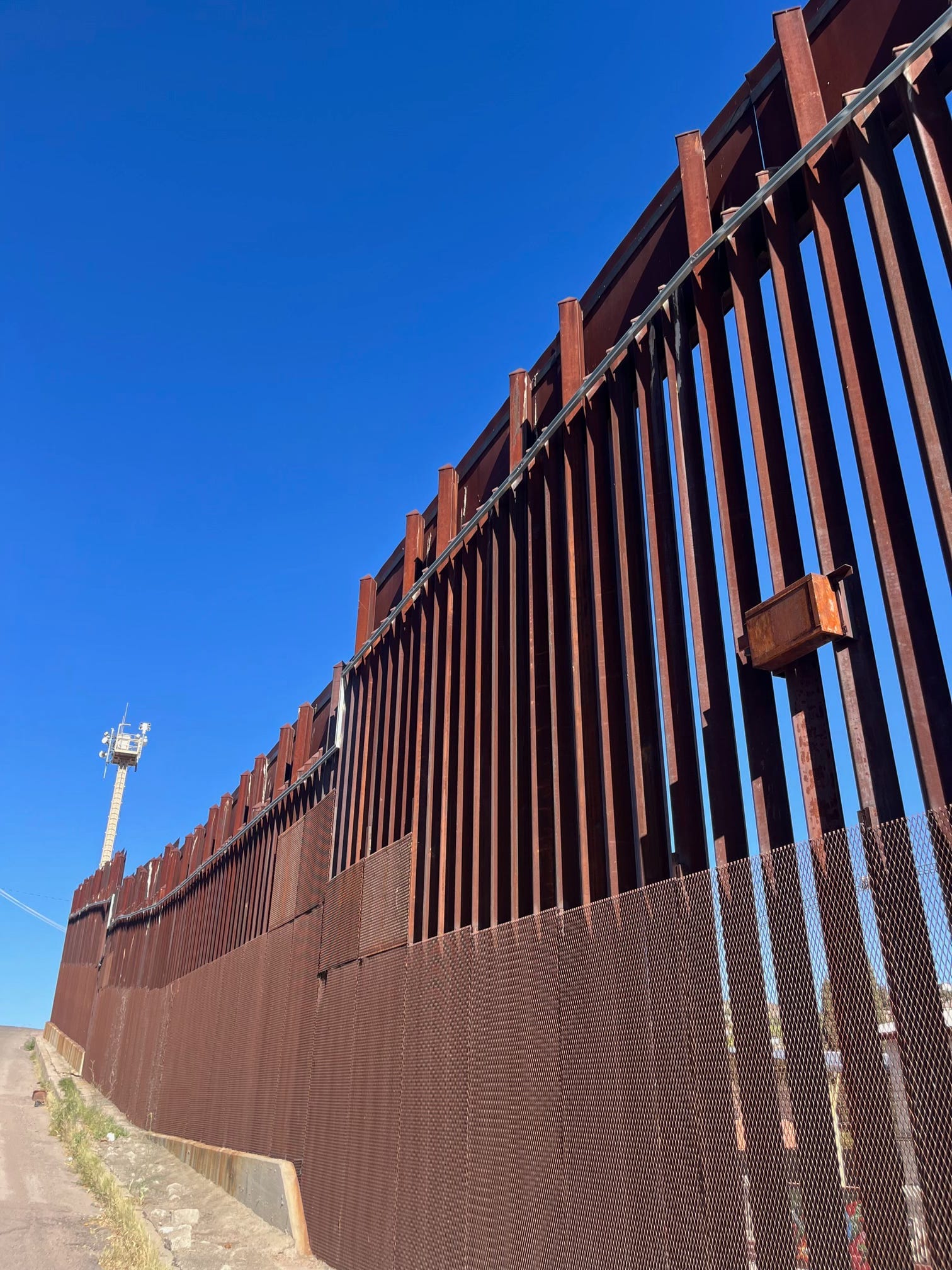
After we recorded the podcast, we took a trip to the border in Nogales. Lengthwise across the bollards was a narrow metal track that looked exactly like the encasement for a sensor system that I saw displayed by a company at the Border Security Expo. It was the first time I had seen this addition to the wall. Indeed, the walls do have eyes.
Note the metal track at the top of this swath of wall in Nogales, Arizona. (Photo credit: Todd Miller)
The Border Chronicle is a reader-supported publication. To receive new posts and support our work, consider becoming a free or paid subscriber.
In February, the country broke an ominous record: over 68,000 people were being held in detention by Immigration and Customs Enforcement, more than ever before.
Border Chronicle founders, Todd and Melissa, talk about how law enforcement surveillance, high-speed chases instigated by Border Patrol, unwarranted searches and seizures, and other heavy-handed policing that border communities have endured for decades has now moved into the interior of the country.
This conversation, hosted by Todd Miller, about a great borderlands adobe brick building project is going great, until Jacques Servin—of the political performance artist trickster and activist troupe called the Yes Men—fails to grasp the meaning of the term "border security."