
Immigration Detention Inc.: A Podcast with Nancy Hiemstra and Deirdre Conlon
The authors break down the billions generated by private immigration detention companies. An industry, they show, that is based on a false narrative.

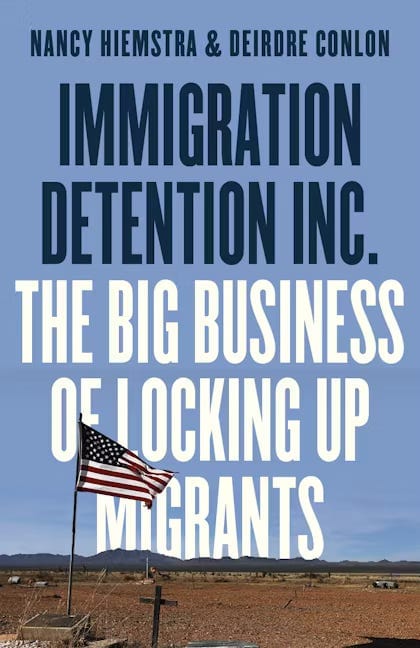
Who profits from immigrant detention, and how is the money made? Geographers Nancy Hiemstra and Deirdre Conlon have investigated these questions for 10 years, producing one of the most thorough examinations of the industry. In today’s podcast, we discuss their findings in the new book Immigration Detention Inc: The Big Business of Locking Up Migrants.
This book comes at a crucial time as the Trump administration attempts to carry out a mass deportation plan that will be financed by an estimated $45 billion budget, via the One Big Beautiful Bill Act.
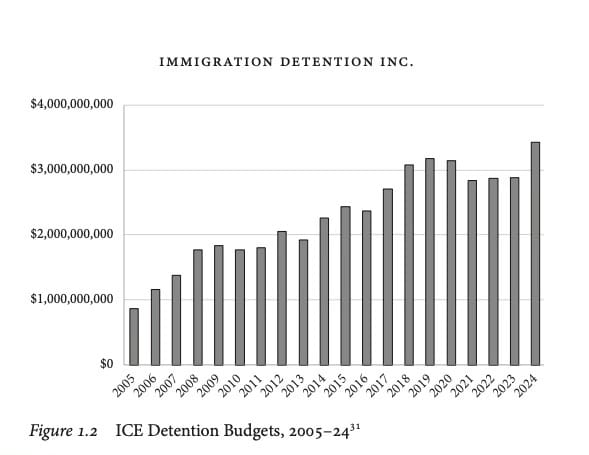
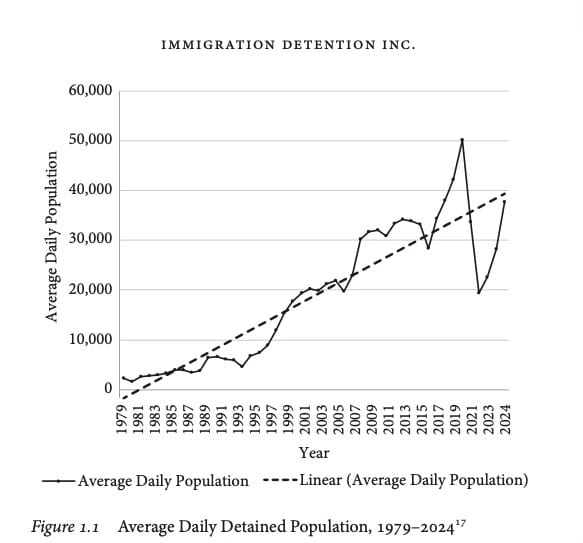
We discuss all of this: the billions made not only by major prison companies like Geo Group and CoreCivic but also by subcontracted services such as food, medical care, and commissary. The authors highlight that substandard food and health services are part of the business model. We discuss the financial dependencies that local governments have developed through their revenue-sharing agreements with ICE. Additionally, we examine the rapid growth of the detention industry—from 7,000 people in the early 1990s to 60,000 today—and how this growth has accelerated in the last eight months under Trump.
Finally, the authors suggest solutions. “Chip away that detention is effective or necessary … this is really a false narrative,” Hiemstra says, and “peel away what makes detention profitable, and peel away the ability to make money off it.”
Hiemstra is also the author of Detain and Deport: The Chaotic U.S. Enforcement Regime. Conlon and Hiemstra also coedited the book Intimate Economies of Immigration Detention.


Support independent journalism from the U.S.-Mexico border. Become a paid subscriber today for just $6 a month or $60 a year.
Author

Related Articles

Beyond the Border Trap: A Review of Amelia Frank-Vitale’s “Leave If You Can”
Frank-Vitale says we must stop “seeing migration as the problem.” Instead, she insists, “the problem … lies in all the attempts to stop human mobility, to contain, detain, and deport people.”

Immigration Policy Is Maternal Health Policy
Research in Texas confirms what border communities already know: that harsh immigration policies harm maternal health. As border-style enforcement spreads across the United States, its consequences for mothers and infants will spread with it.

Why Local Pressure is Key to Impacting National Immigration Politics: A podcast with John Washington, author of “How to Close a Camp.”
In February, the country broke an ominous record: over 68,000 people were being held in detention by Immigration and Customs Enforcement, more than ever before.