Do you have questions about the recent buoy debacle on the Rio Grande? Our reporting has you covered, plus an important new hire at The Border Chronicle, and our new project Wall Watch.
As floodwaters swept hundreds of one-ton border buoys downstream, international bridges closed, commerce slowed, and officials struggled to get answers from DHS about a project advancing despite local opposition, environmental concerns, and treaty questions.
Hundreds of massive orange buoys staged for a controversial DHS floating barrier project broke free near Eagle Pass and are now drifting toward Laredo, threatening bridges, commerce, drinking water supplies and downstream communities.
The Expanding Immigrant Detention Nexus: A Podcast with Jesse Franzblau
Immigrant detention has doubled during Biden, which now wants to expand it more. But not if rights groups can help it, explains the senior policy analyst for the National Immigrant Justice Center.
The Expanding Immigrant Detention Nexus: A Podcast with Jesse Franzblau
0:00
/12000
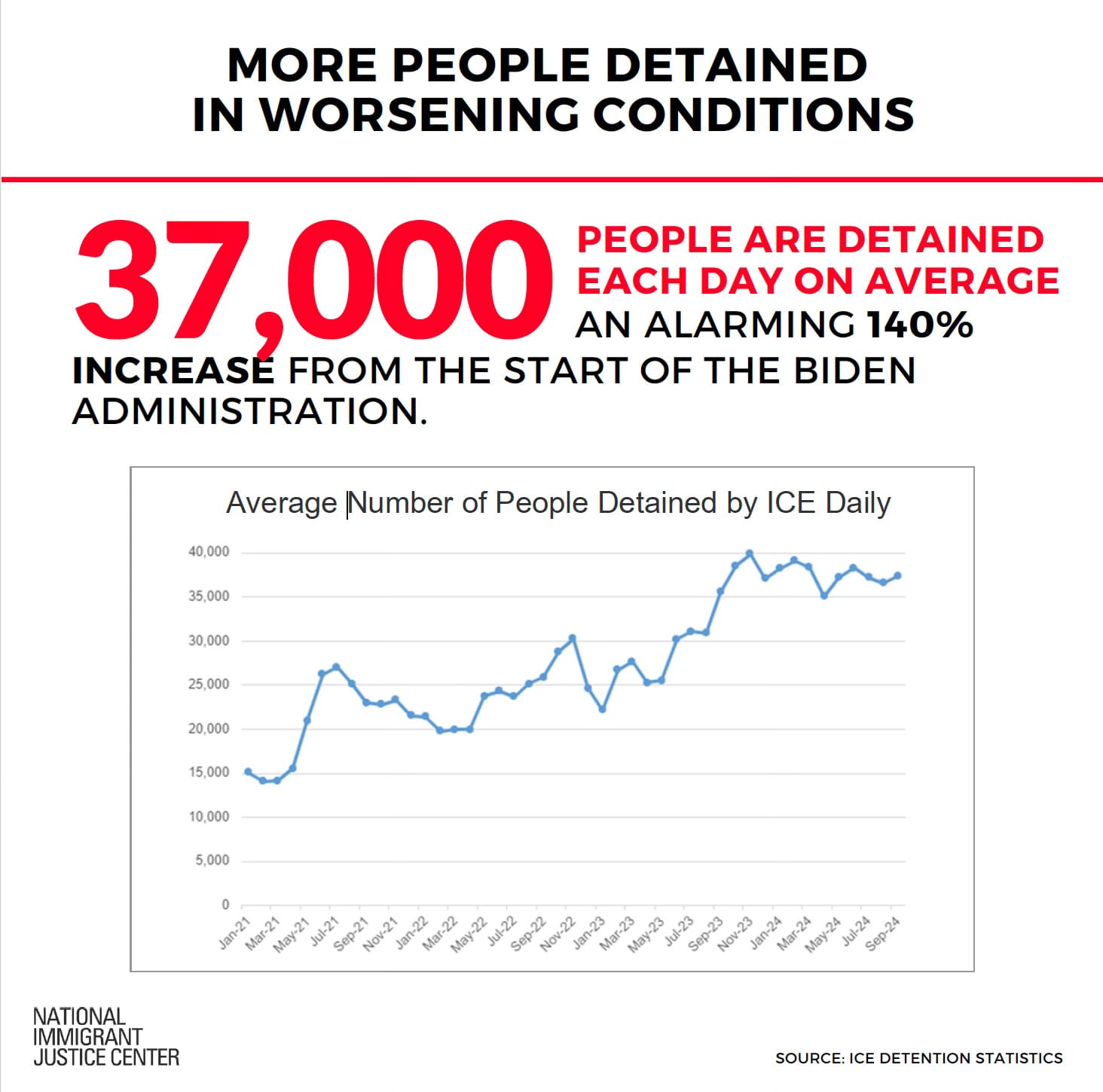
Since Joe Biden’s inauguration in January 2021, there have been alarming trends in detentions and deportations undertaken by Immigration and Customs Enforcement (ICE), according to the National Immigrant Justice Center (NIJC). For instance, the daily number of people detained has gone up 140 percent. Now there are 37,000 people locked up every day, up from 15,000 in 2021. And 90 percent of those people have been held in detention centers operated by private, for-profit companies in more than 190 prisons across the United States (a number that went up considerably during the Trump years).
According to the Snapshot of ICE Detention: Inhumane Conditions and Alarming Expansion, an NIJC briefing released last week, these facilities are notoriously abusive. Since 2021, 23 people have died in ICE custody, and there has been a 50 percent increase in solitary confinement. Now the Biden administration has requested proposals from private industry to further increase detention space.
This is why today The Border Chronicle is talking with the NIJC’s senior policy analyst, Jesse Franzblau. He conducts investigative research on rights abuses in the U.S.-Mexico borderlands for the organization’s Transparency and Human Rights Project.
Franzblau and the NIJC were part of a large coalition of rights organizations, accompanied by past detainees, who converged on Washington on September 23 for a national day of action and advocacy. The coalition called for the Biden administration to halt its plans to open new detention prisons and expand deportations, to close down detention centers known for rampant abuse, and to release incarcerated people and allow them to navigate their cases outside the prison walls.
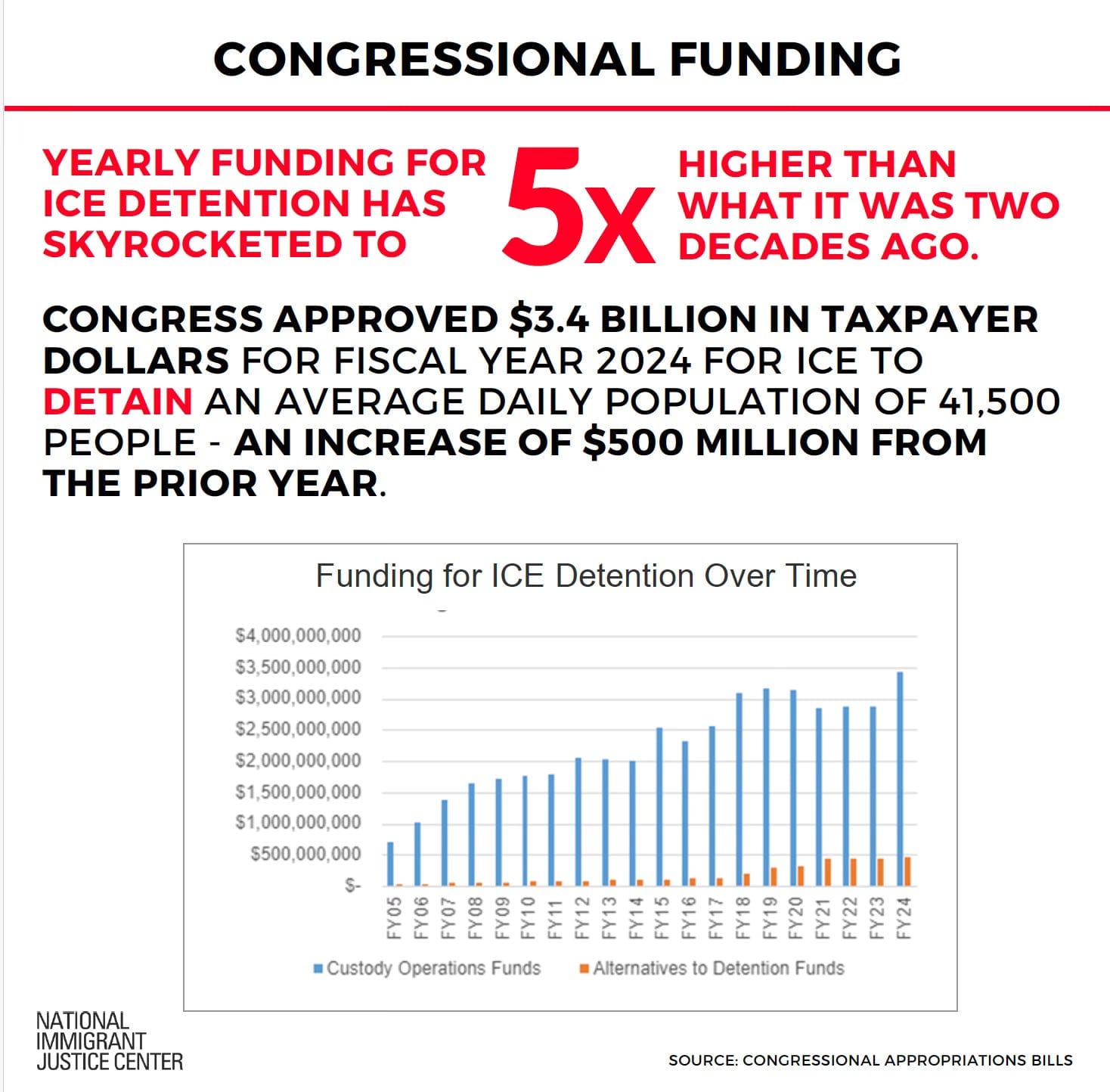
Franzblau talks about all this, and much more, on today’s podcast. He said the immigration detention and deportation apparatus “hasn’t always been this way. It was in the ’80s when it started to take shape during the Reagan administration, then during the ’90s it grew even further, and it grew directly parallel to the growth of the mass-incarceration system.” And now federal funding for ICE detention is five times what it was two decades ago.
In February, the country broke an ominous record: over 68,000 people were being held in detention by Immigration and Customs Enforcement, more than ever before.
As immigrant families face detention, shrinking legal protections and the threat of deportation, Camp Hope offers children a rare chance to play, heal and dream. One former camper is headed to an opera conservatory in Italy.
Border Chronicle founders, Todd and Melissa, talk about how law enforcement surveillance, high-speed chases instigated by Border Patrol, unwarranted searches and seizures, and other heavy-handed policing that border communities have endured for decades has now moved into the interior of the country.
With interior Border Patrol checkpoints to the north, and the border to the south, DACA recipients in border communities feel under threat by multiple layers of law enforcement, from ICE to local police. Nowhere more so than in Texas.